Archive by Author

Even More Tongue Twisters (绕口令)

Posted on 29. Jun, 2012 by in Pronunciation

Now that we’ve gone over some basic tongue twisters or  绕口令 (rào kǒu lìng) I thought this would be a good time to step up the level of difficulty and provide even more challenging tongue twisters. These ones will give you quite a workout, so if your tongue isn’t tired yet it should be after reading (and practicing) along with this post. After all, practice makes perfect.

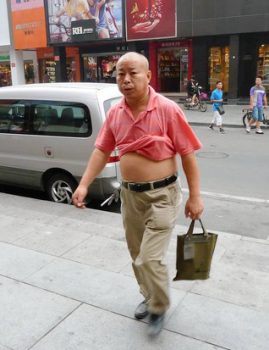
Is your pronunciation or 发音 ( yīn) improving? Is it easier to make the sounds or does your tongue just get tied in a knot like our little friend over to the left? Try following along in the video. If you recall from last tongue twisters post, we’ve already practiced this one:

YouTube Preview Image

吃葡萄吐葡萄皮儿,
不吃葡萄不吐葡萄皮儿。
吃葡萄不吐葡萄皮儿,
不吃葡萄倒吐葡萄皮儿。

chī pútáo tǔ pútáo pí ér,
bù chī pútáo bù tǔ pútáo pí ér.
chī pútáo bù tǔ pútáo pí ér,
bù chī pútáo dào tǔ pútáo pí ér.

Translation: Eat grapes throw out their skins, don’t eat grapes don’t throw out their skins. Eat grapes don’t throw out their skins, don’t eat grapes throw out their skins.

Not so hard, was it? Now that we’ve warmed up, lets get into some new tongue twisters. Here’s an easy one to start off with first:

image

Xī Shī sǐshí sìshísì.

Translation: The Useful Lady of the West was 44 years old at the time of her death.

老頭兒端湯上塔
湯燙
塔滑
湯灑
湯燙塔

lǎotóur duān tāng shàng tǎ
tāng tàng
tǎ huá
tāng sǎ
tāng tàng tǎ.

Translation: An old man, holding (a bowl of) soup, climbed up a tower. The soup was hot. The tower (steps) slippery; (so) the soup got spilt (and) the soup scalded the tower (steps).

墻上掛面鼔. 鼔上畫老虎.
老虎抓破了鼔.
拿塊布来補,
不知道是布補鼔, 還是布補虎.

Qiáng-shang guà miàn gǔ. Gǔ-shang huà lǎohǔ.
Lǎohǔ zhuāpòle gǔ.
Ná kuài bù lái bǔ,
Bùzhīdào shì bù bǔ gǔ, háishi bù bǔ hǔ.

Translation: On the wall hangs a drum, on which a tiger is painted. The tiger clawed a hole into the drum. Taking a piece of cloth to repair it, I didn’t know whether the cloth was mending the drum or the cloth was mending the tiger.

青青山上一根籐
青籐地下掛銅鈴
風吹籐動銅鈴動
風停籐停銅鈴停

qīng qīng shān shàng yī gēn téng
qīng téng dǐ xià guà tóng líng
fēng chuī téng dòng tóng líng dòng
fēng tíng téng tíng tóng líng tíng

Translation: On a green mountain grows a vine. Under the vine there hangs a copper bell. When the wind blows, the vine moves, and so does the bell. When the wind stops, the vine stops, and the bell stops too.

村前有个颜圆眼
村后有个颜眼圆
不知颜圆眼的眼圆
还是颜眼圆的眼圆?

cūn qián yǒu gè yán yuán yǎn
cūn hòu yǒu g4 yán yǎn yuán
bù zhī yán yuán yǎn dē yǎn yuán
hái shì yán yǎn yuán dē yǎn yuán?

Translation: In front of the village there is a Yan Yuanyan. Behind the village there is a Yan Yanyuan. Don’t know if Yan Yuanyan’s eyes are rounder or Yan Yanyuan’s eyes are rounder.

Whew that was exhausting. Try it again from the top, 再次发言!

Follow Stephen on Twitter: @seeitbelieveit

More Tongue Twisters

Posted on 28. Jun, 2012 by in Pronunciation

Now that we’ve covered some basic tongue twisters, it’s time to ramp up the level of difficulty. Try saying these tongue twisters five times fast. See if you can get as good as Jackie Chan:

YouTube Preview Image

青青山上一根籐

青籐地下掛銅鈴

風吹籐動銅鈴動

風停籐停銅鈴停

qīng qīng shān shàng yī gēn téng
qīng téng dǐ xià guà tóng líng
fēng chuī téng dòng tóng líng dòng
fēng tíng téng tíng tóng líng tíng

Translation: On a green mountain grows a vine. Under the vine there hangs a copper bell. When the wind blows, the vine moves, and so does the bell. When the wind stops, the vine stops, and the bell stops too.

老頭兒端湯上塔
湯燙
塔滑
湯灑
湯燙塔

lǎotóur duān tāng shàng tǎ
tāng tàng
tǎ huá
tāng sǎ
tāng tàng tǎ.

Translation: An old man, holding (a bowl of) soup, climbed up a tower. The soup was hot. The tower (steps) slippery; (so) the soup got spilt (and) the soup scalded the tower (steps).

黑蝴蝶飛,
灰蝴蝶飛,
黑蝴蝶飛完,
會蝴蝶飛。

hēi húdǐe fēi,
hūi húdǐe fēi,
hēi húdǐe fēiwán,
hūi húdǐe fēi.

Translation: The black butterfly flies, the gray butterfly flies, after the black butterfly flies, the gray butterfly flies.

村前有个颜圆眼
村后有个颜眼圆
不知颜圆眼的眼圆
还是颜眼圆的眼圆?

cūn qián yǒu gè yán yuán yǎn
cūn hòu yǒu g4 yán yǎn yuán
bù zhī yán yuán yǎn dē yǎn yuán
hái shì yán yǎn yuán dē yǎn yuán?

Translation: In front of the village there is a Yan Yuanyan. Behind the village there is a Yan Yanyuan. Don’t know if Yan Yuanyan’s eyes are rounder or Yan Yanyuan’s eyes are rounder.

红凤凰

黄凤凰

粉红凤凰

粉凤凰飞

Hóng fènghuáng
huáng fènghuáng
fěnhóng fènghuáng
fěn fènghuáng fēi

Translation: Red phoenix, yellow phoenix, pink phoenix, pink phoenix fly.

How’d you do?

The Curious Case of Bo Xilai

Posted on 11. Jun, 2012 by in government, Politics and Diplomacy

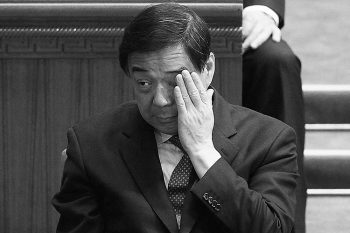
BoXiLaiWant a story with political scandal, murder, and corruption? Something that goes to the top of Chinese government and implicates a myriad of high ranking officials? I present to you, the Curious Case of BoXilai, which just keeps getting more and more interesting as details start to emerge.

For those unfamiliar, Bo XiLai is a Chinese politician who was groomed for greatness and was expected to be fast tracked to the Politburo Standing Committee, only to have his political career (and likely his freedom) jeopardized by a slew of accusations stemming from his governance in ChongQing. While publicly a champion for anti-corruption and a staunch combatant of organized crime, his involvement in extortion, kidnapping and bribery during his tenure in ChongQing are now his undoing.

How did China’s political golden boy, destined for a top position within the CCP, fall so quickly from grace? How did one of the mainland’s most popular “princelings” draw the ire and wrath of Politburo? Well it starts with his tenure in ChongQing.

In Chongqing, Bo XiLai became known for heavy-handed populism and appeal to China’s burgeoning middle classes. He initiated a campaign against organized crime, increased spending on welfare programs, maintained consistent double-digit percentage GDP growth, and campaigned to revive Cultural Revolution-era “red culture.” Bo’s promotion of egalitarian values and the achievements of his “Chongqing model” made him the champion of the Chinese New Left, composed of both Maoists and social democrats disillusioned with the country’s market-based economic reforms and increasing economic inequality.

However, the perceived lawlessness of Bo’s anti-corruption campaigns, coupled with concerns about his outsized personality, made him a controversial figure as many top ranking Politburo officials became wary of the ambitious politician.

Bo was considered a likely candidate for promotion to the elite Politburo Standing Committee in CPC 18th National Congress in 2012. Yet his political fortunes came to an abrupt end following the Wang Lijun incident, in which his top lieutenant and police chief sought asylum at the American consulate in Chengdu and revealed details of Bo’s alleged involvement in a homicide plot. Apparently, Bo XiLai, while combatting corruption among police officials, was on the take, and has spent years extorting, wiretapping and threatening ChongQing public officials who refused to do it his way.

But amidst the corruption and internal financial scandals, Bo is now allegedly implicated in the death of a British national businessman, Neil Heyward, who’s body was found lying in the streets of ChongQing.

In the fallout, Bo was removed as Chongqing party chief in March 2012 and suspended from the politburo the following month. Bo’s dismissal was notable for exposing disunity within Communist Party ranks shortly before a leadership transition. Here’s a timeline of the BoXiLai incident:

Bo XiLai Scandal Timeline:

October 2011, Neil Heywood reportedly had a business dispute with Bo’s wife, Gu Kailai, when he demanded a higher commission for his services. The dispute escalated, with Heywood ultimately threatening to reveal the family’s business dealings and overseas assets, estimated to total in excess of $136 million.

Feb 2, 2012: Chongqing city government announces that its popular police chief, Wang Lijun, has been shifted to another job. It is a demotion – and is the first public confirmation that the policeman has fallen out with Chongqing’s Communist Party boss, Bo Xilai.

Feb 6: Mr Wang flees to the US consulate in Chengdu, near Chongqing. Many believe he went there to seek asylum. He spends the night at the consulate, which is surrounded by Chinese police.

Feb 7: The police chief is persuaded to leave the consulate after Chongqing’s mayor rushes to the scene to talk to him. Mr Wang emerges into the waiting arms of the law and then disappears.

Feb 8: The Chongqing government says that because of over-work Mr Wang is suffering from stress and is now receiving “holiday-style medical treatment”. In fact, he is under investigation and in detention.

Mar 5-14: Bo Xilai takes his seat at China’s annual parliamentary session in Beijing. He keeps an unusually low profile amid rumours that Mr Wang’s actions have tarnished his chances of promotion to the party’s politburo Standing Committee later this year.

Mar  14: At a news conference, Chinese Premier Wen Jiabao indirectly criticises Bo Xilai for his handling of the Wang Lijun incident. It is the first comment from a senior national leader on the issue, and shows Mr Bo is in a precarious position.

Mar 15: China announces that Bo Xilai has been removed from his post as party chief in Chongqing. Officials confirm that this is because of the Wang Lijun incident. He disappears from public view.

Mar 20: A leaked audio recording suggests Bo Xilai and his police chief fell out when Mr Wang told his boss of an investigation into Mr Bo’s family. Another rumour suggests Mr Bo could be linked to the death of a British businessman, Neil Heywood, who died in Chongqing last November.

Mar 26: UK government confirms it has asked China to re-examine Neil Heywood’s death.

Apr 10: China announces that Bo Xilai has been stripped of his Communist Party posts and that his wife, Gu Kailai, and an orderly are being investigated in connection with Mr Heywood’s death.

Apr 25: Bo Xilai’s son, Bo Guagua, writes an open letter to his university, Harvard. He insists he does not live an extravagant life and says his education has been funded by scholarships and his mother’s earnings as a lawyer. He says he has no comment to make about the investigation.

Apr 26: Bo Xilai’s elder brother, Bo Xiyong, resigns his post at a state-owned Chinese company in Hong Kong. It was revealed that he was using another name to conduct business there.

Apr 27: The New York Times reports that Bo Xilai ran a wire-tapping network across Chongqing, with his officials even listening in to a phone call involving President Hu Jintao.

May 16: A group of veteran Communist Party members write to President Hu Jintao, asking him to sack known Bo Xilai supporter Zhou Yongkang. They allege that Mr Zhou, currently in charge of China’s security apparatus, is part of a movement to revive the China of Mao Zedong.

May 23: Bo Xilai’s name is not included on the list of delegates for the municipality’s party conference, an indication of an imminent major reshuffle.

Punishing Bo:

While the CPC is still deciding upon how to dole out punishment for BoXilai and his wife, odds are that both will be found guilty (Bo for corruption and his wife for the murder of Neil Heyward), and both could receive the death penalty, depending upon whether or not the Politburo wants to make an example (and bolster their standings) of Bo. This seems somewhat likely as BoXiLai apparently wiretapped prominent cadre officials along with President Hu Jintao.

Going after corrupt provincial officials is one thing, but trying to extort or wire-tap Hu is another. Keep in mind this isn’t just a simple corruption/murder investigation–it’s a political battle for control of the top. Bo once had high ranking officials on the ropes, now the tides have turned. Expect that they’ll be seeking retribution and will use Bo as a warning for any other up-and-coming, ambitious politicians. As the trial unfolds, Bo will go from from poster-boy to sacrificial lamb. Rumors are even starting to swirl that Bo engaged in sexual acts with actress Zhang Ziyi for millions of dollars.

Amidst all the accusations, and as police chiefs, bank officials and Bo’s relatives fall under scrutiny, one this is clear: BoXiLai is not the egalitarian reformer populists had him pegged for. He, like, the corrupt officials and business tycoons he claimed to crack down upon, was using his political and economic connections to line his pocket and the pockets of his friends and family. As more details emerge, the picture painted is that of a “princeling” who thought he could get away with murder. It turns out–he couldn’t.

Follow Stephen on twitter: @seeitbelieveit