Archive for 'Travel'

How Esperanto Changed My Life

Posted on 15. May, 2013 by in Travel

I had no idea where Esperanto would take me when I started learning it in February 2001. At the time, in a small city in Pennsylvania, I thought, “I’ll do the first lesson of this free online course. If it’s lame, I’ll have lost an hour of my life. If it’s interesting, it could open up a completely new world.”

Later that year, I discovered Wikipedia in its very early stages and started the Esperanto version, which played a major role in the growth of the multi-lingual Wikipedia… for example, helping to start the Czech Wikipedia. For more details about this, you can read my blog post here: Finding the Esperanto Wikipedia (Part 1 of 4).

So, even before learning Esperanto, I was already planning to take a 1-month backpacking trip through Europe, but I found this free hospitality network called Pasporta Servo and I met Amanda Higley Schmidt who had travelled through Europe for 16 months and I thought, if she could travel alone backpacking through Europe, I definitely could too, which encouraged me to follow this dream!

On my trip, I was staying at the apartment of two board members of the World Esperanto Youth Organization, who asked if I would like to be the organization’s next volunteer in Rotterdam for a year. I took them up on that opportunity and after six months of backpacking in Brazil and Europe, I ended up working, speaking in Esperanto for a year, since it was the only language the staff had in common.

While I was there, I got accepted to a 3-week intensive French course held by the Council of Europe in Strasbourg and later through an Esperanto contact helped me take part for free in a one-week intensive French course (normally costing 2700€) in the Netherlands, this time by one of the top French instructors in Europe.

When my volunteer time was up, I worked for the Calgary Esperanto Center in Canada for a few months. A while later, I was travelling to Frankfurt for the first Wikipedia conference and after I got home, I found a job offer to work as a wiki researcher in Heilbronn. Then I moved from New York City to Germany, mostly because of my reputation as the Esperanto Wikipedia Founder.

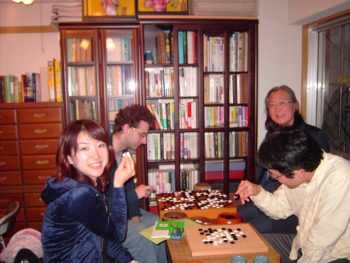
Chillin' at the Esperanto Go Club in Tokyo

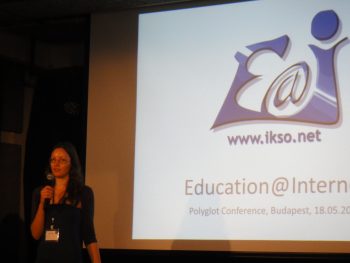
Toward the end of my work there, the Tokyo Esperanto Club asked me if I would like to come visit, all expenses paid, for ten days and give a lecture about the Esperanto Wikipedia. Would I? Oh yes! To this day, that was one of the best trips of my life. I also lectured at a few universities there, which professors translated into Japanese for the local students.

After I returned, my contract at the university ran out, and I got a job working at a social network in Berlin, due to meeting an investor in the company at an Esperanto New Years conference. Since then I’ve moved on to iPhone development, and now also work on the side as the Esperanto blogger for Transparent Language.

As I write this from my home in Berlin, I remember the countries I’ve visited because of Esperanto: Belgium, Brazil, Canada, Croatia, Czech Republic, France, Germany, Japan, Lithuania, Netherlands, Poland, Russia, Serbia, Slovenia, Spain, Sweden, Turkey and Ukraine. After staying in Taipei for a conference, I ended up staying with an Azerbaijani Esperanto speaker in the small city of Pingtung. The thing is, while these experiences sound incredible to people who don’t speak Esperanto, they are quite normal, but still awesome, for those who speak it well and use it to travel.

How has Esperanto changed your life? Feel free to comment below, read others’ experiences on Quora and add your experiences there.

How To Be a Good Pasporta Servo Guest

Posted on 10. Jun, 2011 by in Travel

Having travelled for six months through Brazil and Europe as well as frequently hosting Esperanto speakers in our apartment in Berlin, I’ve learned quite a lot about what makes a good guest. Here are some of my tips for keeping your host happy and making your stay more pleasant as you travel with Pasporta Servo.

Give details of your arrival and departure as soon as possible. We quite frequently get requests like, “We’re visiting Berlin next month, can you host us?” Alternatively, they want us to host them tomorrow. Umm, when are you coming? When are you leaving? We have quite a busy schedule, frequent guests and often travel ourselves, so providing all the details of your trip as early as possible will make it much easier for your host to plan their schedule. If your schedule changes, also let your host know that as early as possible.

Tell a bit about yourself. You read about us and our place in Pasporta Servo. How about you? Where are you from? How old are you? Why do you want to visit our city? Is there anything you want to do in particular while you’re here?

Pasporta Servo book

Give and get contact details for your host. Do you have a cell phone which works in your host’s country? Make sure your host knows your number and be sure to get theirs in case your train is delayed, etc. Also be sure to have your host’s address just in case, even if they plan to meet you at the train station or airport.

Bring a small gift, if possible. Of course, if you’re doing a whirlwind tour of Europe, you won’t always be able to provide a gift for each host, but it’s a nice token to show you care and appreciate the effort they take in making you part of their lives. If you can bring something unique to the area where you come from, even better!

Let your host know of your plans during your stay. Are you just sightseeing? Are you attending a conference? The more you can tell your host about what you will be doing will help them know if you’ll be around for lunch or dinner or an evening outing. Some guests are very low-maintenance… they just need a place to stay, while others would like more help in getting to know the city and would like to hang out and get to know their hosts more.

Take care of the bath towel the night before. Ideally you would bring your own towel, but in case you have to pack very lightly and have no space, make sure you discuss this with your host before you go to sleep. You may wake up before your host and want to shower before them.

Offer to wash some dishes. Especially on longer-term stays and when your host cooks for you, the dishes can pile up. A polite offer to wash dishes will often be very welcome. The workload for a host drops dramatically when you take care of just this one little detail for them.

Speak Esperanto. This is Pasporta Servo after all. Your hosts didn’t sign up to teach you their native language, so respect that and speak Esperanto with them. If you’re bringing a non-Esperanto friend with you, be sure to inform your hosts as early as possible, since it can be quite uncomfortable to have people speak an incomprehensible foreign language in their home. Speaking Esperanto with your travelling companion will make the atmosphere more pleasant for everyone.

Have fun! Travelling is a wonderful experience and it’s really nice to get to know other cultures and the people who live in them. Enjoy yourself and be sure to thank your host when you leave… maybe you’ll get the privilege of hosting them in the future!

Got a tip for travellers? Be sure to leave it in the comments below!

Esperanto Hospitality Network – Pasporta Servo

Posted on 29. Nov, 2010 by in Travel

Pasporta Servo book

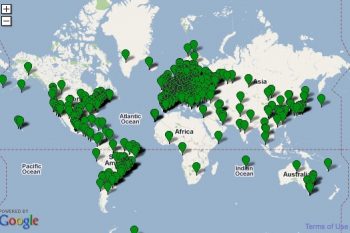
Want to travel the world, but don’t have much money? Would you rather get to know the locals instead of staying in a hotel? Enter Pasporta Servo (PS), a hospitality network with 1450 hosts in 91 countries. The only requirement: speak Esperanto.

I used PS while I was travelling through 14 countries in Europe for five months and always had an interesting experience. To summarize, I’d say there are two different stereotypical types of PS stays: with college students and families. With college students, you typically get a key, they might treat you to breakfast and then you’re pretty much on your own. With families, you’ll often feel like you’re part of the family during your stay, join in their meals, work around their schedule, etc.

I would say that staying with a college student tends to be more fun. You may be sleeping in a sleeping bag on the floor or on a couch, but you’ll probably have a good time. Many have very busy schedules, so you’ll likely get a key, so they don’t have to worry about letting you back in, etc. They’ll often treat you to breakfast, but note that this is completely not necessary according to the terms of the network. You might also be invited to join them for a pub or club in the evening to hang out with their friends! This is an ideal time to learn more about the people and the country while having a few drinks and maybe some dancing.

With a family you’re more likely to get your own room and also be invited to meals. With some families I was accepted very quickly and they made me feel like I was just another member of the family. I ate with them, walked the dog with them, went shopping, etc. It was definitely an interesting view into the everyday life of people in that country. Of course, a disadvantage is that they will generally want to know where you’re going and when you’re likely to come back, but it’s a small price to pay for such an interesting experience!

If you’re lucky, then wherever you’re staying, there might be a local Esperanto speaker who has the day free to show you around where the tourists don’t normally see. I think the most amazing story I’ve heard in this regard is of Jordon Kalilich’s trip to connect with his family heritage in Croatia. I don’t want to spoil it, but let’s just say it involved taking a ferry to a small town and getting to know some sheep. So, now it’s your turn! Where do you want to travel? Are there hosts there? I’d love to hear of your travel plans! If you’ve already travelled with Pasporta Servo, tell us about your adventures, just leave a comment below!