Archive by Author

How to use “comme” and “comment”

Posted on 16. Jul, 2012 by in Grammar

Comme and comment are two similar words but are used differently. Let’s learn today how to use one or the other.

Comme

1. Comme is used as a conjunction with the meaning of “as” and “since”.

Le téléphone a sonné juste comme j’entrais dans mon appartement. [The phone was ringing as I was entering my apartment.]
Comme elle n’est pas là, je vais le faire. [Since she's not here, I'm going to do it.]
Comme la voiture est en panne, il faut aller à pied. [As the car is broken, we have to go on foot.]

2. Comme also expresses comparison, “like”, “the same as”, “the way that”.

Je pense comme vous. [I think like you.]
Rapide comme l’éclair. [As fast as a lightning]
Raide comme la justice. [As strict as justice]
Tout s’est passé comme je l’avait prédit. [Everything happened as I had expected.]

3. Comme is used as an exclamative adverb or to express a certain quality.

Comme elle est belle! [How beautiful she is!]
Comme il fait chaud! [It is so hot!]
Comme il a changé! [He has changed so much!]

Il était comme fou. [He was acting crazy.]
Il est comme désorienté. [He seems confused.]

Comment

Comment means “how”.

Comment écrit-on votre nom? [How do you spell your name?]
Je me demande comment tu as pu faire. [I wonder how you did it.]
Comment partiras-tu, en voiture ou par le train? [How will you leave, by car or by train?]
Comment n’avez-vous pas compris que je plaisantais? [How could you not know I was joking?]

This is it for today! See you next time!

Want more free resources to learn French? Check out the other goodies we offer to help make your language learning efforts a daily habit.

How to say “I’m doing” in French

Posted on 13. Jul, 2012 by in Grammar

Salut! Comment ça va?

French doesn’t have a specific verb tense to say sentences like these:

What are you doing? –> I’m doing my homework.

What’s he doing? –> He’s cleaning his car.

We have two ways of saying this. The first one is to use the present tense:

Qu’est-ce que tu fais?
Je fais mes devoirs.

Qu’est-ce qu’il fait?
Il nettoie sa voiture.

Now when you also have the verb expression être en train de, which means to be in process of doing something. You use it when you want to insist on the ongoing nature of an activity. Here are some examples:

Je suis en train d‘étudier pour mon examen. [I'm studying for my test.]
Tu est en train de faire tes devoirs. [You are doing your homework.]
Il est en train de nettoyer sa voiture. [He is cleaning his car.]
Elle est en train de se maquiller. [She's putting makeup on.]
On est en train d‘attendre le bus. [We are waiting for the bus.]
Nous sommes en train de jouer au football. [We are playing football.]
Vous êtes en train de parler français. [You are speaking French.]
Ils sont en train de se préparer pour l’entrevue. [They are preparing for the interview.]

If you don’t want to emphasize the time nature of the activity and only express the activity itself you could say:

J’étudie pour mon examen. [I'm studying for my test.]
Tu fais tes devoirs. [You are doing your homework.]
Il nettoie sa voiture. [He is cleaning his car.]
Elle se maquille. [She's putting makeup on.]
On attend le bus. [We are waiting for the bus.]
Nous jouons au football. [We are playing football.]
Vous parlez français. [You are speaking French.]
Ils se préparent l’entrevue. [They are preparing for the interview.]

C’est tout pour aujourd’hui! On se voit!

Learning tip: Reading!

Posted on 06. Jul, 2012 by in Vocabulary

Many of you may frown upon the idea of reading so let me tell you a bit of my story. I started teaching at 17 and as a non-native teacher I decided to improve my English by reading and listening. Luckily I worked at a school that had a lot of books in English, by authors such as Stephen King and John Grisham. They were original books, not adaptations, so the vocabulary was not always easy.

I started borrowing these books and, as you can imagine, it took me a long time to read them. I used to underline the unknown words and write them down. The lists were long and I had to be very patient (so will you!) because learning vocabulary doesn’t happen overnight. One thing I noticed was that as I read on the lists were getting smaller and smaller because the words I had written down repeated themselves and I eventually learned them.

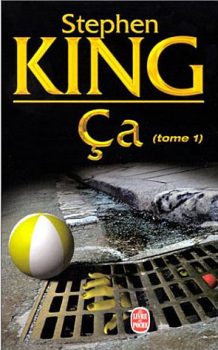
Again, this is something that takes time, dedication and lots of hard work but you know what? It pays off! So I decided to do the same with French. I bought some original French books and some translations of books by Stephen King so I could reread them in French. One of my favorites is IT (Ça, in French), so here’s the first two paragraphs of the book for you to start reading and learn some new vocabulary.

“La terreur, qui n’allait cesser qu’au bout de vingt-huit ans (mais a-t-elle vraiment cessé ?), s’incarna pour la première fois, à ma connaissance, dans un bateau en papier journal dévalant un caniveau gorgé d’eau de pluie.

L’esquif vacilla, gîta puis se redressa, plongea crânement dans de perfides tourbillons et descendit ainsi Witcham Street jusqu’au carrefour avec Jackson Streer. Tous les feux de signalisation étaient éteints, en cet après-midi de l’automne 1957, et pas une maison n’avait de lumière. Cela faisait une semaine qu’il pleuvait sans discontinuer et, depuis deux jours, le vent s’était mis de la partie. La plupart des quartiers de Derry se trouvaient toujours privés d’électricité.”

Have a great weekend!