Archive by Author

Olympic flame

Posted on 20. May, 2012 by in Culture

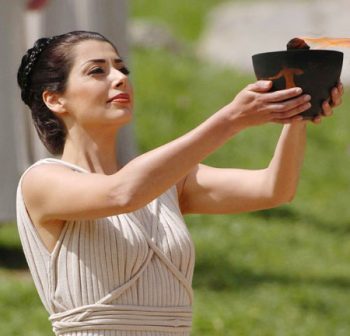
The Olympic flame (Ολυμπιακή φλόγα) is one of the most famous Olympic symbols (σύμβολο), commemorating the theft of fire from the Greek god Zeus (Δίας) by Prometheus (Προμηθέας). Its roots lie in Ancient Greece where a flame was kept throughout the Olympic Games.  Heralds (κήρυκες) were sending messengers (αγγελιοφόρους), wearing olive crowns, to announce the games and to declare peace across the nations and all competitors throughout the competition.  The fire was reintroduced at the1928 Olympics.

The idea for the modern torch relay (λαμπαδηδρομία) tradition is not as old as you may think.  It was introduced in 1936 Olympic Games when the flame carried by runners using a torch from Greece to Germany. The lit of the Olympic flame (αφή της ολυμπιακής φλόγας) takes part in the area of the sanctuary of Olympia, on the altars of Zeus and Hera (Ήρα), situated in front of their temples.

The fire is obtained from the sun’s rays with the use of a parabolic mirror during a traditional ceremony where the high priestess (πρωθιέρια) asks from the god of the sun Appollon (Απόλλωνας) to light up the fire. The flame represents piece, friendship and unity.

At the end of the ceremony the flame is passed to first torch speeder, while the first flame is kept in a special place for the next four years until the next Olympic Games. Over the last seventy years thousands of people have had the honor to carry the flame which has been transported in many different ways. It has travelled by car, bicycle, boat, plane, ski, wheel chairs, camels, horses and even underwater.

Finally, the last torch speeder brings the flame to the host city of the Olympic Games at an opening ceremony which marks the official start of the Olympic games.

It is considered a great honor to be the first or the last torch speeder.

YouTube Preview Image

ps: Sorry for the video but I couldn’t find a proper one in English :)

Greek Superstitions

Posted on 17. May, 2012 by in Uncategorized

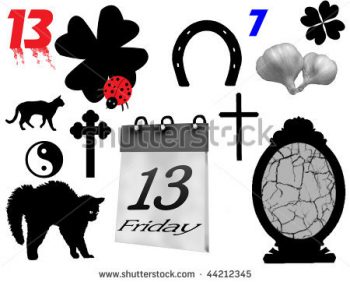
Like in every culture, Greek people have their own superstitions. Though, some of them are very similar and even identical to many cultures. Here are some of the most popular ones.

Sneezing (φτέρνισμα): means that someone is talking or thinking about you. You can ask someone to give you a 3 digit number. Count each digit together and then find the corresponding letter in the alphabet. This letter is supposed to be the initial of the person that is talking about you.

Mirror (καθρέπτης): If you break a mirror, you will have 7 years bad luck. Many also believe that if you look at the mirror after midnight, great evil will find you.

Rabbit foot (λαγοπόδαρο):  Brings good luck in general.

Stars (αστέρια): It’s bad luck to count the stars. But if you see a falling star, make a wish.

Scissors (ψαλίδι): if a pregnant sit on open scissors unintentionally, she will give birth to a boy. If you leave it open you will soon have an argument with somebody.

Salt (αλάτι): Makes unwelcome visitors to leave. All you need is to shoot a little behind theirback.

Garlic (σκόρδο):  A way to ward off the evil eye. You can find it sometimes hanging in a corner of some houses.

Black cat (μαύρη γάτα):  If you see a black cut means that bad luck is waiting for you for the rest of the day.

Ladybug (πασχαλίτσα): It is the opposite of the black cat. It will bring luck if it lands on you.

Ladder (σκάλα):  It will bring bad luck if you pass under it.

Wine (κρασί):  If you are not married and the wine finishes in own glass while serving, then you will have a good marriage.

Bread (ψωμί): You eat the corner of the bread in order to be loved by your wife’s mother.

Food (φαγητό): This is for the children to eat all of their food. If you not finish all your food, you leave some of your muscle power on the plate.

Nails (νύχια): It is bad to cut them at nights or on Friday

Dragees (κουφέτα): If are single person and you put the dragges from a wedding under your pillow before you sleep, you will dream the person that you will get married to.    

Dates (ημερομινίες): Most of you already know the Friday 13th. For us the unlucky days are Tuesday 13th and Friday 14th. In general the number 13 is considered unlucky in any case.

Mousaka

Posted on 13. May, 2012 by in Uncategorized

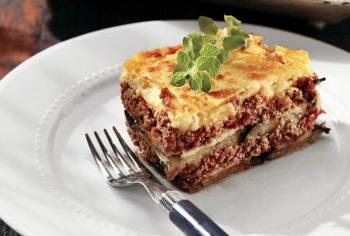
Are you hungry? Today with the help of my grandmother I will give you a recipe of Mousaka (Μουσακάς). This is one of the most known food we have and one of the “must eat” once you visit Greece. This food requires a lot of efforts and time to be cooked. So, here we are:


Ingredients (Yλικά) for 8-10 portions (size of the oven pan 25×35):

6 aubergines (μελιτζάνες)

Oil (λάδι) to fry the aubergines
700gr minced beef (κιμά μοσχαρίσιο)
1 big onion (κρεμμύδι) finely sliced
1 glass of white wine (λευκό κρασί), not retsina!
1 coffee cup olive oil (ελαιόλαδο)
1 big spoon tomato paste (πελτέ ντομάτας)
1 bay leaf (φύλλο δάφνης)
1 teaspoon cinnamon (κανέλα)
4  grains of allspice(μπαχάρι)
salt (αλάτι) and pepper(πιπέρι)

For the Bechamel Sauce (μπεσαμέλ):
3 big spoons fresh butter (βούτυρο)
4 big spoons flour (αλεύρι)
2 water glasses of milk (γάλα)
2 eggs (αβγά)
1 pinch of nutmeg (μοσχοκάρυδο)
1 tea cup grated Kasseri cheese  (κασσέρι)
salt and pepper


Method:

Remove the stems from the aubergines and cut lengthways into thick slices of 1 cm. Salt them and put them in a colander for ½ hour. Take them out, squeeze gently, rinse, and then squeeze them again.Fry them (or shallow-fry them) until they become pale golden on both sides. Afterwards, drain them on absorbent paper to remove the most of their oil

Prepare the minced meat. In a big pan, heat the olive oil and sautee the chopped onion until it looks glistening. Add the meat and sautee together, stirring, until the meat starts to change color. Add the white wine. Cook the mixture until the wine evaporates. Dissolve the tomato paste in some water and then add it into the meat.  Put the bay leaf, cinnamon, allspice, pepper and salt. Stir and cook until all liquid evaporate and minced meat is dried. Let it cool.

Prepare the sauce. Heat the fresh butter in a saucepan, add the flour and cook until it become darker  and add the hot milk while stirring continuously . Once the sauce thickens, remove from heat and add the nutmeg, a pinch of salt and plenty of pepper. Add the cheese and stir, then add the eggs and stir quickly until they are absorbed by the rest of the mixture. Let it wait.

Take a roasting container and put to the bottom create a layer with the slices of eggplant placing them very close without leaving any gaps. Pour over the meat and move it to go everywhere and then do a second layer with the remaining slices of the eggplant. Pour the Bechamel sauce and straighten it with a knife. Then you bake it in the oven for about 1 hour until a golden crust is formed on top. Before cutting into pieces the Moussaka let it sit for ½ hour.