Archive for March, 2012

Lá na nAmadán…na nGamal?…na nÓinseach?…na bPleidhcí?…na bPleotaí?

Posted on 30. Mar, 2012 by in Irish Language

(le Róislín)

We may be well accustomed to calling April 1stLá na nAmadán” in Irish, but couldn’t there be some other possibilities as well?  Irish has many words for “a fool,” so what would happen if we tried some of the others?  And, grammatically speaking, how do we work backwards from “fools” in the genitive plural to the nominative singular form, in other words, to the form you would use to say, “He is a fool” or “She is fool.”  Just before you duck, that is!

Let’s start with “amadán,” since it’s probably the most familiar.  First declension, masculine, eclipsis (urú) for the genitive plural (na n-amadán).  So reverse engineering it and including the definite article for good measure, we have: na n-amadán, na hamadáin, an amadáin (cóta an amadáin), and an t-amadán Is amadán é.  Is é an t-amadán ar an gcnoc é (gotta find a definite article example somewhere to work that “t” prefix in, brón orm, a Bheatles!)

Although “gamail” (fools) are not honored in the name of the holiday, what would happen if they were (na ngamal, of the fools)?  First declension, masculine, eclipsis in the genitive plural: na ngamal, na gamail, an ghamail (hata an ghamail), an gamal.  The nominative singular (aka common) form is “gamal.”  Is gamal é.  Cá as an gamal a bhí ar an gcnoc?

I’ll jump now to “pleidhce” and “pleota,” saving “óinseach” for last, because of the extra discussion involved in discussing male and female fools.

Na bPleidhcí. Got the routine?  Fourth declension, masculine, eclipsis and “-í” ending for genitive plural: na bpleidhcí, na pleidhcí, an phleidhce (caipín an phleidhce), an pleidhce.  So “pleidhce” is the basic form.  An pleidhce a bhí ar an gcnoc nó amadán (Is it a “pleidhce” or an “amadán” that was on the hill?). Nó pleidhce amadáin (or a “silly fool”)?  And, for an example with the definite article: “Féach an pleidhce amach romhainn,” translated by Learaí na Láibe (hey, there’s mud, láib/láibe, again – shoulda known, it’s the Mudcat site!) as “Look at the messer in front of us) from the “Langer” song (http://www.mudcat.org/detail.cfm?messages__Message_ID=1218633).

Na bPleotaí.  Fourth declension, masculine.  Undo the eclipsis,  Nominative plural is “na pleotaí.”  Genitive singular has lenition, as in  “Beany Copter an phleota.”  Nominative singular: an pleota.  Is pleota é.  And with “an” (the), here’s a sample: “Agus tá na gnáthfhadhbanna fós á ciapadh: an Pleota sa bhaile agus Bean Uí Bhatamór ar scoil” (from a “blurba” for the children’s book “Cailitín” by Caitríona Ní Mhurchú, http://www.siopaancarn.com/irishchildrensbooksnsrang67?pm2_a=show&pm2_id=389).  Further description tells us that “an Pleota” is the main character’s “silly brother.”  Ní nach ionadh!

And finally we have “na n-óinseach” (of the female fools).  Second declension, feminine, eclipsis (of the vowel) in the genitive plural.  Working backwards, we get: na n-óinseach, na hóinseacha, na hóinsí (fear na hóinsí), an óinseach.  Is óinseach í.  An raibh an óinseach ó Charraig na nÓinseach ag caint leis an amadán a bhí ar an gcnoc (Was the female fool from “the Rock of the Female Fools” talking with the male fool that was on the hill)?  You might be wondering, where’s that “t-“ for “amadán”?  Gone, because now “amadán” is in a prepositional phrase and the rules change.  Where’s Carraig na nÓinseach, for that matter?  Tá sí i gContae Phort Láirge, where it is also known as “Carrignanonshagh.”

By the way, I checked “Lá na nÓinseach” online to see if it has been proposed, to give us “equal opportunity” fooldom, and found cúpla sampla, which was about what I anticipated.  Most were mixed with “na nAmadán” as the “she/he” approach sometimes recommended for English usage:

Johnny (on www.politics.ie): “Nárbh fhearr dúinn “Lá na n-Amadán is na n-Óinseach” a thabhairt ar an lá áirithe seo sa lá atá inniu ann- ceartas polaitiúil, ionadaíocht 50/50, 7rl, 7rl, 7rl….. :wink:

Agus freagra do Johnny ó “Mhíshásta”:

Míshásta: “Níl aon ghá le ‘La na nÓinseach’ mar léiríonn na hÓinsigh [sic] a nÓinseachas tríd an mbliain go léir.  Anois, ní dóigh liom go bhfuil an ráiteas san an-PC ach an oiread. :wink:

And “Gael” also answered Johnny, perhaps a little more diplomatically or, at least, self-deprecatingly:

Gael: “B’fhéidir gur cheart, ach tá mise ró-leisciúil chun é sin go léir a scríobh. :P

All of the above from: http://www.politics.ie/forum/gaeilge/6158-mcdowell-chun-eiri.html (3-6 Aibreán, 2006)

And also equal opportunity:

Austin Stacks GAA Hurling & Football Club, Ladies Club News, 26ú Márta ‘012 (as they write it themselves):

“Our next game is away to Na Gaeil on April 1st…Lá na nAmadán is na nÓinseach” (http://www.austinstacks.ie)

So bottom line, the holiday uses “na n-amadán,” but there are many other ways to say “fool” in Irish.  Putting them in the genitive plural (to say “of the fools”) requires various amounts of mutation and changes to the ending.  The process is actually fairly predictable, once you get the declensions straight.  Which suggests that soon might be a good time to review the declension series introduced some time ago, starting with http://blogs.transparent.com/irish/an-chead-diochlaonadh-newts-frogs-and-for-easter-baskets/ (April 8, 2011).  So after a little more pleidhcíocht, pleotaíocht, and maybe even mental piollardaíocht, we’ll get back to the nitty-gritty and decline some nouns.  Go dtí sin, SGF, Róislín

P.S. And btw, a final word of warning re: Google translate (for all its sometime merits):

All Fools’ Day came out as “go léir [+] a amadáin [+] lá”.

April Fools’ Day (plural) came out as “fools [+] Aibreán [+] lá” (that’s right, it didn’t translate “fools” – and there are so many choices!)

April Fool’s Day (singular) came out as “Aibreán [+] amadán [+]  lá”

April Fools Day with no apostrophe at all (grrr!) came out as “Aibreán [+] amadáin [+]  lá”

And a deliberately mistyped phrase, “April Fool’s’ Day” came out as “Aibreán [+] amadán [+] ar [+] “ ‘lá ” (yes, it put an apostrophe before the word “lá” – hunh??).

As you may have guessed, I added the plus signs, to break up the flow, so the non-grammatical Irish doesn’t get read as a legitimate phrase.

Cineálacha Gloiní: Types of Glasses

Posted on 26. Mar, 2012 by in Irish Language

(le Róislín)

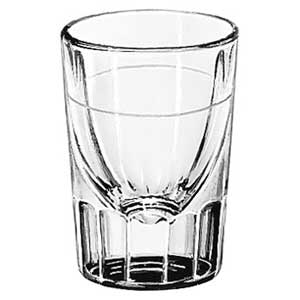
Before taking the mud-in-your-eye detour of the last blog (http://blogs.transparent.com/irish/maidir-le-mud-muck-mire-etc/), we were talking about drinking shots and what the word for “shot glass” would be in Irish.  It also got me thinking, why is “shot glass” so uncommon in Irish language resources, when the typical contents of said glasses are such a delicacy to the Irish palate.

So Googling around, I suppose I discovered the answer, but, as usual, fáilte roimh thuilleadh eolais ó shaineolaithe ar bith sa réimse seo (saineolaí earraí gloine?).  Now I’m wondering why I didn’t put two and two together immediately, but, hey, it gave me another good excuse for a romp through na foclóirí and a chance to rack my brain for any stray references I might remember to the best size container for drinking shots “neat.”

Before we get into the actual shot glass scenario, though, let’s just look at the word for “glass” itself.  As with English, “glass” can either be the material or a small container made of the material, for drinking.  The basic word is “gloine” [GLIN-yuh], with the following forms:

an ghloine (with lenition, since the word is normally considered feminine).  Some dialects and speakers, though, treat this word as masculine, a situation that pertains to a small number of other nouns (mar shampla “taobh”).

na gloine (losing the lenition), of the glass: dath na gloine (the color of the glass)

na gloiní, the glasses.  I’d say this would almost always pertain to drinking glasses, but I suppose it could pertain to cineálacha gloine (types of glass), in specialized usage.  That would parallel a word like “bread,” normally non-countable.  Usually I’d say “loaves of bread” but I could see a situation, if I were working in a bakery or grocery store, where I might say “Are all the breads shelved?”  But like I said, I’d normally use “na gloiní” in the context of drinking and a word like “cineálacha” or “saghasanna” if I were differentiating types of glass.  For eyeglasses, the usual word is “spéaclaí,” but “gloiní súl” (lit. glasses of eyes) may also be used.

na ngloiní, of the glasses: cruthanna na ngloiní (the shapes of the glasses)

Here are a few types of specialized glasses (and believe me, I can’t find all the ones I’m looking for, like highball, lowball, and flute).  But here are a few I’ve seen used:

fíonghloine, a wine glass

gloine choise, a goblet, lit. a foot(-ed) glass

gloine mhanglaim [GLIN-yuh WAHNG-lim], a cocktail glass, with “manglam” (a cocktail) lenited and in the genitive, since it’s attributive (describing the glass).

uisceghloine, a water glass

One example without the actual “glass” element is “timbléar” (a tumbler).  And another interesting “non-glass” word for a glass, specifically a tall one, is a “schooner” (caveat: this can also be “a jug/pitcher,” at least in Australia).  The Irish for this (size unclear to me) is simply “scúnar,” the same as the ship (scúnar).  For the full skinny on the schooner, I’d suggest http://www.brewsnews.com.au/2011/01/schooner-wars/ because the wealth of variation, down to the milliliters and geographic regions in Australia, is way too much for one blog, Most of the mionrudaí wouldn’t pertain specifically to the Irish language, anyway, although it’s always interesting to discuss beer-drinking in Irish.  Noteworthy, though, that “scúnar” can be used in this way.  But I can’t say I’ve heard this much, in Irish or in English!

Anyway, getting back to shot glasses, I think the reason I kept coming up dry looking for this word or trying to recall it in Irish has to do with its relatively recent origins, probably American, which I’ll summarize here as briefly as possible.  These interpretations are straight from Wikipedia, so there may be conflicting opinions.  It’s a bit like searching for the origin of the word “OK.”  Here goes:

1) the saloons of the Old West, cowboys trading a cartridge for a shot of alcohol

2) the small glass used at the dinner table to hold leftover lead shot found in game

3) the lead shot used in glass quill holders; the loose shot kept the quill upright

4) small glasses known as “cannons” or “firing glasses,” used in some fraternal organizations, which have thick bases since they are slammed down on the table

5) the glassworks factory of Friedrich Otto Schott in the 19th century

Do roghasa! (your choice!)

But where does this leave us?  If the word “shot glass” isn’t so traditional in Ireland, what is used for small servings?  I went straight to the horse’s mouth and checked out some recipes for drinks on the www.jamesonwhiskey.com website and found that “shot-sized” drinks are served in “rocks glasses.”  Bhuel, I can’t find specific Irish for a “rocks glass” either, so will probably have to settle for “timbléar fuisce” (a whiskey tumbler) and let the topic rest.  Or else find an Irish-speaking mixologist.  Maybe the moral of the story is that there isn’t much doubt as to how one serves uisce beatha (aka fuisce) in Irish.  I suppose “gloine bheag” will do.  And the bartender probably knows it’s “beag” as well, so there probably isn’t much that needs to be said, other than “gloine uisce beatha, le do thoil.”  Or better yet, an t-ainm branda is fearr leat.  And no, that’s not from “branda” (brandy) but from “branda” (a brand).  Slán agus sláinte — Róislín

Maidir le “Mud” (Muck, Mire, etc.)

Posted on 23. Mar, 2012 by in Irish Language

(le Róislín)

Before getting back to the question of the shot glass vs. the “timbléar fuisce,” I thought I’d look a little further into the words for mud, mire, muck and the like, as mentioned in the last blog.  Whether you decide to use any of these for an cuspa sláinte traidisiúnta Béarla (Here’s mud in your eye!) will remain “suas leat.”   Here’s the recap, with a little more background, and a few more entries.

Seo pictiúr a fuair mé ag http://www.flickr.com/photos/clearly ambiguous/1280631800/lightbox/. Deir an grianghrafadóir, Scott Robinson: "No mud in my eyes, but I'm still getting it out of my ears"

Abar, mud, boggy ground

Bogach (variation “boglach”), soft boggy ground, mire (cf. “bog” soft).  The most generic word for a bog, though, is “portach,” which will no doubt be ábhar blag eile, lá eile (Beidh lá eile ag an bportach!)

Clábar, mud, mire, muck, dirt, filth

Dóib, sticky mud, daub (as in wattle and daub), plaster-clay

Draoib (variation: gríb), mud, mire, scum

Greallach, mire, or more specifically, ground trodden into mire (!), slush, or puddly ground

Lábán, mud, mire, a mud-flat, also, soft roe

Láib (variation: gláib), mud, mire, mould/mold (loose friable earth)

Lathach, mud, mire.  Agus anns a’ Ghàidhlig: puddle, swampy place, soft clay on the seashore

Moirt (variation: muirt), mud, muck, heavy clay, sediment, dregs

Pluda: puddle, mud, thin mud (!), a pool of standing water.  Also, pludach

Puiteach, mud, mire, muck, boggy ground, soft boggy matter, a marshy spot, or, presumably in a specific context, a soft, well-ripened blackberry

Salachar, mire, also simply, dirt, filth, ordure, etc.

Slab or slaba [pronounced with an “ah” sound, not like English “slab” (of marble, etc.)], mud, mud on the seashore, slob as a type of mud, ooze, mire; also a “slovenly person” or “slob.  So, an Irish origin for “a slob”!  But then there’s also the Danish “slab” (mire) and Icelandic “slabb” (slush).  Of course, those could all be related, given the history.  And somehow, this must also account for “slob ice” (slushy or sludgy ice floating in the sea).

Hmm, seeing the “slob/ooze/mud” connection sends me back on the hunt for more related words, or more meanings per word.  So I see that clábar and puiteach can also mean “slob” and, just to round things out, they can also mean “slop” (as opposed to “slops”). Now, for the exact quality of láib that disqualifies it from meaning “slob” but allows it to mean “slop,” I’m really not sure.  Maybe it’s just a lexicographical quirk.

In real life, “láib” and “clábar” are the words out of all of these that I’ve heard and used most.  I’m not sure I’ve had much reason to discuss seashore mud or the friability of earth, but there’s always a first time.  Cad fúibhse?  Ábhar cainte daoibhse iad seo? 

One word that should provide a backdrop to all of this, though not necessarily muddy, mucky, or miry as such, is “ithir” (soil, earth).  This gives some more compound words pertaining to soil, like “ithirmhapa” ([IH-hirzh-WAH-puh], soil map) and “ithirthorthúlacht” ([IH-hirzh-HOR-hoo-lukht], soil fertility).

And that has led me to note two more words for “soil scientist,” “ithireolaí” and “eolaí ithreach,” besides the one mentioned in the previous blog (peideolaí).  A quick comparison to “peideolaí” online, using amais Google:  ithireolaí (0 amas), peideolaí (2 amas, both from the most recent blog in this series!), and eolaí ithreach (2 amas, both referring to Dr. David Wall in the publication Teagasc: Agricultural and Food Development Authority (www.teagasc.ie).  “Teagasc” means “teaching” and this organization has a leagan Gaeilge for a good chunk of its web site <bualadh bos!> and the nasc for that is, logically enough, http://www.teagasc.ie/gaeilge/.  So, while a cuardach Google is never bun agus barr an scéil in matters like this, it is one perspective.  Here it seems to tell us that soil science is not being widely discussed in Irish online, at least not in a way that a)  is easily Googleable and b) makes use of the occupational terms.  Sin mar atá.

I’ve only ever met one soil scientist, fód, úúps, fad m’eolais, and she was Welsh, not Irish, otherwise I’d check with her on some of these matters.  I’m sure she’d be an expert on the equivalent Welsh terminology.  I suppose there must be some technical distinctions between boggy ground (decaying vegetable matter, on its way to becoming gual) and regular mud (earth and water).  “Mire” I see defined as “wet swampy ground” and also as “deep mud.”  And what exactly is “muck”?  One definition I see puts it concisely as “dung in a moist state” (!) and defines it as “aoileach” in Irish, accurately enough, but that wouldn’t really seem to account for the frequent overlap with “mud” and “mire.”  Discussing “aoileach” would certainly take at least another full blag, so that’s a project for another day.  At any rate, there seems to be a lot of overlap in the Irish terms, which is often the case, and context is usually the best way to sort out the differences, if indeed they can be sorted out.  Or, if you can find some ithireolaithe (aka eolaithe ithreach or peideolaithe) who also speak Irish, cuir ceist orthu.

Most related terms having to do with mud are based on “láib,” such as, bád láibe, mud-barge; blár láibe, mud-flat; folcadh láibe, mud-bath; oitir láibe, a mud-bank; and paca láibe, mud-pack

A few miscellaneous ones not based on “láib”: pludgharda, a mud-guard; bothán dóibe, a mud hut or cabin (as opposed to an adobe hut/cabin, which would be “bothán adóibe”); and ráca clábair, muck-rake (the real physical object, not necessarily the abstract usage).

And then there’s “mudlark,” an English “mud” word that doesn’t involve mud at all in the Irish.  There could be implied mud, since it refers to streetlife, probably before paving and sewers, but not to the extreme that you might find in the countryside.  So the Irish for a “mudlark” is “smugachán sráide,” lit. a snotty-nosed child of the street.

As for slinging the figurative mud, there are so many phrases for that that I’ll wait for another blog to discuss that topic.

So that’s it for now for “mud” and its cohorts.  Maybe sometime in the future, I’ll do a “Maidir le “Mudd” blog, as an entrée into a further discussion of RéaltAistear (Star Trek) in Irish.  But for now, Harcourt Fenton Mudd agus a phláinéad will have to wait, while we keep our feet firmly planted on the talamh, fód, or ithir.  Hopefully said cosa will not be báite sa láib.

Did I say that’d be it for now?  Well, I just discovered that 29 Mí an Mheithimh will be the second annual International Mud Day, so perhaps we’ll revisit the topic at that time.  As far as I can tell, the event was initiated by the Nature Action Collaborative for Children (http://worldforumfoundation.org/wf/wp/initiatives/nature-action-collaborative-for-children/international-mud-day-2011/mud-day-logo/).  Meanwhile, up next, cineálacha gloiní i nGaeilge, an timbléar fuisce ina measc.  SGF, Róislín