Archive for August, 2009

La storia di un’autovelox

Posted on 29. Aug, 2009 by in Culture, Italian Language

A few blogs ago I wrote about the tough new laws which are being applied to cyclists here in Italia despite the continuing infringements committed by the idiosyncratic ‘Italian Driver’: Ancora una nuova legge da dimenticare

As a ‘coda’ (sequel), I thought you might enjoy the following article which I read a few days ago in Il Corriere della Sera. If you can’t manage to read it, don’t worry because I’ve translated it for you underneath.

FIUMICINO – Per evitare le multe prendono a picconate l’autovelox: denunciati tre amici. Stanchi di ricevere multe per eccesso di velocità, decidono di smontare l’autovelox a colpi di piccone. Forse ispirati da qualche pellicola, martedì pomeriggio tre amici (di 25, 31 e 32 anni) hanno pensato di danneggiare uno degli impianti per la rilevazione della velocità a Fiumicino, comune sul litorale alle porte di Roma.

SOSPESI A QUATTRO METRI DI ALTEZZA – I tre stavano cercando di smontare l’autovelox di via di Coccia di Morto, ma sono stati sorpresi dagli agenti della polizia che li ha trovati «al lavoro» muniti di piccone. Arrampicati sul palo di sostegno, stavano cercando di danneggiare il dispositivo ottico dell’impianto, posizionato a ben 4 metri da terra. I tre italiani (due dei quali residenti a Fiumicino e uno a Pomezia) sono stati denunciati in stato di libertà per danneggiamento aggravato. Il piccone utilizzato per commettere il reato è stato posto sotto sequestro dai poliziotti.


FIUMICINO – In order to avoid fines they assault the speed camera with a pickaxe: three friends charged. Tired of getting fined for breaking the speed limit, they decided to ‘dismantle’ the speed camera by hitting it with a pickaxe. On Tuesday afternoon, possibly inspired by a film, three friends (25, 31 and 32 years old) decided to damage one of the systems used to do speed checks in Fiumicino, a town on the coast close to Rome.

SUSPENDED FOUR METERS UP IN THE AIR – The three were trying to dismantle the speed camera in Coccia di Morto street, but they were taken by surprise by the police who found them ‘at work’ armed with a pickaxe. Having climbed up the supporting pole, they were trying to damage the optical mechanism of the system, positioned a good four meters above ground level. The three Italians (two of whom are resident in Fiumicino and one in Pomezia) have been charged with causing damage under aggravating circumstances but have not been taken into custody. The pickaxe used to commit the crime has been seized by the police.

Verbs followed by the preposition ‘Di’

Posted on 26. Aug, 2009 by in Grammar

At the end of my previous article ‘Tricky little words: ‘Ne’’ I promised you a list of common verbs that are normally followed by the preposition di, and which can be substituted by the particella pronominale ‘ne’. Several of the verbs in this list are reflexive, therefore when using the ‘ne’ the reflexive pronoun goes first and should be changed to me (myself), te (yourself, friendly) se (himself, herself, yourself polite), ce (ourselves), ve (yourselves), se (themselves), e.g. Laura: Hai comprato il latte? Bruno: Scusa, me ne sono dimenticato (Laura: Have you bought the milk? Bruno: Sorry, I forgot it). Those of you who use the ‘byki’ software can use the following to make a ‘byki list’


Accorgersi di – to notice

Avere bisogno di – to need

Avere paura di – to be afraid of

Dimenticarsi di – to forget

Innamorarsi di – to fall in love with

Interessarsi di – to be interested in

Lamentarsi di – to complain about

Occuparsi di – to deal with / to look after

Pentirsi di – to regret

Preoccuparsi di – to worry about

Rendersi conto di – to realize

Ricordarsi di – to remember

Ridere di – to laugh at

Soffrire di – to suffer from

Stancarsi di – to be tired of

Stufarsi di – to be fed up with

Vantarsi di – to boast about

Vergognarsi di – to be ashamed of


Tricky little words: “Ne”

Posted on 23. Aug, 2009 by in Grammar

In my previous ‘Tricky Little Words’ article I dealt with the dreaded ‘ci’. Now it’s time to get to grips with that other ubiquitous two letter word that can be such a nightmare for learners of Italian: ne! Firstly though I want to clarify the distinction between the congiunzione ‘nè … nè’ (note the accent on ) which means ‘neither … nor’, and the particella pronominale ‘ne’ without an accent. It is the latter of these two which we’re going to look at in this article.


The first ne that a student of Italian would normally encounter is the so called particella partitiva which is used when talking about the quantity of something which has already been mentioned in the conversation, and which means “of it” or “of them”. Sometimes we express the quantity ‘of it’ / ‘of them’ with a numeral in the following way: Mario: Quanti caffè bevi al giorno? Carlo: Di solito ne bevo tre (Mario: How many coffees do you drink a day? Carlo: I usually drink three of them), or Turista: Scusi, c’è un bar qui vicino? Passante: Sì, ce n’è uno all’angolo della piazza (Tourist: Excuse me, is there a bar near here? Passerby: Yes, there is one of them on the corner of the square)

Alternatively you can use an indefinite adjective/adverb without specifying the quantity. For example: Ho moltissimi pomodori. Ne vuoi qualcuno? (I’ve got lots of tomatoes, would you like some of them?), or Giovanna: Abbiamo il pane? Mario: Sì, ma ce n’è poco (Giovanna: Have we got any bread? Mario: Yes, but there isn’t much of it).

N.B. In English the particella partitiva ‘of it’ / ‘of them’ is often not stated, e.g. ‘I’ve got lots of tomatoes, would you like some?’ in Italian however the ne should always be included.


Ne becomes a bit more complicated when it substitutes a noun or a pronoun which is preceded by the preposition di (of / about), or di combined with the definite article, i.e. del, dello, della, dell’, dei, degli, delle, (of the / about the). For example: Maria è partita, ne sento molto la mancanza (Maria has gone, I really miss her). In this example the ne substitutes di lei (of her) because in Italian we say ‘sentire la mancanza di qualcuno / qualcosa’ (to feel the lack of someone / something). Similarly, Mario: Ciao Giovanni, devo parlarti di una cosa importante. Giovanni: Va bene, ne parliamo dopo la riunione (Mario: Hi Giovanni! I need to talk to you about something important. Giovanni: Okay! We’ll talk about it after the meeting).


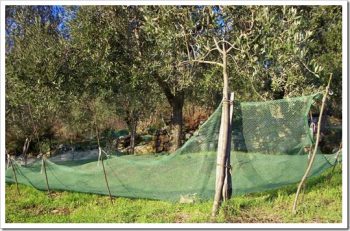
Ne can also substitute a noun or a pronoun preceded by the preposition da (from), or da combined with the definite article, i.e. dal, dallo, dalla, dall’, dai, dagli, dalle, (from the). For example: Luca è andato al bar e ne è uscito dopo mezz’ora (Luca went to the bar and left after half an hour). In this example the ‘ne’ substitutes ‘dal bar’ (from the bar). Here’s another example: Quest’anno abbiamo raccolto tante olive e ne abbiamo estratto un buonissimo olio (This year we picked loads of olives, and we extracted a really good oil from them). In this example the ne substitutes ‘dalle olive’ (from the olives).


As with ‘ci’ there are also some idiomatic verbs which have ‘ne’ built into them. Here are some examples using the most common ones:

valerne la pena (to be worth it), e.g. ci è voluto molto tempo, ma n’è valsa la pena (it took a long time, but it was worth it)

non poterne più (to reach one’s limit), e.g. che caldo, non ne posso più (it’s so hot, I can’t stand it any longer);

farne a meno (to do without something), e.g. al mattino ho bisogno di caffeina, non ne posso fare a meno (in the morning I need caffeine, I can’t do without it);

combinarne di tutti i colori (to get up to all sorts of mischief), e.g. è un bambino molto vivace che ne combina di tutti i colori (he is a lively child who gets up to all sorts of mischief).


Finally, there are several verbs which describe movement or state which incorporate ‘ne’ in their reflexive form. This makes the verb more emphatic than its simpler form, but other than that the ne doesn’t seem to serve any particular purpose apart from confusing the unfortunate learner of Italian who tries to decipher this complicated construction. The most common verbs are venirsene from venire (to come), starsene from stare (to stay), partirsene from partire (to leave), rimanersene from rimanere (to remain, to stay), and andarsene from andare (to go), e.g. Luca se n’è stato tutto il giorno a letto (Luca stayed all day in bed), or adesso me ne vado (I’m leaving now).

In my next blog I’ll give you a list of verbs that are normally followed by the preposition di, and which can therefore be substituted by ‘ne’.

Alla prossima volta!