Archive for June, 2011

Hey Fox!

Posted on 30. Jun, 2011 by in Korean Language

There is a very well known Korean children’s song that is called 여우야 여우야. The song title roughly translates to “Hey Fox, Hey Fox”. It’s a cute little song about asking a fox what he’s doing. What the song does is teach children that the three basic motions that are essensial to carry on in life are sleeping, being hygienic and eating. The interesting part of the song is that there’s a line where they ask whether the frog is alive or dead. The frog is alive, which implies that the fox didn’t get to eat. My guess is that they didn’t want to scare the kids by talking about survival in the wild and predator/prey relations. Before I present the song I just want to point out that there will be a couple of lines in the song that have a phrase before the tilde (~). That’s the part of the responder to the original question. The phrase that comes after the tilde will be the commentary of the questioner. So for example the part that says 잠잔다, which is before the tilde, is the response to the question 여우야 여우야. The part that says 잠꾸러기 is the commentary of the questioner, which in this case happens to be “[you] sleepyhead”.

YouTube Preview Image

여우야, 여우야 뭐하니 (yuhooya yuhooya mohani)

Hey fox, hey fox what are you doing?

잠잔다~ 잠꾸러기 (jamjanda~ jamgooruhgi)

I’m sleeping~ sleepyhead

여우야, 여우야 뭐하니 (yuhooya yuhooya mohani)

Hey fox, hey fox what are you doing?

세수한다~ 멋쟁이 (sehsoohanda~ mutjengi)

I’m washing [my face]~ Cool guy/dandy guy

여우야, 여우야 뭐하니(yuhooya yuhooya mohani)

Hey fox, hey fox what are you doing?

밥먹는다~ 무슨반찬~ 개구리 반찬 (bapmuhknunda~ moosunbanchan~ gehgoori banchan)

I’m eating~ What’s the side dish?~ frog side dish

죽었니, 살았니 살았다~~ (jookuhtni, saratni saratda)

Is it dead, alive; It’s alive

여우야, 여우야 뭐하니 (yuhooya yuhooya mohani)

Hey fox, hey fox what are you doing?

잠잔다~ 잠꾸러기 (jamjanda~ jamgooruhgi)

I’m sleeping~ sleepyhead

여우야, 여우야 뭐하니 (yuhooya yuhooya mohani)

Hey fox, hey fox what are you doing?

세수한다~ 멋쟁이 (sehsoohanda~ mutjengi)

I’m washing [my face]~ Cool guy/dandy guy

여우야, 여우야 뭐하니(yuhooya yuhooya mohani)

Hey fox, hey fox what are you doing?

밥먹는다~ 무슨반찬~ 개구리 반찬 (bapmuhknunda~ moosunbanchan~ gehgoori banchan)

I’m eating~ What’s the side dish?~ frog side dish

죽었니, 살았니 살았다~~ (jookuhtni, saratni saratda)

Is it dead, alive; It’s alive


South Korean Towers

Posted on 27. Jun, 2011 by in Culture, Geography

Some of the best places to see Korea from up high are from an observation tower. One of the best observation towers in South Korea is Gyeongju Tower (경주타워). Gyeongju Tower is located in Gyeongju City (경주시) in North Gyeongsang Province (경상북도). It is eighty two meters high and was built as part of an Expo held at Gyeongju in 2007. The center of the tower where it’s bare, is supposed to be an outline of a Korean pagoda.


The Busan Tower (부산타워) is located in Joong District (중구) in the city of Busan (부산). The Busan Tower is one of the older observation towers in South Korea and it has towered over the area since nineteen seventy-three. The Busan Tower is one of the special landmarks of Busan. It’s especially a great date spot in the evenings when the Tower is lighted up for all to see. It’s also a favorite photo spot where everyone wants to take a photo of themselves against the backdrop of the Tower.


N Seoul Tower (엔 서울타워) is in Seoul (서울) and is a major landmark in Seoul. The Tower rests on Namsan Mountain (남산), which means that in order to get to the Tower, a cable car is needed to reach the Tower. The Tower is about two hundred and thirty seven meters high. From the top of the tower, you can see almost the whole of Seoul below. It’s a great place to take pictures of the city of Seoul, especially at night when the City is glowing with bright lights.


The Hanbit Tower (한빛탑) was built for the Daejeon Expo in 1993 (대전 엑스포 ‘93) and can be found in the city of Daejeon. The design of Hanbit Tower was inspired by the architecture of traditional Korean pagodas. When the Hanbit Tower was first revealed, it was supposed to be a symbol of Korea’s past and future melded into one. Today, the Hanbit Tower is still visited by tourists who want to see the entire landscape of Daejeon from up top.


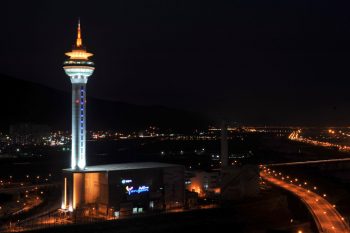
Yangsan Tower (양신타워) is located in the city of Yangsan (양산) in Gyeongsangnam Province (경상남도). Like the other towers in South Korea, Yangsan Tower is a symbol of the community’s hopes and future. Yangsan Tower in particular represents the technological innovation of South Korea, and also benefits in highlighting the tourism of the local area. The Yangsan Tower is basically like a modern day giant torch that lights up the city below.


Hyanggyo

Posted on 24. Jun, 2011 by in Culture

Before modern public schools, Korean public schools were called Hyanggyo (향교). The Hyanggyo were first started in the Goryeo Period (918-1392) and ended sometime in the Joseon Period (1392-1910). While the Hyanggyo fell into disuse, the Seowon (서원) faired much better than the Hyanggyo. The Seowons were privately run schools for the sons of the elite. Here is a previous article about it: All over Korea you can still see various Hyanggyo, some of which are still being used for educational purposes.

The Yangyang Hyanggyo (양양 향교) has been dubbed as the 105th treasure of Gangwon Province (강원도). If you watch the video you’ll see a gate in front of the Hyanggyo. This gate was called the Hongsalmun (홍살문). The hongsalmun indicated that the person was about to enter an important site. Towards the top center of the hongsalmun is the image of the taeguk (태극), which can still be seen on the Korean flag. The taeguk is a circle with a ying and yang symbol.

In the old days the way to move up in society was to get a good education. The Pyungchang Hyanggyo (평창 향교) is one good example of a public school that mostly the sons of the elite attended. Sometimes the illegitimate sons of powerful men attended these schools through political connections. In some ways the Hyanggyo were cram schools where students were taught subjects that would be in the national civil service examination. These examinations were called Gwageo (과거).

The Goheung Hyanggyo (고흥 향교) is still in use today. The lecture hall of Goheung Hyanggyo is still used to teach interested participants about Confucianism and the subjects that were tested on the Gwageo. There is a ritual hall at Goheung Hyanggyo called the Myeongnyundang (명년당). Every month students make ritual offerings in the ritual hall called the Daeseongjeon (대성전). Keeping up with these rituals is a way for the students to keep Korea’s past alive and relevant.