Archive for November, 2008

Andrzejki – The Night Before St. Andrew’s Day

Posted on 29. Nov, 2008 by in Culture

One of my friends asked me if I knew any fortune-telling games for Andrzejki and my answer was “What on earth are you talking about?” Actually, it was much more to the point than that, but since this is a PG blog, I will refrain from quoting directly.

And she said, “You know, hot wax and all that…” And then I finally remembered. Good grief, I must have been like 6 years old when I tried that last. And even then, the only reason I remembered it at all was that the hot wax spilled on my hand and I got blisters.

You see, in Poland the night before St. Andrew’s Day (Andrzejki) is an occasion for parties, celebrations, drinking and eating and yes, even fortune-telling. And since St. Andrew’s Day comes on November 30th, that means that Polish Andrzejki is celebrated tonight, on November 29th.

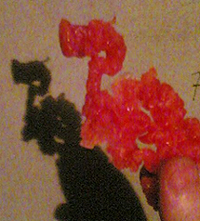
One of the most popular fortune-telling games for Andrzejki is the already mentioned hot wax. It goes like this: get a candle and melt it until you get nice, hot, pourable wax. Prepare a dish of cold water. Get a key, preferably a key with a rather large hole. Stick the key into the hand of a person (normally a woman, I’ve never heard of guys doing this) who wants to know her future and steadily pour the wax into the water through the hole in the key. See what I mean about a big hole? Otherwise the participant will end up with painful blisters.

The wax will float and cool and when it’s properly cooled off, you take it out and examine its shadow. And that shadow is supposed to tell you what will happen in the future.

Another game that my friend shared with me goes like this:
Get the shoes of all unmarried women in the house and line them all up in a well, line. Take the last one and move it to the front of the line. Repeat, repeat, and repeat. Meander a bit around the house to make it more interesting, then head for the door. Whoever’s shoe crosses the threshold first will get married first.

Poor Saint Andrew, he must be spinning in his grave… Oh wait, he doesn’t have a grave, if I remember correctly. Phew!

Dzień Dziękczynienia – Thanksgiving

Posted on 27. Nov, 2008 by in Vocabulary

Happy Thanksgiving to our American friends!

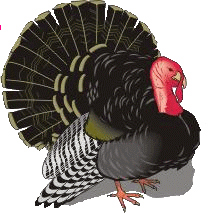
To those of you who are in Poland, are you doing anything special? Are you preparing the whole nine yards of turkey and stuffing and mashed potatoes and pies and ham and green beans and corn and freshly baked rolls?

And speaking of pies, how would you translate “pie” into Polish. My dictionaries say that it’s either ciasto or placek. But that’s not entirely true, is it now? Ciasto is simply “cake” and placek is also “cake,” even if a flat one. Neither one gets even close to describing the true nature of “pie.”
I simply said “paj” in Polish and people seemed to understand. At least the people I met in Gdańsk.

But anyway, let’s leave this profound “pie” problem for another time and cover the rest of your Thanksgiving feast.

  • indyk (masc., pl. indyki) – turkey
  • szynka (fem., pl. szynki) – ham
  • ziemniak (masc., pl. ziemniaki) – potato, though in some parts of Poland you can hear the German version “kartofel” (pl. kartofle) being used
  • fasola szparagowa (fem., pl. fasole szparagowe, though this plural would be rarely, if ever used) – green bean
  • kukurydza (fem., pl. kukurydze, though as above, this plural would be rarely used) – corn
  • galaretka (fem., pl. galaretki) – jello (but be careful with this one, in Polish “galaretka” means the savory kind, too and it’s not as disgusting as it sounds, OK?)
  • sałatka (fem., pl. sałatki) – salad
  • nadzienie (neuter, pl. nadzienia) – stuffing

And finally:

  • Dzień Dziękczynienia or Święto Dziękczynienia – Thanksgiving

And here something funny happens. Depending on which Polish phrase you use, be careful, because they have different grammatical genders.
Dzień Dziękczynienia is masculine (literally – day of thanksgiving)
and Święto Dziękczynienia is neuter (literally – holiday/feast/celebration of thanksgiving).

Now go and enjoy your Thanksgiving dinner. And to our friends not in the US – tell me about important holidays in your countries and I’ll cover them, too. In Polish, naturally. Kartofle and all…

Perfective vs Imperfective

Posted on 25. Nov, 2008 by in Grammar

One of you sent me an email wanting to know more about the verbs I listed in the Dative part 3 blog post. “What’s the deal with those two forms?” was the question.

Well, I’m glad you asked. And here are the verbs in question:

Remember when we were talking about grammatical aspect and imperfective verbs? I said back then that almost all Polish verbs have two grammatical aspects – perfective and imperfective.

Perfective means or implies than an action is finished and completed. Imperfective – that the outcome of whatever it is you are doing is still pending, or that an action is habitual, or somesuch. And I also said that perfective verbs don’t exist in the present tense.

Are you with me? OK so far?

Then let’s take a look at our verb list above.
Dać” and “dawać” both mean the same in English, but in Polish the difference is quite visible. They both can be translated as “to give.” So, what’s the deal with the difference?

Dać” means to give once and it’s done, finished. Whoever you gave it to now has it and you can go home. The action is completed. You have nothing else to do. As a perfective verb, it has no present tense. It only exists in the past and the future. For example:
Dałam jej pieniądze. – I (female speaker) gave her money. She has it now. I only gave it to her once.

Dawać,” on the other hand, implies a habitual action. Something you do over and over. And as an imperfective verb, it has forms in all three tenses. Here’s one example:
Dawałam jej pieniądze. – I (female speaker) have/had been giving her money. For some time in the past she (whoever she might be) had been getting cash from me. Lucky her.

You see the difference now? What in English is accomplished by different tenses, in Polish is done by different verbs.

Here are the forms of “dać

Future tense: audio

  • ja – dam
  • ty – dasz
  • on/ona/ono – da
  • my – damy
  • wy – dacie
  • oni – dadzą

Past tense: audio

  • ja (fem / masc) – dałam / dałem
  • ty (fem / masc) – dałaś/ dałeś
  • on – dał
  • ona – dała
  • ono – dało
  • my (fem / masc) – dałyśmy / daliśmy
  • wy (fem / masc) dałyście / daliście
  • oni – dali
  • one – dały

And now for “dawać

Future tense: audio

  • ja – będę dawać or będę dawała / dawał (fem / masc)
  • ty – będziesz dawać or będziesz dawała / dawał (fem / masc)
  • on – będzie dawać or będzie dawał
  • ona – będzie dawać or będzie dawała
  • ono – będzie dawać or będzie dawało
  • my – będziemy dawać or będziemy dawały / dawali (fem / masc)
  • wy – będziecie dawać or będziecie dawały / dawali (fem / masc)
  • oni – będą dawać or będą dawali
  • one – będą dawać or będą dawały

Present tense: audio

  • ja – daję
  • ty – dajesz
  • on/ona/ono – daje
  • my – dajemy
  • wy – dajecie
  • oni – dają

Past tense: audio

  • ja (fem / masc) – dawałam / dawałem
  • ty (fem / masc) dawałaś / dawałeś
  • on – dawał
  • ona – dawała
  • ono – dawało
  • my (fem / masc) – dawałyśmy / dawaliśmy
  • wy (fem / masc) – dawałyście / dawaliście
  • oni – dawali
  • one – dawały

Complicated? Nah! Just a little maybe.