Archive for July, 2009

“W internecie” or “na internecie”?

Posted on 31. Jul, 2009 by in Polish Language

So…. The Lexiophiles Best Language Blog contest is over, and this year it was an immense failure for us. Or rather, for me. Last year, Polish Blog came in 6th. This year, 71st.

Oh well, I guess the novelty of Polish Blog has worn off, and it’s my fault too, because I haven’t told you about this contest and didn’t beg you to vote for me.

But that brings me to this question – what other internet resources do you use in your Polish language adventure?

With the overload of information on the internet, I know you can find stuff on just about anything. And that includes język polski. But which ones of those many resources are worth reading and using?

I have to admit, I am rather clueless here. I know that a few of you frequent other blogs, I know that some of you write your own blogs (as Pinolona and Island1 do). And then if you add to that language forums, discussion forums, and what-not forums, you can end up with a sizeable list of Polish-themed goodies on the internet. But the question is, which ones of those are worth your time and aggravation – as it often happens with discussion forums?

So, let’s share our “język polski w internecie” experiences! But since I have little to share here, I have to, once again, depend on you.

Oh, and before I forget. It’s “w internecie” in Polish (in the internet), not “na internecie” (on the internet). But don’t worry if you’re like me, and prefer to say “na internecie”. And from what I’m seeing, this mistake is becoming more and more popular. But as one friend very patiently explained to me, these two expressions actually mean something different.
Different? Yes, there is a difference, I agree (I just like to annoy my friend) but it’s so slight that most people don’t even realize it. But hey, that’s Polish for you.

Verb Aspect – one more time

Posted on 28. Jul, 2009 by in Grammar

Agnieszka left a comment asking for help with explaining the difference between pomóc and pomagać (to help), and prosić and poprosić (to ask). And when a reader asks – I dig out my fat Swan’s “Polish Grammar” book and get cranking.

We’ve talked about this verb aspect thingie before. Because that’s what it’s called – aspect. And it has to do with how an action is conceived and executed – whether it’s completed, or habitual, or on-going, and what not.

In English it’s done through the many tenses: continuous, perfect, and so on. And in Polish the same thing is expressed through our many verb forms. Luckily, we’ll be talking only about two of those forms, because most Polish verbs have two aspects.

One is perfective, and it refers to an action which is completed – done and over with. But not just any old done and over with, but the kind that actually produces a change in the general state of things. The other aspect is imperfective and that one deals with all sorts of other types of actions: on-going, habitual and even actions that are completed, but which did not produce any change in the general state of things.

Confusing? Let’s try it again, this time using Agnieszka’s examples.

  • pomóc and pomagać – to help

Pomóc is a perfective verb. Why? It doesn’t have a present tense form.
You can only say:

  • ja pomogę (future tense), or
  • ja pomogłem (past tense masculine) or
  • ja pomogłam (past tense feminine)

If you want to say that you are helping someone right now, you have to use “pomagać” and say:

  • ja pomagam – present tense (all genders)

The easiest way to spot the difference between these two is when looking at their past tense forms:

  • pomóc – pomogłem, pomogłam (perfective)
  • pomagać – pomagałem, pomagałam (imperfective)

The first one (pomogłem, pomogłam) clearly shows that the action is finished and that we successfully managed to help. Our help brought results.

The second one, on the other hand, only tells us that we were helping and helping and helping and that’s it. We have absolutely no clue if our help actually worked. Or not.

So, what’s the deal with prosić and poprosić? Here it gets a bit funkier, because the perfective form of the verb is created by adding a prefix: “po-“ in this case.
And so “prosić” becomes “poprosić” – to ask

But don’t worry, all the other stuff applies just the same.
Poprosić” is a perfective verb, and as such has no present tense. You can only say:

  • ja poproszę (future tense) or
  • ja poprosiłem (past tense masculine) or
  • ja poprosiłam (past tense feminine)

And now, let’s compare this with “prosić”:

  • ja proszę (present tense, all genders)

– yep, it has present tense, so it must be an imperfective verb!

And in the past tense:

  • ja prosiłem (past tense masculine) or
  • ja prosiłam (past tense feminine)

When “ja poprosiłam” I got some sort of reaction from the person I was asking. My action of asking them is done.

But when “ja prosiłam” I was doing it over and over and got no results. And frankly, we can’t really tell if I’m completely done with all that asking, or not.

Polish verb aspect is not an easy thing to learn, but one of our readers suggested this thing: learn both verbs as totally separate words, don’t pair them up. I’ve tried that and it works. It seems like a lot more work in the beginning, but once when you get the hang of it, it’s actually a very effective way to get all this aspect mess nicely sorted out.

Good luck!

Anna Goes Back to School – in Łódź

Posted on 24. Jul, 2009 by in Culture, Vocabulary

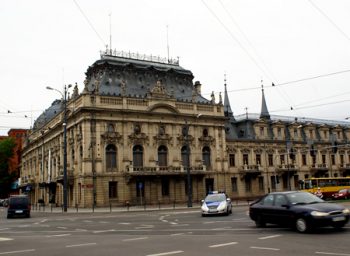
I am really glad that so many of you share my opinion about Łódź. That city is a fascinating place, and if I could, I would very probably move there myself. I even like that fact that it’s so hard to get to. But if you are determined to get there, whatever you do, don’t drive. Save yourself a lot of time, nerves and energy and take one of those cute, new, little “pośpieszny” trains from Warszawa. They almost make you feel like you’re indeed in a civilized European country.

Unfortunately, I won’t be moving to Łódź anytime soon. So, instead, I’m going to go to school there. No, not to Film School. Like I said before, they wouldn’t take such a beztalencie (talentless wonder) as me. And I’m only kinda, sorta going to school in Łódź, because all my coursework will be done as a distance learning program.

I think I mentioned on this blog before that I was considering going back to school in my old age. The problem was finding the right school. Because of my situation, what I needed was an individual course of study. But not only that – I wanted a fully virtual individual course of study. Not a “ studia zaoczne” (weekend) program, but the whole enchilada, toppings and all – done entirely on-line.

So sometime last year, I began the tedious process of contacting different schools. In Poland. I very quickly came to realize that public institutions are still in the dark ages when it comes to distance learning and shifted my focus towards private schools. Eventually, I found one that offered everything I wanted. But in Brisbane, Australia.

Now, I don’t know about you, but if my studies are going to cost a truckload of money, I’d rather pay that truckload to a school in Poland. Yes, I’m a patriot, in my own sort of way…

And so, one more time, I began to contact various institutions of higher education in various places in Poland. Most laughed at me. One even said flat out – “how are we going to know if you’re learning anything if you don’t come to school?” And another – “we can’t teach you English virtually – you need to sit through the lectures. And besides, who do you think you are to ask for this special treatment?” (Special treatment? Haven’t they heard about distance learning before? I’ve always assumed it was a rather basic study option.)

You see, this was my problem – I wanted to get a degree that has to do with English, communications, and intercultural relations.

And then I got in touch with a certain school in Łódź. I explained my situation and spelled out what I wanted, in really simple words, so there wouldn’t be any misunderstandings later on. And voila. A week later I was enrolled in one of their licencjat (bachelor degree) programs. This school decided to take a chance on me and trusts me (oddly enough) to do my part. On my end, I trust them to provide me with the tools and materials (on-line, naturally) to make it all work.

How will it end? We will find out in three years, or possibly sooner. And of course, in the meantime, I will keep you updated on my “back to school” adventures on this blog.

So yeah, go Łódź!!!

PS – Thank you for all your emails and warnings! They are much appreciated! But the school I chose is not AHE. :)