Archive for January, 2010

Verbs Expressing Feelings and the Nouns that Follow Them

Posted on 31. Jan, 2010 by in Grammar, Polish Language

So, what were we talking about last time? Ah yes, verbs that express emotions. You know, stuff like love (kochać), hate (nienawidzieć), like (lubić), dislike (nie lubić), etc.

In English, it’s simple, whether you like or don’t like someone (or something), the noun that follows the verb expressing your feeling doesn’t change.
I like winter. I hate winter.
“Winter” stays “winter” no matter what.

As you’ve probably figured out by now, this is not how it works in Polish. Well, nothing is ever simple and straightforward in Polish. It wouldn’t be Polish otherwise.

Remember when we talked about these two cases: dopełniacz (genitive) and biernik (accusative)? No? Then now it’s the time to look up those blog posts (I wrote about those cases in the past) and refresh your memory. Don’t worry, I’ll wait.

OK, I see you’re back. Good! We can move on to the fun bits now.

So, this is how those winter (zima) sentences would look like in Polish.

  • Lubię zimę. – I like winter
  • Nienawidzę zimy. – I hate winter.

See what happened to “zima”? Yes… Your worst fears have been confirmed. We have two different cases here.

In “Lubię zimę” we have the accusative case – biernik, which answers to these questions: “kogo?” and “co?”.
Lubię kogo” – when talking about people. Or “Lubię co” – when talking about everything else.

In “Nienawidzę zimy” we have the genitive case – dopełniacz, which answers to these questions: “kogo?” and “czego?”.
Nienawidzę kogo” – when talking about people. Or “Nienawidzę czego” – when talking about everything else.

Yes, you are right – in both of these examples, the “kogo?” question when talking about humans is the same. But that doesn’t actually mean that the noun will stay the same. Not so! (And what did you think, huh?)

For example:

  • Lubię Kasię (or Anię, if you want to talk about me behind my back) – I like Kasia (Ania).

and

  • Nienawidzę Kasi (Ani) – I hate Kasia (Ania).

Luckily, this is only the issue with feminine humans. Masculine humans stay the same.

  • Lubię Pawła – I like Paweł.
  • Nienawidzę Pawła – I hate Paweł (Paweł, it’s nothing personal, it’s just an example, OK?)

Incidentally, when talking about space aliens in Polish, treat them as humans (at least grammatically), even though they are very clearly not.

So, basically, this is the drill:
If you have positive feelings towards someone or something, use biernik (accusative).
If you have negative feelings towards someone or something, it’s time to use dopełniacz (genitive).

Hey! What happened to you? Wake up! Wake up!!!

On Disliking Winter – Verbs Expressing Emotions

Posted on 28. Jan, 2010 by in Vocabulary

So, in the last post, our guest blogger – Ms. Anglopole was telling us just how lovely and picturesque polskie zimy (Polish winters) can be.

Now, I don’t know about lovely, but they sure are picturesque. Even if you’re not a fan of cold weather (like me), you have to admit that śnieg (snow) looks very pretty. It covers all those ugly, unsightly things and makes even the dirtiest city appear fresh and clean. Of course, that lasts for only about five minutes until the snow turns grey and yellow. And slushy. Yeah, nie znoszę zimy! – I can’t stand winter.

But what was it we were talking about? Ah yes, pretty and picturesque.

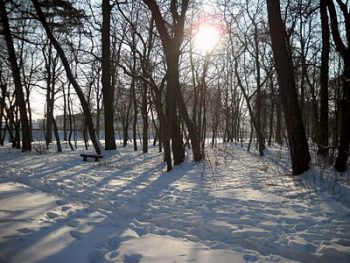
There are people out there who don’t mind bundling up and going out with a camera to take photos, even in the dead of winter. One such person is the lovely young lady who runs the City Toruń Daily Photo blog.

Kasia kocha (loves) Toruń, it’s her home town, and being the tough Polish woman that she is, she odważnie (bravely) went out in the cold and took some wintry shots.

So, go take a look at them while the snow is still biały i puszysty (white and fluffy)!

And since we are talking a lot about disliking and hating winter, I thought I might as well include those verbs for your learning pleasure:

  • lubić – to like
  • nie lubić – to dislike
  • kochać – to love
  • nienawidzieć – to hate
  • nie znosić, nie cierpieć – can’t stand (something), to resent, to dislike, but more powerful than “nie lubić”.

We’ll talk about nouns (yes, it’s declension time again – how fun!) that follow these verbs in the next post.

Guest Post – Evil Winter! (“Zima Zła”)

Posted on 25. Jan, 2010 by in Culture, Geography, Vocabulary

Today we have a new guest post by a new guest blogger – Ms. Anglopole.
Ms. Anglopole is Polish but lives with her husband and kids in the UK. She blogs about her Anglopolish life at Anglopole’s Ponglish World.

OK, Ms. Anglopole, the floor (or rather – the blog) is yours today! Take it away.

A few weeks before Christmas the British media treated us with scary news: there would be heavy snowfalls (opady śniegu) practically everywhere in the British Isles! Yeah, yeah, you’ve guessed right – for most immigrants (emigranci) from the Central and Eastern Europe this news was far from frightening, and actually, the omnipresent British ‘snow panic’ was getting to be really annoying.

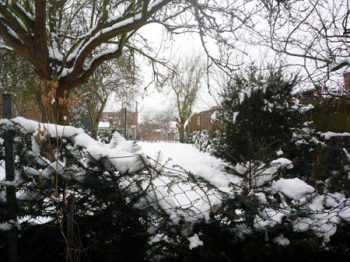
Surprisingly the weather forecast (prognoza pogody) was correct on that occasion and we actually had a month of real winter, which reminded me of Polish winters (polskie zimy) and how harsh they can be. I am sure many of my countrymen living in the UK welcomed the freezing temperatures (mrozy), blizzards (zamiecie), snowdrifts (zaspy śnieżne) and picture postcard landscapes (krajobrazy jak z obrazka) as a reminder of Poland in winter. Those homesick for our homeland have felt more at home in the UK this winter, that’s for sure.


I am not a great fan of cold winters and so the ‘big freeze’ we experienced last year and at the beginning of 2010, for me personally, was more of a survival camp (obóz przetrwania) than anything else.

First of all, the fact that nothing whatsoever was done to clear the local roads and pavements (sidewalks) from snow was a major hazard (zagrożenie) for anyone venturing out of their house. On those snowy days I couldn’t stop thinking about winter tyres (opony zimowe) which are a necessity (konieczność) in Poland and here are rather uncommon.

Also I so wished I had a shovel (szufla) to clear the snow at least around our house. To transport the kids around people needed sleds (sanie) and we got one as well. Ironically, on the day a friend of ours gave us a sled for our children, the snow began to thaw (topnieć) and it hasn’t snowed again since. The white blankets covering the fields have disappeared and all the snowmen (bałwany) built by excited kids have melted away (roztopiły się).

At the moment, the winter here is more or less as it usually is in the UK – rainy (deszczowa, yes, “deszczowa”, because in Polish “winter” – “zima” is a feminine noun), windy (wietrzna) and chilly (chłodna). I am relieved, frankly speaking. I also feel for all my friends back in Poland as winter there seems to be truly Siberian and can be described nicely by this paragraph from Maria Konopnicka’s poem ‘Zła Zima’ (Evil Winter):

“Hu! Hu! Ha! Nasza zima zła!
Szczypie w nosy, szczypie w uszy
Mroźnym śniegiem w oczy prószy,
Wichrem w polu gna!
Nasza zima zła!”

It looks like the global warming (globalne ocieplenie) in Europe has been more like a global freezing! ;-)

Oh, spring, where art thou?! Wiosno, gdzie jesteś?!

Thank you so much Ms. Anglopole! You have no idea how happy I am that you decided to write about winter. Personally, I hate winters. I’d rather pretend they didn’t exist at all. So, needless to say, I am very glad you picked this “frosty” topic for your guest post.