


More idioms with ‘cara’ Posted by carol on Jan 24, 2022

Olá, pessoal! Hi, guys! A while back we went over phrases in Portuguese with the word ‘cara’. I also pointed out that these are very common na língua falada (in spoken language) and that knowing some of them can come in very handy when it comes to entender e falar (understand and speak) português. And…
Unbelievable headlines from Brazil in 2021 Posted by carol on Jan 10, 2022

Saudações, prezados leitores! Greetings, dear readers! Feliz 2022! Happy 2022! Você acompanha as notícias em português? Do you follow the news in Portuguese? Our previous posts offered a recap on last year’s main stories. But besides those decisive events that shaped 2021, there were several other manchetes (headlines) that caught our attention throughout the year…
2021 Highlights – Part II Posted by carol on Dec 30, 2021

E aí, galera? 2021 está chegando ao fim! Last week we looked back on 2021’s chief events in Brazil. Now it’s time to move forward with the second part. Estão prontos? O acidente de Marília Mendonça | Marília’s Mendonça’s crash Although we covered it before in this previous post, we cannot help but bring up…
2021 Highlights Posted by carol on Dec 20, 2021

Olá, prezados leitores! So here we are again, ready to ring in the ano novo (new year). The past few years have been quite unstable and unpredictable. But one thing is for sure: our retrospectiva with the year’s highlights. That’s right, time to look back on the main facts and events that left a lasting…
Learn Portuguese with Christmas music! Posted by carol on Dec 8, 2021

Olá, caros leitores! Feliz dezembro a todos! The year is drawing to a close, and it hasn’t been an easy one. But with the holidays coming up, we can all look forward to uns dias de folga (a few days off), encontros de família (family gatherings), presentes (gifts), comidas deliciosas (delicious meals) and, why not…
How to use the word ‘cara’ in Portuguese Posted by carol on Nov 30, 2021

Olá, meus caros leitores! Como estão? December is almost here, can you believe it? Hang on…por que vocês estão fazendo essa cara? Why are you making that face? Our post today is about a word that us Portuguese speakers, specially Brazilians hold very dear: cara. Have you ever used it before? Literally speaking, cara is a…
Can you match these sayings in Portuguese? Posted by carol on Nov 24, 2021
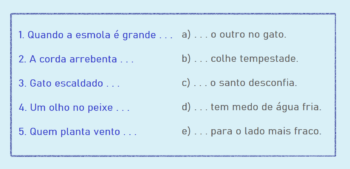
Olá, pessoal! Hi, everyone! Every language and culture has their own sayings, or as it goes in Portuguese, provérbios or ditados populares. They are common expressions dating back from ancient times whose origins no one can really pinpoint, but most falantes (speakers) of a certain language have heard. Usually in a metaphorical style, sayings describe…