Archive for August, 2009

«Что когда? или: дни недели» [What when? or: Days of the Week]

Posted on 31. Aug, 2009 by in language, Literature, Traditions

When meeting someone at this fall’s new schedule in a Russian university/firm/organization (really, anywhere Russian is spoken) you could ask them courteously: «Что нового приносит эта осень вашему расписанию?» [What new does this fall bring to your schedule?]. But that’s a really ambitious question and could sound a bit formal. A less strict way of asking the same thing would be: «Что на вашем расписании этой осенью?» [What's on your schedule this fall?] Or why not skip all kinds of formalities and be both «на ты» and a little bit rude at the same time: «Есть ли вообще у тебя какое-нибудь расписание?» [Do you have any kind of schedule at all?]

Tomorrow is 1st of September, known in Russia as «день знаний» [The Day of Knowledge] and the day when both school children and university students begin studying «после летних каникул» [after the summer holiday (note that «каникулы» is always in plural in Russian, even if it's just ONE holiday/break!)]. Summer is over, even though it might still be warm outside and seem like fall is far away. The 1st of September is my favorite day of the year; there’s something special about going back to school/university that makes me feel all happy inside. It’s very hard to explain (but maybe I’m not the only one who feels this way?) – I’m nervous and excited every time, despite the fact that I’ve studied for so long that I shouldn’t be the least excited, nevertheless nervous about it. September means the beginning of a new season – «осень» [fall]. «Осень» is a feminine noun, thus it should be paired with adjectives in the following way: «золотая осень» [golden fall], «красивая осень» [beautiful fall] or «холодная осень» [cold fall]. Fall means for many of us a stricter «расписание» [schedule], where every day has its very own timetable. That’s why I think we should discuss «дни недели» [days of the week] in Russian today! The names of weekdays in Russian differ a great deal from names in other languages (now I’m mostly comparing with Romanian and Germanic languages) and that’s why they deserve some extra attention. And as always I’m at my best when allowed to mix in «немножко этимологии» [a little etymology] in my posts… Oh, and in Russian language the days of the week are always written with a lowercase letter!

«Понедельник» [Monday]:

«В славянских языках ПОНЕДЕЛЬНИК имеет значение первого дня или, согласно одной версии, дня “после недели”, поскольку “Неделя” является старым
русским словом, обозначающим современное воскресенье»
[In Slavic languages MONDAY has the meaning of the first day or, according to one version, the day "after Nedelya" (week) since "Nedelya" is an old Russian word that marked the modern Sunday].

«Вторник» [Tuesday]:

«В славянских языках ВТОРНИК однозначно читается как “второй” день недели» [In Slavic languages TUESDAY simply reads as the "second" day of the week].

«Среда» [Wednesday]:

«В таких славянских словах, как СРЕДА, СЕРЕДА, а также в немецком Mittwoch, финском Keskeviikko, название дня отмечает наступление середины недели. В древнерусском, оказывается, было ещё одно название среды – “третийник”» [In such Slavic words, as 'SREDA' (Wednesday), 'SEREDA', and also in the German Mittwoch, the Finnish Keskeviikko, the name of the day marks the advance of the middle of the week. In Old Russian language, it turns out, there was yet another name for Wednesday - ‘tretiynik' (lit. ‘the third one')].

«Четверг» [Thursday]:

«В славянских языках значение ЧЕТВЕРГА, очевидно, носит сугубо числовое значение четвёртого дня» [In Slavic languages the meaning of THURSDAY, obviously bears the principally numerical connotation of the fourth day].

«Пятница» [Friday]:

«В славянских языках, как вы уже догадались, этот день по смыслу “пятый”» [In Slavic languages, like you've already guessed, this day is according to meaning "the fifth"].

«Суббота» [Saturday]:

«Оказывается, русское название СУББОТА, испанское el Sabado, итальянское Sabato, французское Samedi восходят к ивритскому Шаббат, означающему “покой, отдых“» [It turns out that the Russian name for SATURDAY, the Spanish el Sabado, the Italian Sabato, the French Samedi ascend to the Hebrew word Shabbat, meaning "repose, rest"].

«Воскресенье» [Sunday]:

«День недели ВОСКРЕСЕНЬЕ пишется почти так же, как воскресение – слово, обозначающее то, что Иисус Христос сделал именно в этот день недели. В испанском же Domingo, французском Dimanche, итальянском Domenica, как и в русском ВОСКРЕСЕНЬЕ проявились христианские мотивы» [The weekday SUNDAY is in Russian written almost exactly (but not really!) as the word for resurrection - the word that means that which Jesus Christ did just on this day of the week. In the Spanish word Domingo, the French Dimanche, the Italian Domenica, just like in the Russian ‘RESURRECTION' showed Christian motives].

Out of the seven Russian week days the last one is the hardest to remember correctly, and learn how to write properly. Try to remember that Sunday has the old neuter noun ending spelling «ье» [soft sign + e], whereas Jesus’ awesome accomplishment is spelled with the more modern ending of «ие» [ji + e]. When pronouncing the word you don’t have to make any difference between the words; they’re pronounced exactly the same. And usually people will know what you mean depending on what context you put the word in. While we’re on the subject it should be added that scholars are still fighting over how to properly translate the title of the famous 19th century novel «Воскресенье» by «Лев Николаевич Толстой» [Lev Nikolayevich Tolstoy]. Most translate it as “Resurrection”, but there a few researchers out there fighting to have it called “Sunday”… And some say Tolstoy saw the two as one and the same thing. Whatever the title is meant to mean – it is a wonderful piece of fiction either way.

Good luck with your new fall schedule!

Breaking Russian News: «Авось» Goes International!

Posted on 26. Aug, 2009 by in Culture, language, News, The Russian Emotion, Traditions

Remember the post «Авось!» or a really Russian Expression” in which I decided to try if «авось» [perhaps; possibly; maybe] works also outside of Russia? In the post I posed the following question: Can one say «авось повезёт» [maybe (I'll) get lucky; perhaps (I'll) have some luck] a day or two before taking the TOEFL test outside of Russia – in my case: «в Стокгольме, столице Швеции» [in Stockholm, the capital of Sweden] – instead of preparing during several months in advance for the test «от которого зависит всё твоё будудщее» [on which your entire future depends]? And «сдать» [pass] it? I didn’t just pose this question – I actually tried it «в действительности» [in reality]. On myself and my own future. And guess what, «дамы и господа» [ladies and gentlemen]? It works, it really works! Now all of you – from the most frail beginners to almost fluent speakers of Russian language – all of the world’s lovers of «русская речь» [Russian speech] that are still just friends with «русская грамматика» [Russian grammar] can use this «исконная русская фраза» [original Russian phase], this «традиционное русское выражение» [traditional Russian expression] in their every day life «вне Российской федерации» [outside of the Russian Federation]. I scored 107 out of 120 on the TOEFL test (my university of preference in the USA asks only more than 68 – but let’s not spoil things with talking about what’ll happen only «через ещё годик в России» [after yet another (little) year in Russia]…). Some of the readers of this blog might argue – and most correctly, too – that it wasn’t really the Russian «авось» which helped me in only making 13 points worth of mistakes, but the fact that I’m almost fluent in English. «Может быть, вполне может быть» [maybe, quite (possibly) maybe] is what I say to them as I add this: But who can exclude a little help of «авось» in a one-time case as this one? What we need to make a firm conclusion is a «широкий статистичексий фундамент» [broad statistical foundation] – anyone out there willing to try «авось» in their own lives?

«Авось и на самом деле всем вам повезёт!» - [Perhaps all of you'll really get lucky!]

Today I thought we’d continue to talk about luck; or more specifically: «русское везение» [Russian luck]. You might be seeing this Russian word for ‘luck’ for the very first time – «везение» [luck; good fortune], whereas you’ve both read, heard and pronounced the word «удача» [luck; success; fortune; stroke of good luck; good innings] many times before. This is the word most commonly used when wishing each other ‘good luck’ in Russian: «Удачи!» [note that when wishing someone something in Russian you always put what you're wishing them in GENITIVE - thus turning «удача» into «удачи» - don't forget!]. But is it worth knowing also «везение» as it comes from the verb «везти» which is used in the expression «везёт кому-нибудь» [someone is lucky; someone has luck]. And since people – even Russians – tend to get lucky from time to time, it is an expression that can come in handy ever so often. The verb «везти» is one of those extremely interesting «глаголы движения» [verbs of motion], and being as such it is imperfect and only in ONE DIRECTION (for movements in many directions this verb has a close friend: «возить»). «Везти» can be translated into English – apart from into ‘to have luck’ – as ‘to wheel; carry; tote; trundle’. When used to tell of someone having luck the following is important to know: 1) always put this verb in THIRD PERSON SINGULAR, i.e. «оно»: thus present tense «везёт» turns into past tense as «повезло»; 2) the sentence’s SUBJECT should always be in DATIVE, for example: «тебе везёт» [you have luck], «мне не везёт» [I don't have any luck] and «им повезло» [they were lucky; had luck]. Using dative is a very smart and subconscious Russian way of taking away all personal responsibility from the subject of the sentence, which means that to have luck in Russian (or why not say ‘to have Russian luck’?) doesn’t really have anything to do with actions you may or may not have taken. And isn’t that really what luck is all about?

Let’s take a look at two pictures as we try to understand this expression even better:

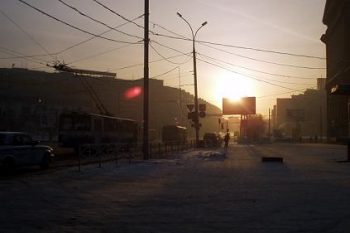
«Утром в Новосибирске нам повезло с погодой – “мороз и солнце, день чудесный” - прямо как из стихотворения Александра Сергеевича Пушкина[In Novosibirsk we were lucky with the weather - ‘frost and sun, what a fantastic day' - just like in the poem by Alexandr Sergeyevich Pushkin!]

«А после обеда в том же Новосибирске нашему везению с погодой пришёл конец, и начался сильный снегопад…» [But after lunch in the very same Novosibirsk our luck with the weather came to an end and a forceful snowfall began...] 

«Вести дневник» [To Write a Diary], or «Крутой маршрут» Евгении Гинзбург [Yevgenia Ginzburg's “Journey into the Whirlwind”]

Posted on 18. Aug, 2009 by in Culture, History, Literature, Soviet Union

Don’t let the fact that it takes a while to pronounce the long title above today scare you from reading today’s post! This long title is an attempt of mine to combine two equally interesting subjects worthy of one post each but really also equally interconnected with each other and thus worthy of being mentioned in one sentence (like the sentence I used in today’s complicated title above). Do I have your attention? Then «давай!» [come on!] and hear me out on this one. Have you ever tried keeping a diary in Russian? «Это хорошая идея, и, на самом деле, очень даже хорошая идея» [It is a good idea and in fact a very good idea indeed]. It could be a simple way of practicing the language at least a couple of times a week, if you, for example, keep finding yourself unable to write something every single day. I have never actually tried it myself (yet!), but during my years as a student of Russian language in Russia I’ve met many other students from around the world that have been accurate keepers of such ‘practice diaries’ in Russian. Perhaps this phenomenon could be called something like «дневники для практики языка» [diaries for language practice] in Russian? Some of my fellow students have been so persistent in their diary writing that they have given their notebooks to their professors for proof reading and thus also grammar correction every week.

What’s important to know before you start writing your Russian diary is that in Russian you do not «писать» [write] but actually «вести» [lead, conduct, guide; drive, navigate, pilot; carry on; hold, keep; prosecute, carry out an activity; give, transact] your «дневник» [diary; journal; day book]. If that was too many English verbs to one Russian verb for you to handle, then focus on the translation of «вести» here as ‘to keep’ and you’ll understand the phrase «я веду дневник» as ‘I keep a diary’ and can be fully content with this as it is a completely satisfactory comprehension of it. You’ll also be able to answer the question «ты ведёшь дневник?» [do you keep a diary?] (that’s the informal way to inquire, the formal way would of course be: «Вы ведёте дневник?» [do You keep a diary?]).

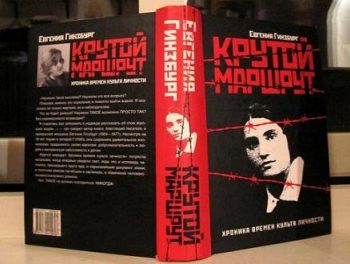
Have there ever been moments in your life when you’ve wished that you could back and check details from your past in diaries? Only to realize that you either а) didn’t keep a diary at the time; or б) didn’t write down what was truly significant? Have there ever been times when you have wanted to retell stories from long ago? Important accounts you wished you had written down? Things you have now forgotten? Names of people lost forever into the deepest corners of your memory? Not all of us can rely on our «память» [memory; recall; recollection] but have to write things down as they occur in order to later make them «воспоминание» [sg. recollection, memory, remembrance; flashback; memorial; reminiscence] first and later part of our «воспоминания» [pl. memoirs; reminiscence; memorials]. Some of us, however, are blessed with another gift – a gift to «запоминать» [memorize; mark] in order to much later «вспоминать» [recall, recollect, remember; reminisce]. The past month I’ve spent together with the memoir of a person blessed with such an amazing ability to remember every thing – from names of important people to the tiniest of details. During the past month I’ve been traveling through a memoir written with the accuracy of a diary – «Крутой маршрут» ["Journey into the Whirlwind"] by the brilliant, intelligent and lovely «Евгения Гинзбург» [Yevgenia Ginzburg].

While «в Кургане» [in Kurgan] on the 20th of July I came across this «хроника времён культа личности» [chronicle of the times of the personality cult] on sale in a bookstore and just had to buy it. Only when the Russian writer «Василий Павлович Аксёнов» [Vasily Pavlovich Aksyonov] died on the 6th of July did I realize that he was the son of «Евгения Гинзбург», whom I had known as the author of this spectacular work about 18 years spent on Kolyma ever since reading the notebooks of «Варлам Шаламов»… which I did in April this year. Time and time again it keeps being proved to me that to love Russia is to constantly discover something new about this country!

I started reading «Крутой маршрут» [the title could more literally be translated as ‘a steep route'] as soon as I had brought it home from the bookstore and since then I haven’t been able to let it go nor finished reading it. Finish reading it is not something done over a weekend – this memoir is over 800 pages long. And that’s one of the best things about it! I don’t know about you, but I’m a bit old-fashioned in the way that I prefer long works of fiction (or long memoirs, for that matter…) and now that I have only about 150 pages to go as I’m posting this I have to confess that I don’t really want it to ever end. I am absolutely and completely in love with Yevgenia Ginzburg. After spending almost the entire spring of 2009 with Shalamov and his tales from «Колыма» [Kolyma] it was not just interesting but also refreshing and surprising to read a woman’s account of the same place at the same time. Both Ginzburg and Shalamov were arrested during the terrible year of 1937 during ‘the infamous great purge’ and spent a total of 18 years in prison, camps and exile. Shalamov arrived in Kolyma already in 1937, Ginzburg only two years later – after spending two years in a prison cell in Yaroslavl. Of course one shouldn’t compare these two people because they are very different, but I can’t help myself. Both of them left important accounts of their life during this particular time in this region’s history behind that are well worth reading, even though they should be separate already by their different genres – Shalamov wrote many short stories, Ginzburg wrote one long memoir. Ginzburg is personal where Shalamov is not. They had different intentions with what they wrote and thus what they left for us to read are very different accounts. Yet many things remain alike and true even though – just like they both keep repeating in their works – there are many, many truths out there.

But while reading Ginzburg what kept coming back to me again and again was one single thought – that there seems to have been a lot more humor on the women’s side of the barbed wire. Not only Ginzburg, but all the other women surrounding Ginzburg in prison and in camps and in hospitals, keep joking and laughing long after Shalamov’s men have grown silent and stern and harsh. And the first thing the women in Ginzburg’s memoir say when they see the male prisoners upon arrival in Vladivostok after a month on a train is: “Oh no! And they who have such poor ability to endure pain!” (in Russian: «Они же так плохо переносят боль!») Women are really better prepared to endure that kind of cruel pain, and better prepared physically for hunger, which is why they did not die as fast and mercilessly as the men did on Kolyma.

Ginzburg was not able to keep a diary during her years in prison, camps and exile. And yet she remembered everything. In this work you’ll find hundreds of dialogues and an equal amount of names of real people from this time. «Крутой маршрут» is a terrible, beautiful, true chronicle of this time in the history of this country. Not only do I highly recommend it because of its value as a source for historical facts, but as a document of what it means to be a woman. Ginzburg is first and foremost a woman. I don’t really know how to explain it, but that’s what I found most in this memoir – her pride of herself and her sex combined with a marvelous dedication to motherhood which I have never read anywhere else before (but then again, I haven’t read that many books written by women – yet!). What I would recommend above everything else is of course to read it in the original Russian – not only because Ginzburg has a rich language, but also because she often quotes poetry. Both her own poems and the poems of many famous Russian poets. Poetry helped her survive these hardships. Poetry saved her life.

To me reading this memoir is one of the greatest reading experiences of my life. And the best part about admitting to this is that I haven’t finished it yet – thus the greatest reading experience of my life will continue!