Tag Archives: Russian food

Best Russian Candies

Posted on 29. Mar, 2013 by in Russian food

more Russian candy

You might be getting ready to celebrate католическая Пасха (Catholic Easter) this Sunday in which case you are probably too busy to read a long-winded post. So let’s keep it short and sweet. Let’s talk about конфеты (candies).

What are some of the Russian alternatives for the candies you usually buy around Easter holiday? (If you don’t like candies, then may I interest you in other Russian sweets?)

Let’s begin with the traditional драже (dragee). The word драже might sound similar to дрожать (to tremble). Sure, a little сладкоежка (someone with a sweet tooth) might indeed дрожать от нетерпения (tingle with impatience) at the sight of this candy while his parents might содрогаться (shudder) at the damage sugar does to their child’s teeth. However, the words are not related.

Драже is just a generic name for a small roundish candy, such as M&Ms, Jelly Beans, chocolate covered almonds or multi-colored glazed raisins known as морские камушки (sea pebbles). Just as Jelly Beans or Skittles, драже do not come individually wrapped into обёртки (wrappers). Which is a major time saver.

Next up is леденцы (sugar candy) which can be на палочке (on a stick) or not. Some are made as драже, but they usually end up sticking together into a shapeless blob and are best avoided. For some reason, леденцы на палочке look especially irresistible to children (and even some adults). Maybe that explains the other use of the phrase на палочке. When in Russia, try to find and enjoy traditional леденцы на палочке (sugar candy on a stick), for example a translucent red петушок на палочке (rooster on a stick).

Another word for леденец is карамель. Well, at least it’s the candy industry term for леденец. But when we talk about карамельки, we usually think of candy that’s made with melted sugar and molasses. Oh, and it usually has some kind of начинка (filling) inside, including fruit-, berries-, cream- and liqueur-based ones. And it’s never on a stick. And it’s always shaped like a батончик (short thick stick). So it’s pretty much nothing like леденец in my book. Карамельки (little caramel candies) are usually individually wrapped in colorful фантики (wrappers).

By the way, these simple paper wrappers became the gateway into the world of коллекционирование (collecting) for many children.

Another type of карамель is ирис (taffy). Do not confuse it with the flower ирис even though the candy got its name after this beautiful flower. Чем старше мы становимся, тем меньше нам хочется ириски (The older we get, the less we want to have taffy). This stuff will pull your коронки (dental crowns) right off, I tell you!

Finally, let’s talk about шоколадные конфеты (chocolate candies) or шоколадки (chocolates). There are so many to choose from! First, there are шоколадки с начинкой (filled chocolates), such as пралине (pralines), chocolates filled with fruits or liquor, or light crispy вафли (waffles) covered in chocolate. Each chocolate candy is wrapped in a beautiful wrapper, sometimes two or three (an inner wax paper one, a middle foil one and an outer one with a picture or a design).

Then there are наборы конфет (boxes of chocolates) of all shapes and sizes. Russians buy them as small gifts (yes, even if a box is a giant lavishly decorated one), tokens of appreciations, so to speak. But here’s a hint: if you prefer substance over looks, have a discerning taste, and don’t care for the “life is like a box of chocolates” spiel,  forgo the flashy oversized boxes of pralines for a modest box of Птичье молоко (lit: Bird’s Milk). Don’t aim for looks, but do make sure to check whether it’s fresh. The delicate mousse inside these chocolate-glazed candies won’t spoil, but it will crystallize which will affect the taste.

And that’s it for today.

One more note – if you plan to visit your local Russian grocery store and buy some candies, read the wrappers first. Here are the proper names of some of the most popular and most nostalgia-inducing candies – Ласточка, Мишка на Севере, Красная Шапочка, Грильяж в шоколаде, Кара-Кум, Коровка, Белочка. If the name on the wrapper sounds close, but not quite the same, it means that the manufacturer most likely did not follow the original recipe or quality standards. Also, get familiar with what the images on the classic candy wrappers should look like. If the name matches, but the image is not the same, it’s a подделка (fake).

Finally, buy extra candies and invite your Russian friend for дегустация (tasting). Your friend will surely let you know how the candies you bought measure up to the classics of his/her youth.

My recipe for something sort of like black bread

Posted on 05. Jun, 2012 by in language, Russian food

Мой рецепт для хлеба, напоминающего чёрный

In part 1, I described my attempts to reproduce “authentic Russian black bread” at home. And now, here’s the step-by-step recipe for those who want to try it! My instructions tell how to make the bread ручным способом (“by hand”), but you can certainly use a хлебопечка (“bread machine”) if you like. (I’ll give some general tips for that in the comments.)

Although I developed this recipe in an American kitchen (hence the title), I’ve tried my best to internationalize the directions. Here, it’s assumed that a стакан (lit., “drinking glass”) holds exactly 1 US cup or 240 mL of liquid. A чайная ложка (“teaspoon”) is 5 mL, while a столовая ложка (“tablespoon”) is 15 mL.

Also, in most Russian recipes it’s customary to measure granular/powdery ingredients — flour, sugar, uncooked rice, etc. — by вес (“weight”) in grams. But in the States we invariably measure these items by объём (“volume”) in cups. So when appropriate, I’ve given both weight and volume quantities, using the incredibly helpful conversion tables at this Metric Kitchen website.

Russian packages of some of the ingredients
Russian packages of some of the dry ingredients we’ll be using in this recipe. (Syllable-stress alert: Remember, мука is “flour”, but мука means “torture”!)

Сначала, давайте соберём ингредиенты (“First, let’s gather the ingredients”). I’ve grouped them below in the order we’ll be dealing with them in the recipe.

(А)

  • Четверть стакана пшеничной крупы (1/4 cup bulgur wheat, uncooked = 50 g)
  • Одна столовая ложка семян кориандра (1 tablespoon whole coriander seeds)

(Б)

  • Один и одна треть стакана тёплого кофе (1-1/3 cups warm brewed coffee = 320 mL)
  • Две столовые ложки патоки (2 tablespoons molasses)
  • Одна столовая ложка какао (1 tablespoon unsweetened cocoa)
  • Две чайных ложки сухих дрожжей (2 teaspoons dry yeast granules)

(В)

  • Один стакан пшеничной муки (1 cup all-purpose white wheat flour = 120 g)
  • Три стакана ржаной муки (3 cups rye flour = 360 g)
  • Треть стакана глютена (1/3 cup gluten powder = 40 g)
  • Полторы чайных ложки соли (1-1/2 teaspoons salt)
  • Две чайных ложки сушёного укропа (2 teaspoons dried dillweed)

(Г)

  • Две столовых ложки растительного масла (2 tablespoons vegetable oil = 30 mL)

(Д)

  • Две чайных ложки пищевой соды (2 teaspoons baking soda)

В чашке (in a teacup), combine the bulgur and coriander seeds with about 1/2 cup (120 mL) of кипяток (“boiling-hot water”) and let soak for at least 20 minutes to soften. Drain off excess water after soaking.

В небольшую миску, налить кофе (Pour the coffee into a smallish bowl.) The coffee should feel “warm but not hot” — somewhere in the 100-110°F range (40°C-ish). Stir the cocoa and molasses into the coffee. Потом добавить дрожжи (“Then add the yeast”). After several minutes пена (“foam”) will appear on the surface of the liquid as the грибочки размножаются (“wee little fungi multiply”) and release CO2.

Потом в большую миску положить муку и все остальные ингредиенты из группы В (“Next, put the flour and all the other ingredients from group В into a large bowl”). Тщательно смешать вилкой (“thoroughly mix with a fork”) these dry ingredients; then add everything EXCEPT the baking soda (in other words, А + Б + В + Г). Mix it all with a big wooden spoon until it comes together as a homogeneous тесто (“dough”).

And now comes the calorie-burning part: пора месить тесто (“it’s time to knead the dough”). From long experience, I have two practical suggestions here.

  1. The dough may be липкое (“sticky”) at first; therefore, begin kneading with just one hand — keeping the other hand clean чтобы присыпать тесто мукой, по необходимости (“in order to sprinkle the dough with more flour, as necessary”).

  2. Once the dough is less sticky and you can use both hands to knead, поставить миску на пол и сесть на колени перед миской (“put the bowl on the floor and kneel down over the bowl”), as though the dough has suffered a heart attack and you’re a paramedic performing CPR! This way, gravity and your body weight do most of the work.

At any rate, вымешивать тесто восемь-десять минут — до тех пор, пока не перестанет липнуть к рукам и миске. (“Knead the dough 8-10 minutes — until it stops sticking to your hands and the bowl”).

Now rub a little more vegetable oil all over the ball of dough, накрыть миску влажным полотенцем (“cover the bowl with a damp towel”), and let it sit in a warm place for at least one hour, пока объём не увеличится раза в два (“until the volume has increased by about 2x”).

Knead the dough again for just a minute, then press it into a well-greased форма (“bread/cake pan”) — I used a 9 x 5 inch pan (about 23 x 13 cm). Customarily, black bread is baked as a буханка (“rectangular pan-molded loaf”), not as a батон (“long panless loaf”), because the sides of the форма give the heavy dough some vertical support. Again, cover the dough with a damp towel and put it in a warm place for 45-60 minutes.

Near the end of the второй подъём (“second rising”), turn on the oven and нагреть печку до (“heat the oven to”) 375°F (190°C).

Растворить пищевую соду (“dissolve the baking soda”) in about 1/4 cup of кипяток, and gently brush several coats of the mixture over the top of the loaf. You can also sprinkle on toppings like seeds or coarse salt, if you wish.

And now we’re almost done: посадить в печку (“sit it in the oven”), set the timer for 40 minutes, and enjoy как вкусно пахнет на кухне, пока хлеб выпекается! (“how delicious it smells in the kitchen, while the bread is baking!”) When it’s done, remove the loaf from the pan and let it cool completely before slicing — if you can wait!

Приятного аппетита!

Baking genuine Russian-style black bread in a “Yankistani” kitchen: Can it be done?

Posted on 04. Jun, 2012 by in language, Russian food

Выпечка настоящего чёрного хлеба на “пиндостанской” кухне: возможно ли это?

In one of her Easter posts, Yelena mentioned the challenge of making baked goods — such as the sweet Easter кулич — from дрожжевое тесто (“yeast dough”). And indeed, yeast loaves can take a bit more practice, and are more labor-intensive, than “quick breads” raised with пищевая сода (“baking soda”) or пекарский порошок (“baking powder”).

But her comment reminded me of my own опыты (“experiments”) with reverse-engineering чёрный хлеб (“Russian-style black bread”) at home.

This is something I’ve been tinkering with for years, and I’ll say right up front that although I’m very pleased with the latest results, my рецепт (“recipe”) is still only a хитроумное подражание (“cunning imitation”) of the original — so maybe I should’ve put the word настоящий (“genuine; real”) в кавычках (“in quotes”)!

In Part 2 of this post, I’ll take you through the recipe шаг за шагом (“step by step”). But to explain why perfectly duplicating Russian “black bread” outside of Russia ain’t so simple, you first need to understand what чёрный хлеб is — and what it is NOT. As I was surprised to learn when I bought my first loaf from a Moscow булочная (“bread store”), the color, flavor, and texture have virtually nothing in common with American pumpernickel!

American-style pumpernickel

American-style pumpernickel is dark as bitter chocolate, but the texture is often слишком пышный (“too fluffy”) to be a satisfactory substitute for Russian black bread, which is quite плотный (“dense; closely-textured”).

It turns out that most of the pumpernickel we buy in U.S. supermarkets — although much “blacker” than чёрный хлеб — is merely American-style rye bread with artificial coloring added. And American-style recipes for так называемый “ржаной” хлеб (“so-called ‘rye’ bread”) sometimes contain as much as 75% wheat flour and only 25% rye flour! This is because пшеница (“wheat”) is quite rich in глютен (“gluten”), the elastic белок (“protein”) that helps dough rise –while рожь (“rye”) is comparatively gluten-poor.

In contrast, industrial-scale пекарни (“bakeries”) in Russia have always made their black bread with 100% rye — apparently with the help of a special закваска (here: “sourdough starter-culture”) that’s optimized to compensate for the lower levels of gluten in rye. (Something I learned from Википедия!)

Borodinsky-style black bread

Black bread in the “Borodinksy” style, made with a 100%-rye sourdough and studded with coriander seeds.

However, sourdoughs can be slow, fussy, and unpredictable — and to be honest, I have very little experience with them even though I make my own bread all the time. Besides which, there are different formulations of закваска and I don’t know exactly what Russian bakeries use. Maybe in the future I’ll try to do an all-rye, sourdough version — когда-нибудь, но не сегодня (“someday, but not today”).

So, beginning на основе (“on the base”) of an all-wheat white bread recipe from a cookbook, I aimed to create an adaptation with mostly rye flour but raised by good ol’ надёжные дрожжи (“reliable yeast”), not a temperamental закваска. And just recently I found a solution: Adding a few tablespoons of ultra-concentrated “vital wheat gluten,” which can be found in many U.S. supermarkets under the Bob’s Red Mill or Arrowhead Mills brands. Using the gluten powder let me make a 75% rye dough that would rise sufficiently with ordinary yeast.

Gluten powder

Adding about a tablespoon of gluten powder for each US cup (~120 grams) of flour improves the rising and texture of many homemade yeast breads.

With the gluten problem solved, the rest of the adaptation was rather easy. I added some cracked bulgur-wheat for texture and moistness; whole coriander seeds, which are obligatory in the popular style of black bread called бородинский; plus some coffee, cocoa, and molasses — for their bitter/sour notes and also for color.

The finished bread is medium-brown inside, похож по цвету на картон (“resembling cardboard in color”) — close to the Russian original, but much less dark than our American pumpernickel. The texture is плотный (“dense”) and жёсткий на ощупь (“coarse to the touch”), though somewhat different from my memories of the “real thing,” which may be the unavoidable result of using дрожжи instead of закваска. And the flavor is, dare I say, крепкий (“robust”) — strong, кисловатый (“sourish”), earthy.

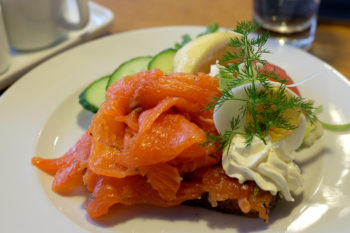
In other words, quite непригодный (“unsuitable”) when you’re craving sweet, fluffy French toast with strawberry syrup — but absolutely perfect to slice thin as a sturdy base for бутерброды (“open-face sandwiches”) topped with something salty and savory: cheese, salami, ham, smoked fish, pickled mushrooms…

Tomorrow: the рецепт!