Archive for August, 2010

“La Tomatina” de Buñol

Posted on 31. Aug, 2010 by in Entertainment, Holidays, Spanish Culture

I’m starting to believe that there are celebrations for any random reason in the world. Bearing that in mind, it won’t sound so strange that in Spain we celebrate one with tomatoes. It consists in just that: people throwing tomatoes at each other.  However, the tomatoes are crushed before being thrown, so you don’t hurt the target.

The Tomatina in Buñol has become so famous that even in China they have tried to replicate it. Last August 25th, over 45,000 people from all over the world gathered together in that village from Valencia to throw 100,000 kilos of ripe tomatoes at each other. Some of them got up really early to enjoy a whole day of partying, and others had dark rings under the eyes, sign that they didn’t have a full night’s sleep, probably for the same reason. This year it was even more special, since the producers of a Bollywood movie took advantage of the occasion to shoot some scenes that will be part of the blockbuster “You only live once”; also a committee from the Korean government came over to gather information for their own version of this celebration. Amazing.

For about an hour, after hearing the sound of a really loud firework, a battle takes place that will leave both locals and visitors covered in tomato from head to toe. The sound of a second firework will mark the end of the party. Cleaning then starts, which will leave the town spotless thanks to the natural acidity from the tomatoes. It’s funny when you think that this large celebration started as a prank, or at least that’s what they say. I’ll tell you how: around 1945, during a “Giants and Big-Heads” festivity, a local young boy tried to take part in the parade, but he was not allowed to. He got so angry that he started a fight that ended up as a whole battle. Just by chance, in the same square where the fracas took place there was a produce stall, and the young fighters started using vegetables as ammunition. They must have had quite a good time in such an unusual combat, because the following year they organized the whole thing again, this time each bringing their own tomatoes from home. It was banned for a few years, but the locals still gathered together to do it. In 1957, facing a strict ban from the town hall, they celebrated “the burial of the tomato”, staging a funeral procession and carrying a coffin with a big tomato inside. This comical form of protest caught on, and two years later the Tomatina started again, reaching its status today as a Feast of International Touristic Interest in Spain.

In order to take part, you have to follow a few basic rules:

Do not carry any bottles or objects that can cause injury.

Do not tear other people’s t-shirts.

Crush the tomatoes before hurling them so that nobody gets hurt.

Facilitate the work of cleaning trucks.

Respect the start and stop fireworks.

I guess that we should add to this list a good aim, and a willingness to have a great time. And I used to think tomatoes were only good for gazpacho…

See you soon, my friends!

Tomatoes in Mid-air
by aaroncorey

Empiezo a creer que en el mundo hay fiestas por todo, y para todo. Así que no es de extrañar que en España celebremos una a “tomatazo limpio”. Porque justo de eso se trata: una enorme multitud de gente tirándose tomates los unos a los otros. Eso si, el tomate se espachurra antes de lanzarse, para no hacer daño al contrario.

La Tomatina de Buñol ha conseguido tal fama, que incluso en China han intentado exportar esta especial celebración. Según las noticias, el pasado 25 de agosto se congregaron más de 45.000 personas de todo el mundo en la localidad valenciana para arrojarse unos 100.000 kilos de tomates maduros. Algunos, madrugadores para disfrutar de un buen día de fiesta, y otros con ojeras de no haber dormido demasiado, posiblemente por la misma causa. Este año ha sido incluso más especial, ya que las cámaras de Bollywood aprovecharon para rodar secuencias que incorporarán a una superproducción, “Solo se vive una vez”, y una delegación del gobierno de Corea vino a recopilar información, para una celebración propia. Increíble.

Durante una hora, tras escuchar el sonido de la carcasa, comienza el combate que dejará tanto a vecinos como a visitantes totalmente cubiertos de trozos de tomate. Eso si, la juerga terminará con el segundo disparo de la carcasa. Comienzan entonces las tareas de limpieza, dejando la ciudad limpia como una patena gracias a la acidez del tomate. Es curioso pensar que esta multitudinaria fiesta se inició por una gamberrada, o eso dicen. Os cuento: allá por el año 1945, en una fiesta de “Gigantes y Cabezudos”, un joven intentó participar en la cabalgata, pero no se lo permitieron. Esto lo enfadó sobremanera, haciendo que comenzase una pelea que terminó siendo una batalla campal. Dio la casualidad que en la plaza en que se produjo el altercado, había un puestecillo de verduras, y los jóvenes comenzaron a arrojarse las mismas como si fuesen munición. Se ve que pasaron un buen rato en tan inusual combate, porque al año siguiente organizaron otra batalla, esta vez llevando cada uno los tomates de casa. Durante algunos años se prohibió, aunque los vecinos acudían de forma espontánea a celebrarla. En 1957, ante la tajante negativa del Ayuntamiento a permitirla, se celebró un “entierro del tomate”, desfile fúnebre portando un ataúd con un gran tomate dentro. Esta cómica protesta hizo que desde un par de años más tarde se celebre anualmente, siendo hoy día Fiesta de Interés Turístico Internacional.

Para participar, solo hay que seguir unas cuantas reglas básicas:

No llevar botellas ni objetos que puedan causar accidentes.

No romper camisetas.

Aplastar los tomates antes de lanzarlos para no hacer daño a nadie.

Estar atentos al paso de los camiones que limpiarán las calles y a los asistentes.

Respetar el inicio y el fin de la “guerra”.

E imagino que a todo esto habrá que sumar una buena puntería, y ganas de pasarlo bien. Y yo que pensaba que con un tomate solo se podía hacer un buen gazpacho…

¡Hasta muy pronto amigos!

La Tomatina (25.08.2010) / Spain, Buñol
by flydime

How to express the future in Spanish – Advanced uses

Posted on 30. Aug, 2010 by in Spanish Grammar

We don’t always need to express the future in Spanish using the Futuro de Indicativo (hablaré, cantarás, etc.).

When we want to express plans and intentions we can use the indicative present form of ir (voy, vas, va, etc.) + a + infinitive of the main verb. We can also use the Presente or Imperfecto of the verb pensar (pienso / pensaba) + infinitivo.

With the first option we emphasize precise plans and with the second one we imply intention. We use the third form (pensaba) when we add a hint of willingness to negotiate what we have expressed. Take for example the question:

¿Qué vas a hacer el fin de semana?

The answer could be:

Voy a ir a la playa. (I’m going to go to the beach. I’ve already decided about it.)
Pienso ir a la playa. (I’ve thought about it, it’s almost decided.)
Pensaba ir a la playa. (I want to go, but if there’s something more interesting to do, I can change my mind.)

Sometimes we use a typical future verb form but we’re conveying another idea such as doubt, insecurity or hypothesis. Take a look at some of them:

* Come up with a hipothesis or express what we think is possible or likely (could express present or future)

¿Dónde estará Carlos? (Where could Carlos be?)
Estará en la escuela. (He might be at school.)
Será el mejor concierto del año. (It’s going to be the best concert of the year.)

We can also use a future form to give an idea of a past action. In this case we use the Futuro Perfecto.

María todavía no ha llegado, ¿le habrá pasado algo? (María hasn’t arrived yet, I wonder if something happened to her / what could have happened to her?)

We also use the Futuro Perfecto to express the idea of an action that will be completed in the future. In English we have the phrase will have + infinitive.

A esa hora mañana, ya habré terminado el proyecto. (At this time tomorrow, I will have finished the project.)

The Futuro de Indicativo form can also be used to express surprise, disbelief or contrast.

Será un profesor de inglés, pero no sabe hablarlo correctamente. (He may even be an English teacher, but he can’t speak it correctly.)

Eso es todo por hoy, mi gente. Nos vemos prontito.

Borriquillo

Posted on 26. Aug, 2010 by in Entertainment, Holidays, Spanish Culture

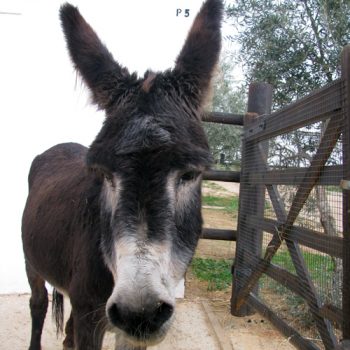
There are many indigenous species in Spain, but donkeys are among the ones I love the most. Maybe it’s because I didn’t have just a dog or a cat when I was a child, but I also considered our donkey as my personal pet. Although this animal’s name is a synonym for stubbornness, donkeys are intelligent, friendly, playful, and eager to learn. Their misplaced reputation for obstinacy is due to their intense feeling of self-preservation: you can’t force a donkey into doing something he is not confident about.

There are many emblematic figures in Spanish culture that are connected to this noble animal: we can’t think about Don Quijote and his inseparable squire Sancho Panza without the figure of one’s horse, and the other’s donkey. Or “Platero”, the friendly donkey of our childhood readings by the Nobel Prize winner Juan Ramón Jiménez!

Unfortunately, donkeys are an endangered species, and not many people seem to care about it: at the beginning of the 20th century there were about 1,250,000 donkeys in the country, but now their number has dwindled to just 65.000. Traditionally they have been used as working animals in agriculture, but the mechanization of rural work left these animals without “employment”, so the need to keep them decreased.

We have to honour the work of charity associations such as the Donkey Sanctuary, and their Spanish brand “El Refugio del Burrito” in Málaga. They care for donkeys and mules, protect them from abuse, monitor their work conditions, as in the case of the touristic “burro taxis” in Mijas, and use them in therapy with physically or mentally disabled children. The benefits these noble animals offer to them are amazing!

Now let Julito introduce himself: he is one of the guests in this sanctuary. I hope that, after reading his story, you will want to become more involved with them, or maybe adopt one! You can do that here: http://www.elrefugiodelburrito.com/

Julito

“Julito has a very interesting story: He was rescued by a man in Madrid, who saved him from being used as lion bait in a Safari Park! Once rescued, Julito decided it was time to develop his full potential… and started a singing career that earned him his name (After Spanish crooner Julio Iglesias)! Indeed, braying is what Julito seems to enjoy the most. Julito was relinquished to us when his rescuer, who loves him dearly, could no longer take care of him. He wanted to make sure that Julito had the best possible life. We are proud to present this Donkey Divo in our adoption scheme!

In spite of being a true donkey crooner, our charming Julito is not a divo at all, and is always kind and sharing with his donkey friends and neighbours. Ask Lungile! Ever since Julito moved in to his beautiful paddock-villa, he became good friends with neighbouring Lungile. Every morning, when Julito has decided his diet does not allow him any more of his delicious extra feed, he picks up his bucket, knocks on Lungile’s fence, and passes him the treat. He will then croon a beautiful bray, as his friend enjoys the delicatessen… you just can’t get more generous than that!”

YouTube Preview Image