Archive for November, 2010

Esperanto Hospitality Network – Pasporta Servo

Posted on 29. Nov, 2010 by in Travel

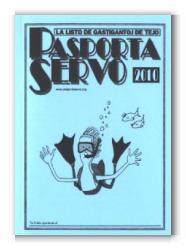
Pasporta Servo book

Want to travel the world, but don’t have much money? Would you rather get to know the locals instead of staying in a hotel? Enter Pasporta Servo (PS), a hospitality network with 1450 hosts in 91 countries. The only requirement: speak Esperanto.

I used PS while I was travelling through 14 countries in Europe for five months and always had an interesting experience. To summarize, I’d say there are two different stereotypical types of PS stays: with college students and families. With college students, you typically get a key, they might treat you to breakfast and then you’re pretty much on your own. With families, you’ll often feel like you’re part of the family during your stay, join in their meals, work around their schedule, etc.

I would say that staying with a college student tends to be more fun. You may be sleeping in a sleeping bag on the floor or on a couch, but you’ll probably have a good time. Many have very busy schedules, so you’ll likely get a key, so they don’t have to worry about letting you back in, etc. They’ll often treat you to breakfast, but note that this is completely not necessary according to the terms of the network. You might also be invited to join them for a pub or club in the evening to hang out with their friends! This is an ideal time to learn more about the people and the country while having a few drinks and maybe some dancing.

With a family you’re more likely to get your own room and also be invited to meals. With some families I was accepted very quickly and they made me feel like I was just another member of the family. I ate with them, walked the dog with them, went shopping, etc. It was definitely an interesting view into the everyday life of people in that country. Of course, a disadvantage is that they will generally want to know where you’re going and when you’re likely to come back, but it’s a small price to pay for such an interesting experience!

If you’re lucky, then wherever you’re staying, there might be a local Esperanto speaker who has the day free to show you around where the tourists don’t normally see. I think the most amazing story I’ve heard in this regard is of Jordon Kalilich’s trip to connect with his family heritage in Croatia. I don’t want to spoil it, but let’s just say it involved taking a ferry to a small town and getting to know some sheep. So, now it’s your turn! Where do you want to travel? Are there hosts there? I’d love to hear of your travel plans! If you’ve already travelled with Pasporta Servo, tell us about your adventures, just leave a comment below!

Signing up for an Esperanto conference… in Esperanto! (Part 2 of 2)

Posted on 22. Nov, 2010 by in Uncategorized

In my last blog post, I started to explain how to sign up for an Esperanto conference such as determining how long to stay and where.  Now, where were we… how about food?

Do you want to cook your own meals?  Most people like to not worry about meals and just join everyone in the cafeteria, but some people love buying their own food and cooking.  If you want to cook yourself, keep the following in mind: you’ll be buying your groceries in a foreign country, so things may be harder to find or stuff you’re expecting may not be available and everything will be in a foreign language!  Also, you’ll want to ask what kind of kitchen will be available to you and what equipment you might need to bring along (like pots, pans, etc.).  This can vary quite a lot from conference to conference, so be prepared!  To get a feel for the prices, the lodging at JES costs 150€ for the entire week in a youth hostel with food, 110€ for mass lodging with food or 35€ for mass lodging and cooking yourself.

So, now that we have lodging and food out of the way, do you want to contribute to the program?  Giving a lecture is an excellent way to learn a language!  You can find a topic that interests you and may not be well known to others and look up all the words related to that to prepare yourself. Don’t be afraid, participants are generally quite patient with beginners and if you’re missing a word during your lecture, just ask, and someone from the audience will help you!

Most Esperanto conferences have a projector in case you want to bring your laptop and give a Powerpoint presentation, but you might want to get more creative and do something more interactive, like teach a dance!  You can also volunteer at the registration desk or serve tea or beer during the evening program.  Typically when you volunteer, you’ll also get a rebate on the cost of attending, so that’s another great way to immerse yourself in Esperanto on the cheap.

All the conferences details are now taken care of, time to pay, but how?  If you live in Germany or Poland, you can pay effortlessly to a German or Polish bank account.  Barring that, the easiest way is probably to pay through UEA to their account peja_l via credit card or paypal.  I’d recommend keeping proof of payment in case it can’t be found when you arrive at the registration desk.  Usually there is no problem, but it can speed things up in rare instances.

In any case, I hope this has helped you sign up for an Esperanto conference and I hope to see you there.  Feel free to leave any questions in the comments!

Signing up for an Esperanto conference… in Esperanto! (Part 1 of 2)

Posted on 21. Nov, 2010 by in Uncategorized

Ok, so after my last blog post, you’ve decided you want to sign up for an Esperanto conference, great!  But you looked at the website and saw aliĝilo, kotiztabelo, memzorgantejo and landkategorio.  Ok, you may understand those words, but what do they mean in context?  Well, Transparent Language to the rescue!  To sign up, you’ll have to find the registration form (aliĝilo, literally: joining tool).  You fill out basic contact information and then you have some decisions to make.

How long do you want to stay?  How much luxury do you want in your sleeping arrangements?  Do you want to eat in the cafeteria or prepare your own food?  Want to contribute to the program as in give a lecture or help out in some other way, like serving tea in the gufujo?  How will you pay?  Aaaah, so many questions!  But, if you’re like most Americans, you love options, but more than that, you like to be informed about the options you have, so let’s get started.

How long do you want to stay?  Note that the program cost is often the same no matter how long you stay.  Also, the cost for staying overnight with food is often the same for say 3-5 days as for the “flat rate” of the entire week to encourage people to stay longer.  So, paying for the program also brings up these landkategoriojn.  Let’s look at an example of a kotiztabelo from the Junulara E-Semajno:

PROGRAMKOTIZO

La kotizo dependas de via aĝo kaj loĝlando, tamen ne dependas de longeco de via partopreno en la aranĝo. [The cost depends on your age and country of residence, however it does not depend on the length of your participation in the event.]

Aĝo A-lando B-lando C-lando
< 18 35 € 45 € 60 €
18 – 30 40 € 50 € 65 €
> 30 45 € 55 € 70 €

Land-kategorioj:

  • A – Albanio, Bjelorusio, Bosnio-Hercegovino, Bulgario, Kroatio, Makedonio, Malto, Moldavio, Montenegro, Portugalio, Rumanio, Serbio, Ukrainio, ĉiuj landoj de la Rusa Federacio, Azio, Afriko, Amerikoj kaj Aŭstralio.
  • B – Ĉeĥio, Estonio, Grekio, Hispanio, Hungario, Latvio, Litovio, Pollando, Slovakio, Slovenio
  • C – ĉiuj aliaj

It’s been quite a tradition of Esperanto meetings to encourage participation of ali-land-anoj (foreigners, literally: other-country-members) by making prices lower for people who either have to travel quite a distance (like from the USA to Europe) or those living in poorer countries like from Eastern Europe.  Also, the older you are, the more likely you will have more money, thus the more expensive the conference will be for you.

How much luxury do you need?  You basically have two options: stay in the youth hostel (junul-ar-gast-ejo, literally: youth-group-guest-place) or stay in a common area and sleep on the hard floor with your own sleeping bag (amas-loĝ-ejo, literally: mass-lodging-place).  Mass lodging can make it possible for people with very little money, but also little comfort requirements to attend a large Esperanto conference at a very affordable price.  I’ve heard of Russian students who hitchhike for a week in the winter (!!) to attend an Esperanto conference in Germany.

In the next blog post in this series, I’ll answer the remaining burning questions, so continue reading!