


Archive for 'Culture'
Traditional Japanese Hats Posted by Ginny on Jul 26, 2010
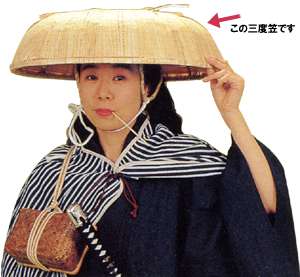
The takuhatsugasa (托鉢笠) was a hat worn by travelers to avoid the glare of the sun or protect the face from rain. The hat was made of rice straw woven together. A good portion of the hat shields the face, and if you watch samurai movies, you’ll notice that the hat was used to shield…
Japanese Swords Posted by Ginny on Jul 23, 2010
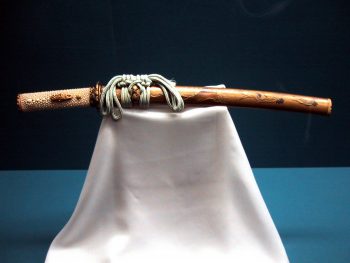
The samurai class has long been disbanded and the use of swords in public places has been banned. However, the swords of the samurai are still of keen interest to collectors and sword aficionados. Just by looking at the sword, you can tell the period in which it came. If only swords could talk! Imagine…
Woodblock Prints Posted by Ginny on Jul 20, 2010
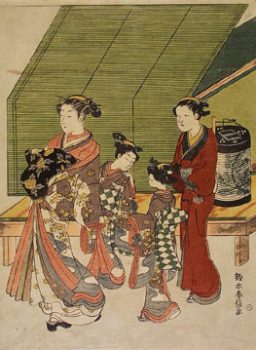
Moku Hanga (木版画) or woodblock printing is a unique art form of Japan. To make a woodblock print an image was painted on a thin piece of paper called washi (わし) and glued to a flat piece of wood. Then the artist would carve away an image on the wood. Lastly, the ink was added…
Japanese Painters Posted by Ginny on Jul 14, 2010
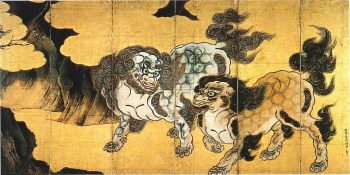
I can’t list all the Japanese painters that ever lived because there is simply too many to count. What I can do is list some of the more famous ones. Hasegawa Tōhaku (長谷川 等伯) is known for his reserved style of painting. One of his famous paintings is called Shōrin zu byōbu (松林図 屏風), which…
Royal Wedding Attire Posted by Ginny on Jun 29, 2010
Seventeen years ago in June, Prince Naruhito (皇太子徳仁親王) married a commoner named Masako Owada (小和田 雅子) : After the ceremony, the Prince changed into a black suit and the newly crowned Princess changed into a white wedding dress. The actual wedding ceremony was held in the traditional Japanese style for royals. In the heat of…
Japanese Gardens Posted by Ginny on Jun 26, 2010
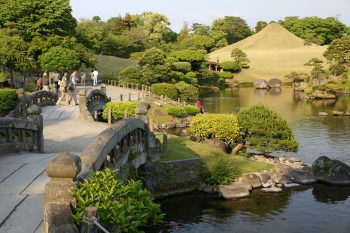
In some parts of the world, the weather is getting warmer and more people are venturing out to see the different varieties of Japanese gardens on display. A Karesansui (枯山水) is a type of garden where the natural landscape is used in a harmonious manner to create a picturesque scene. Gardens of this variety…
のが + … Posted by Ginny on Jun 23, 2010
You can indicate whether someone is good at something by using のが上手です. 比嘉さんは日本語を話すのが上手です = Mr. Higa is good at speaking Japanese (ひが/比嘉 = Higa. さん = Mr. は = subject particle. にほん/日本 = Japan. ご/語 = language. を = direct object marker. はなす/話す = speak. のがじょうずです/のが上手です = is good at [doing]) You can also indicate…