


How to calm someone down, en español Posted by Adir on Sep 23, 2010
You know those times when you need to calm someone down when they’re very nervous or angry because something bad or unpleasant has happened? Well, let’s learn some really useful expressions to express this. ¡Anímate! – Cheer up! ¡Cálmate! – Calm down! ¡Que eso no te saque el sueño! – Don’t lose your sleep over…
Spanish Lesson Intermediate 5 Form and use of the Futuro Perfecto tense Posted by Laura & Adam on Sep 22, 2010
¡Hola! ¿Qué tal? Hoy vamos a ver el tiempo Futuro Perfecto. The equivalent tense in English is “I will have done, you will have done, etc…” Primero, vamos a ver la forma (how to construct the tense) y después veremos el uso (when to use it) FORMA: La forma tiene dos partes: Primera parte: verbo…
Reviewing Irregular Past forms, With Music! Posted by Adir on Sep 21, 2010
Yeah, you know how much I love Latin music and I try to do something with songs in my classes all the time. Spanish irregular past verbs forms are sometimes hard to memorize and this song by Thalia can help you with the following verbs: hacer, querer, estar, tener and poder. Learn the song and…
The Bogeyman, en español Posted by Adir on Sep 20, 2010
When we were kids we used to believe in the Bogeman, that legendary monster that comes to eat children who don’t want to go to sleep or who are crying for no reason. Here are some very common “lullabies” containing the bogeyman in Spanish. Duerme niño, duerme, (Sleep, kid, sleep) duerme, que viene el coco…
Vocabulario: Accidentes geográficos Posted by Adir on Sep 17, 2010
Hi, there! Let’s learn today some vocabulary related to geographical features en español. 1. el acantilado – cliff La tormenta arrojó el bote contra los acantilados. – The storm threw the boat against the cliffs. 2. el cañón – canyon Fuimos a visitar el Gran Cañón del Colorado el año pasado. – We went to…
Bandoleros Posted by Magda on Sep 16, 2010
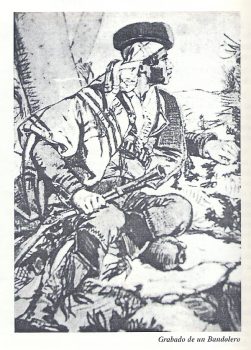
Historic events often facilitate the formation of social groups and characters that turn into either heroes or villains. When these become important, art, literature, and even music, all contribute to their immortality. This is what happened in Spain with the figure of the bandit. Just like in many other countries, bandits, criminals, and smugglers have…
Spanish Lesson Beginner 5 The Spanish alphabet and questions related to spelling Posted by Laura & Adam on Sep 15, 2010
¡¡Hola!! I hope you are all well and enjoying your Spanish studies. Today we are going to learn the Spanish alphabet, how to spell and how to ask someone how to spell something. I hope you find the class useful. Alfabeto: Alphabet: A: a, B: be, C: ce, CH: che, D: de, E: e, F…