


Mafalda, l’enfant terrible Posted by Magda on Sep 14, 2010
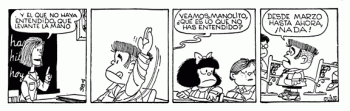
She’s a girl. She’s six years old. She loves the Beatles, pancakes, democracy, and human rights… and she hates soup. Does this sound familiar to you? No? Maybe it will, if I give you just a single name: Mafalda. The character of Mafalda, her family and friends, were created in 1962 by Joaquin Salvador Lavado…
Vocabulary: backpacking in Europe or Latin America Posted by Adir on Sep 13, 2010
Hey, there! If you have that adventurous and restless spirit of going around the world with only a backpack this is the post for you. Let’s learn some vocabulary that can be useful when you’re backpacking (or learn it just for the fun of it, really!). 1. cubremochilas – backpack covers 2. bolsas de plástico…
Los Refranes Posted by Adir on Sep 11, 2010
Los refranes are folkloric sentences that carry ideological values and the way people think. They are, therefore, ways of expressing culture and play a moralizing role in society. Let’s check out some very interesting refranes with their translation and thematic explanation in Spanish. 1. Perro ladrador, poco mordedor. – A dog that barks a lot…
Study tip: how to improve your Spanish pronunciation Posted by Adir on Sep 10, 2010
Ah! The Spanish pronunciation! For English speakers it seems as if it’s something out of this world, but there’s always a way out, trust me. Here I’m going to give you some cool tips so you can improve your Spanish pronunciation. Remember, being great at anything takes some time, so don’t be hard on yourself…
Mexican culture: El Mariachi Posted by Adir on Sep 9, 2010
Mariachi music is one of Mexico’s greatest traditions. The term mariachi comes from the Coca Indians and it means “music”. It’s considered one of the most romantic music forms all over the world and in a mariachi band you can find violins, trumpets, a guitar, a vihuela (typical mariachi guitar) and a guitarrón (a big…
Spanish Lesson Advanced 4 Verbos con doble significado según se usen con indicativo o con subjuntivo Posted by Laura & Adam on Sep 8, 2010
Hoy vamos a hablar de verbos con doble significado según se usen con indicativo o con subjuntivo. Aquí no podemos aplicar los usos del subjuntivo que ya conocemos. Son verbos excepcionales que se pueden usar con los dos modos y significan dos cosas diferentes. Acordar/decidir + indicativo: Pensar de común acuerdo (think) Patricia decidió que…
Las Cabañuelas, or an ancestral weather forecast Posted by Magda on Sep 7, 2010
Who hasn’t checked the weather on TV before going on a trip or when planning a vacation? Well, in Spain we have more accurate way than just listening to a weather person, and that is to follow the Cabañuelas. This weird term refers to an ancient method of predicting weather. Used by our grandparents, simple…