Attan, the Afghan National Dance

Posted on 18. May, 2012 by in Uncategorized

Attan, the Afghan National Dance

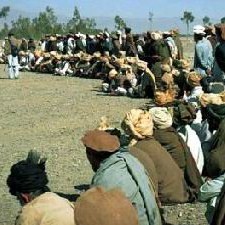
Attan which is referred to as the Afghan National Dance is the very famous Afghan group Dance in Afghanistan. Attan is a very old traditional dance. It is said to have been one of the religious traditions of  the pagans living in the area that  is called Afghanistan today. This dance later became part of the Pashton Muslim  tribes’ tradition.

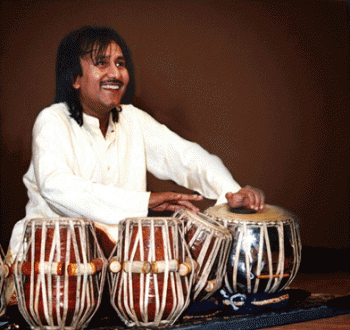
The dance is preformed to Dohul, which is a big barrel two-sided drum, and usually accompanied by other musical instruments like flute, however today the electronic musical instruments are also used to produce the music for Attan. The dance usually starts with a small group of men, dancing to a slow beat of the drums, and more people join the group as the dance progresses. The person with the best dance skills leads the team dancing in a circle. The dance gets faster little by little reaching to a point where the number of people in the group decreases and those with the most skills usually remain the last people in the groups.  The Attan gets most exciting when it gets to the fastest point where the remaining Attan dancers show their skills and moves. The lead of the team controls the drummer signaling him the number of beats and the types of beats he wants.

Afghans Perform this Dance to celebrate various occasions like weddings, national holidays, victories and other happy occasions. It is also a good party-dance with friends.  Both men and women perform Attan, the only major difference is that men perform the Attan in both public and private but women perform it in private such as weddings and parties where the audience is only women.

The following are some of the related vocabulary

Dool                ډول           drum

Toola              توله            flute

Atann              اتڼ        Attan dance

Natsaa             نڅا         dance

Mili                 ملي          National

Mili atann ملي اتڼ           National dance/National Attan dance

 YouTube Preview Image

Types of the letter ی (yaa) in Pashto

Posted on 09. May, 2012 by in Uncategorized

Types of the letter ی   (yaa) in Pashto

Out of 44 letters in Pashto alphabet five of them are the variations of the letter ی  (yaa). These letters are all called “yaa” and look almost alike but they are different letters and have different functions and sounds. Sometimes even the native Pashto speakers are confused by the types of the letter yaa. Understanding the difference between the sounds and usage of these letters is very important. Because by replacing one type of yaa with the other the meaning of a word or sentence totally changes. Or a feminine word changes to masculine… etc.

The best way to learn and remember the differences between these yaa is to remember their distinctive sounds and memorize them in the form of a sentence.  In the example sentences you will be able to see their usage and memorize the sentences for future reference. Also in the accompanying video you will hear the sounds of each type of the letter yaa and the pronunciation of the example sentences.

Masculine Yaa   ی

This yaa does not have any dots and is called masculine yaa because it is used at the end of masculine words .this type of yaa only appears at the end of the words.  This yaa is also used at the end of past participle of masculine verbs. When you are first learning Pashto you might not hear the differences in the sounds of these different types of yaa but later you will be able to differentiate them.

Examples, سړی  (man), کوچی  ( nomad) ښکلی (handsome)تللی  (has gone)

Sarganda Yaa ي

This yaa is called sarganda yaa, it has two horizontal dots underneath it. It is comparatively easy for the learners of Pashto to remember the sound of this yaa, because the sound of this yaa is like the “ee” in the word “see”. It can be used both in the middle or end of a word. It is usually used at the end of masculine plural words.  Example: سړي  (men) زمري (lions)

Feminine yaa ۍ

Feminine yaa has a little tail at the end and does not have any dots. It is called feminine because it appears only at the end of feminine words. It can only be used at the end of feminine words. The sound of this yaa is “ai” and is easy to remember.  Examples:  کوچۍ (female nomad) هګۍ  (egg)

Verbal Yaa ئ

The verbal yaa has the Hamza sign above it   and has no dots. It is called verbal yaa because it is used only at the end of verbs and cannot be used anywhere else. The sound of this yaa is the same as the feminine yaa but only the usage is different. Examples: لرئ  (you have) وګورئ (look!)

Long Yaa ې

Long yaa has two vertical dots underneath it. it is used with the plural of feminine words that end with the letter ه and sometimes some feminine words end with the long yaa. ښځې   (women) کوټې  (rooms) ملګرې  (female friend)

In the following example sentences, the meaning of the sentences will show the usage of the types of yaa and help you remember the sounds.

د کوچۍ مېړه هم کوچی دی

د کوچۍ خور زما ملګرې ده

هغوی ښه خلک دي. ښه پوهېږئ

Translation: The husband of the nomad is also a nomad. The sister of the nomad is my friend. They are good people. You know well.

Now watch the video and listen carefully to the sounds of the letters and the examples.

YouTube Preview Image

Affirmative, negative, and interrogative simple sentences in Pashto.

Posted on 07. Mar, 2012 by in Uncategorized

Affirmative, negative, and interrogative simple sentences in Pashto. The Pashto sentence structure is  subject-object-verb.

English

Transliteration

Pashto


Hamed has a pen.


hamed yaw qalam laree.


حامد یو قلم لري                             


Hamed does not have a pen.


hamed yaw qalam na laree.


حامد یو قلم نلري                            


Does Hamed have a pen?


aayaa hamed yaw qalam laree?


آیا حامد یو قلم لري؟                         


Hamed is a student.


hamed yaw zda kawonkai  dai.


حامد یو زده کونکی دی                   


Hamed is not a student.


hamed yaw zda kawonkai na dai.


حامد یو زده کونکی ندی                   


Is Hamed a student?


aayaa hamed zda kawonkai dai?


آیا حامد یو زده کونکی دی ؟              


Hamed is going.


haamed zee.


حامد ځي                                     


Hamed is not going?


haamed na zee.


حامد نځي                                    


Is Hamed going?


aayaa  hamed zee?


آیا حامد ځي؟                                 


Hamed is present. 


haamed hazer dai.


حامد حاضر دی                             


Hamed is not present.


haamed hazer na dai.


حامد حاضر ندی                            


Is Hamed present?


aayaa hamed hazer dai?


آیا حامد حاضر دی؟                         


This is a book.


daa yaw ketaab dai.


دا یو کتاب دی                               


This is not a book.


daa yaw ketaab na dai.


دا یو کتاب ندی                             


Is this a book?


aayaa  daa yaw ketaab dai?


آیا دا یو کتاب دی؟                           


That is a cat.


hagha yawa peshoo da. (fem)


هغه یوه پیشو ده                             


That is not a cat.


hagha yawa peshoo na da.(fem)


 هغه یوه پیشو نده؟                           


Is that a cat?


ayaa hagha yawa peeshoo da?


آیا هغه یوه پیشو ده؟                         


Hamed is coming.


haamed raazee.


حامد راځي                                  


Hamed is not coming.


hamed na raazee.


حامد نراځي                                 


Is Hamed coming?


Aayaa hamed raazee?


آیا حامد راځي؟