Archive by Author

Best Russian Candies

Posted on 29. Mar, 2013 by in Russian food

more Russian candy

You might be getting ready to celebrate католическая Пасха (Catholic Easter) this Sunday in which case you are probably too busy to read a long-winded post. So let’s keep it short and sweet. Let’s talk about конфеты (candies).

What are some of the Russian alternatives for the candies you usually buy around Easter holiday? (If you don’t like candies, then may I interest you in other Russian sweets?)

Let’s begin with the traditional драже (dragee). The word драже might sound similar to дрожать (to tremble). Sure, a little сладкоежка (someone with a sweet tooth) might indeed дрожать от нетерпения (tingle with impatience) at the sight of this candy while his parents might содрогаться (shudder) at the damage sugar does to their child’s teeth. However, the words are not related.

Драже is just a generic name for a small roundish candy, such as M&Ms, Jelly Beans, chocolate covered almonds or multi-colored glazed raisins known as морские камушки (sea pebbles). Just as Jelly Beans or Skittles, драже do not come individually wrapped into обёртки (wrappers). Which is a major time saver.

Next up is леденцы (sugar candy) which can be на палочке (on a stick) or not. Some are made as драже, but they usually end up sticking together into a shapeless blob and are best avoided. For some reason, леденцы на палочке look especially irresistible to children (and even some adults). Maybe that explains the other use of the phrase на палочке. When in Russia, try to find and enjoy traditional леденцы на палочке (sugar candy on a stick), for example a translucent red петушок на палочке (rooster on a stick).

Another word for леденец is карамель. Well, at least it’s the candy industry term for леденец. But when we talk about карамельки, we usually think of candy that’s made with melted sugar and molasses. Oh, and it usually has some kind of начинка (filling) inside, including fruit-, berries-, cream- and liqueur-based ones. And it’s never on a stick. And it’s always shaped like a батончик (short thick stick). So it’s pretty much nothing like леденец in my book. Карамельки (little caramel candies) are usually individually wrapped in colorful фантики (wrappers).

By the way, these simple paper wrappers became the gateway into the world of коллекционирование (collecting) for many children.

Another type of карамель is ирис (taffy). Do not confuse it with the flower ирис even though the candy got its name after this beautiful flower. Чем старше мы становимся, тем меньше нам хочется ириски (The older we get, the less we want to have taffy). This stuff will pull your коронки (dental crowns) right off, I tell you!

Finally, let’s talk about шоколадные конфеты (chocolate candies) or шоколадки (chocolates). There are so many to choose from! First, there are шоколадки с начинкой (filled chocolates), such as пралине (pralines), chocolates filled with fruits or liquor, or light crispy вафли (waffles) covered in chocolate. Each chocolate candy is wrapped in a beautiful wrapper, sometimes two or three (an inner wax paper one, a middle foil one and an outer one with a picture or a design).

Then there are наборы конфет (boxes of chocolates) of all shapes and sizes. Russians buy them as small gifts (yes, even if a box is a giant lavishly decorated one), tokens of appreciations, so to speak. But here’s a hint: if you prefer substance over looks, have a discerning taste, and don’t care for the “life is like a box of chocolates” spiel,  forgo the flashy oversized boxes of pralines for a modest box of Птичье молоко (lit: Bird’s Milk). Don’t aim for looks, but do make sure to check whether it’s fresh. The delicate mousse inside these chocolate-glazed candies won’t spoil, but it will crystallize which will affect the taste.

And that’s it for today.

One more note – if you plan to visit your local Russian grocery store and buy some candies, read the wrappers first. Here are the proper names of some of the most popular and most nostalgia-inducing candies – Ласточка, Мишка на Севере, Красная Шапочка, Грильяж в шоколаде, Кара-Кум, Коровка, Белочка. If the name on the wrapper sounds close, but not quite the same, it means that the manufacturer most likely did not follow the original recipe or quality standards. Also, get familiar with what the images on the classic candy wrappers should look like. If the name matches, but the image is not the same, it’s a подделка (fake).

Finally, buy extra candies and invite your Russian friend for дегустация (tasting). Your friend will surely let you know how the candies you bought measure up to the classics of his/her youth.

How to Curse like a Russian

Posted on 22. Mar, 2013 by in Culture, language, when in Russia

Ok, the usual disclaimer goes here: if you are easily offended, do not read this post. Parental advisory recommended. Using any of these words in public is considered mild hooliganism and is punishable by law.

The three whales of русский мат (Russian curse words) are the three rude words for a male sexual organ, female sexual organ and the sexual act itself. The forth word has a literal meaning of “prostitute”. This in itself is neither new nor original.

What sets Russian obscenities apart from English-language ones is the enormous flexibility and depth of meaning thanks to all the suffixes, prefixes, and compound words formed with матерный (obscene) roots.

It wouldn’t be an exaggeration to say that mastering just one of these three words would get you closer to mastering both the mechanics and that certain je ne sais quoi of the Russian language than штудирование (thorough study of) “regular” textbooks or even reading the classics.

Speaking of the classics, it should come as no surprise that they more than dabbled in мат. I’m not even talking about the modern classics, such as Pelevin or Erofeev. Nope, I mean such светоч (luminary) of Russian literature as Mikhail Lermontov and Anton Chekhov and, of course, Наше Всё (Our Everything), the great Alexander Pushkin himself.

Anyway, most of the times the obscenities are not used in their literal sense, to describe детородные органы (genitals) or половой акт (sexual intercourse). Instead, they are used for just about anything else. They are used to describe a full range of emotions, complex thoughts and actions, and just about any conceivable situation.

But this mind-boggling flexibility achieved with just four very short words pales in comparison to the virtuosity of a true дока (old hand) who can stack them together into intricate ругательства (invective) known as трёхэтажный or многоэтажный мат (the three-stories or multistory obscenity).

Still, please think twice before using even mild матерные слова (obscene words) in a conversation. Yes, you might come across these words in books. And yes, you might overhear them on the streets or in YouTube videos. And yes, expect to hear at least a few of these крепкие словечки (strong words) in a casual atmosphere of застолье (a feast), especially if the conversation turns to politics or economy. Still, resist the temptation to join in or to show off your grasp of colloquial Russian, especially if

1. You are in the presence of minors or women

2. You are a woman. Women should never материться, как грузчики (curse like a stevedore).

3. You do not have a very firm grasp of all the intricacies of meaning and usage. One wrong prefix and you just call something awesome a total junk. Or, in case of the image at the top of the post, wrong stress turns a very rude “don’t talk!” into no less rude “don’t steal!”

4. You are in a public place – remember, it is against the law, even if your favorite soccer team is not doing their best… again.

Speaking of cursing in public now being illegal, the new Russian law levies fines on any незапиканный (unbleeped) or incorrectly/partially bleeped out нецензурная ругань (strong language; lit: bad language that is not allowed by censorship). This goes not only for what the anchors or journalists themselves might utter, but extends to comments and reactions from readers, listeners and viewers, including comments on the articles or news clips.

Sounds outrageous? Well, as the State Duma explains: свобода речи – это не значит вседозволенность (freedom of speech doesn’t mean permissiveness).

Interestingly, the new law does not create a чёрный список (black list) of forbidden words. Instead, issues will be resolved on a case-by-case basis by expert philologists. One of the authors of the new law explained that the offensive word must be bleeped or *** enough to completely obscure its meaning. He further said:

Если в слове из трёх букв уберёте центральную букву и замените её звёздочкой, это не значит, что никто не поймёт, что у вас написано

(If you take out the middle letter from a three-letter word and replace it with an asterisk, it doesn’t mean nobody understands what you have written)

Can you guess which three-letter word слуга народа (the people’s servant) is talking about? And speaking of the phrase “three-letter word”… It’s a widely used euphemism for the most widely used obscene word in the Russian language. So when you say “да пошёл ты на все три буквы!” (lit: go to all the three letters!) everyone knows exactly what you meant (a very strong version of “go to hell!”).

Does it mean that the public use of euphemisms, such as the above “three-letter word” is also punishable? Too bad because there are truly clever Russian euphemisms for obscenities, such as the word скоммуниздить meaning “to steal”, раздолбай meaning “a good-for-nothing person”,  and едрёна мать, one of the countless Russian phrases with the meaning closest to the English four-letter exclamation.

This brings to mind one бородатый анекдот (an old joke):

На одном заводе процветала матерщина. Директор строго-настрого запретил материться на производстве. Ругаться перестали, но упала производительность труда. Директор на планерке спрашивает ветерана – дядю Ваню, в чём дело.
– Да, знаете, Петр Иванович, раньше бывало скажешь: “Иван, подай вон ту хреновину”, а сейчас пока вспомнишь, как она называется – полчаса пройдет.

Try to translate it using this vocabulary or, if all else fails, Google Translate:

процветать – to flourish

матерщина – from мат (obscenity) is the noun that describes the entire body of obscene words

строго-настрого – an adverb meaning “in the strictest way”, compare to other adverbs such as крепко-накрепко (in the strongest way), перво-наперво (the very first thing), мало-помалу (little by little), скоро-наскоро (quickly)

материться – to use obscenities in one’s speech

планёрка – a work meeting

Oh, but it looks like I haven’t told you the exact words for the big three Russian obscenities. Well, you see, I can’t do it. Women should not curse. Plus, as my Mom always said, интеллигентный человек не матерится (an intellectual does not use obscenities). To this day, it режет слух (sets teeth on edge; lit: grates hearing) when someone around me curses in Russian.

Besides, there are quite a few great resources on the subject, including this Wikipedia article (in English), this Wikipedia article (in Russian), a pretty good Lurkmore article (in Russian), the classic (in Russian), this video (in Russian, a perfect primer to all four big bad words) and, should you really dig deep into the subject, this very comprehensive book. Good luck!

Three Whales and Other Russian Phrases for Counting to Ten

Posted on 13. Mar, 2013 by in Culture, language


I am trying to figure out a way to talk about the три кита русского мата (the three whales of the Russian obscenity) without crossing the line yet without having to use so many *** that it makes the post unreadable. If you have any ideas on how to do this, let me know. In the meantime, let’s talk about these “three whales”. By the way, they were first mentioned by Rob in his comment on the previous post.

While the expression три кита might seem puzzling, it is actually a very common one. It means “the three pillars”:

Три кита музыки – это песня, танец и марш (The three pillars of music are song, dance and march).

But why киты (whales) and not, say, слоны (elephants)? And why три (three) and not один (one) or пять (five)?

To answer this question and to practice Russian comprehension skills, here’s the explanation:

В давние времена люди думали, что Земля – плоская, как блин, и поддерживается на спинах трёх больших рыб. Так как в те времена ещё не знали, что кит – млекопитающее, то китов считали самыми большими рыбами. Люди верили, что три кита удерживают на себе Землю.

(Run this paragraph through Google Translate if you’d like to check your comprehension).

So I thought, using the whales as an example, why not count to 10 using Russian phrases with numbers in them:

1 – Один

Одна нога тут, другая – там (One leg here, the other one – there) – this might sound like a phrase out of a particularly gruesome episode of CSI, but its meaning is absolutely benign. It simply means to get something done in a jiffy, on a double:

Сбегай за пивом, только быстро, одна нога здесь, другая – там (Run and fetch beer, but make it quick).

2 – Два

На два фронта (On two fronts) – you are as likely to come across this phrase in history books as in everyday speech as in

Оказывается, мой бывший встречался ещё с одной женщиной, такая вот любовь на два фронта - Turns out, my ex was seeing someone else, love on two fronts so to speak.

While in the above sentence the meaning of “на два фронта” is clearly “two-timing”, in general the phrase is used to describe a situation when efforts and resources are split between two goals.

3 – Три

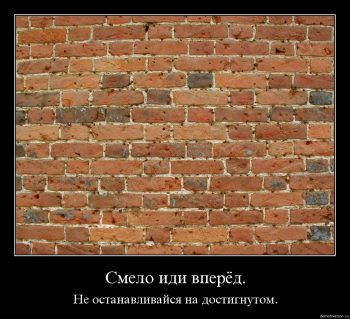
Три кита – see above. Can you name the Three Whales of the Marxism-Leninism from the image at the top of the post?

4 – Четыре

В четырёх стенах (Between four walls) – someone who живёт в четырёх стенах (lives between four walls) is someone who rarely or never goes outside. You can use this phrase to prod your Wii-addicted spouse to go for some Italian:

Дорогой, что мы всё в четырёх стенах, может сходим в ресторан? (Darling, why do we always stay home; how about going out to a restaurant?)

If this fails, guilt trip him with Я для тебя просто сфера услуг в четырёх стенах! (I am just an in-house services provider for you!)

Or you can complain about your cabin fever:

Я больше не могу сидеть в четырёх стенах! (I can no longer stay indoors!)

5 – Пять

Пятое колесо (the fifth wheel) has the same exact meaning in Russian as it does in English. So let’s use пятый угол (the fifth corner) instead. Here’s some geometry – a four-walled room (from the sentences above) has four corners. If you are looking for the fifth corner, it means you are working really hard looking for a place to hide or for an escape route.

Мой пёс боится грома. Каждый раз во время грозы он ищет пятый угол. (My dog is scared of thunder. Every time during a thunderstorm he is trying really hard to hide.)

6 – Шесть

Шесть досок (Six boards) – what can you make with six boards? Yep, a box. What kind of a box? How about the kind that is put six feet under.

7 – Семь

Семь пятниц (Seven Fridays) – do you have a flaky friend, the one who promises to go to a club with you, but calls you at the last moment to say something came up? Or maybe you are the one who can never make up your mind about where to go for your vacation. Or maybe you’ve heard a politician to flip-flop on a particularly important issue? That’s exactly what семь пятниц на неделе (seven Fridays in a week) means – to act flaky, to flip-flop, to change one’s mind in a way that’s irritating or upsetting to others:

Мой друг – человек необязательный. У него вечно семь пятниц на неделе. (My friend is flaky. He always changes his mind about things.)

8 – Восемь

Do you know any phrases that have восемь in them? I don’t. And Восьмое марта (March 8th, the International Women’s Day) doesn’t count for this game. Although, if nothing else, this will do or as we say на безрыбье и рак рыба (something is better than nothing; lit: when there’s no fish, crayfish will count as fish). Besides, crayfish has 8 walking legs. So there!

9 – Девять

Тридевятое царство (The thrice ninth kingdom) – A mythical kingdom of Russian fairy tales, it is also known as тридесятое государство (the thrice tenth state). So basically, it’s a far-away land where math works differently, I s’pose since 3×9=27, but 3×10=30, so how can these two be the same place?

10 – Десять

Десятая вода на киселе (The tenth water of kissel) – ok, so kissel is a type of thick drink of sweet juice and starch. And the entire phrase means “forty-second cousin” or someone who’s a very-very-very distant relative, perhaps not even a relative at all:

Мой дядя Ваня – не самых честных правил, да и вообще он мне не дядя, а так, десятая вода на киселе. (My uncle Ivan is not of the high ideals, and he is not even my uncle, but some forty-second cousin of mine or something.)

Some might argue that it should be седьмая вода на киселе or девятая вода на киселе, or even двенадцатая вода на киселе, but all the versions are equally valid and are in use.

Now is your turn to look for Russian expressions with numbers in them. Can’t think of any? Think of some in your language and find out how to translate them into Russian.