


Archive for 'Vocabulary'
Word search game – family Posted by aziza on Jul 26, 2011
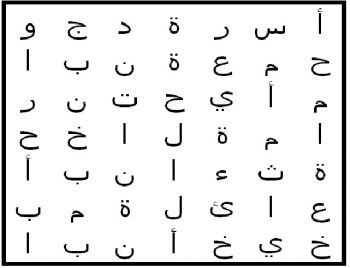
In this post, I have created an Arabic word search game for you. Can you find the 10 words below in the table? Do you know what these words refer to? If not, check the answers post for the translation. All the words are related to family relations. أم أخت ابن أخ خالة…
(2) Arabic Diacritics (Al-Tashkeel الـتـشـكـيـــل ) Posted by Fisal on Jul 25, 2011
The Harakaat الحركات which literally means “motions” are the short vowel marks but Tashkeel refers to other vowel or consonant diacritics.. * Fathah / ـَ / The Fatha فتحة is a small diagonal line placed above a letter and represents a short /a/. The word Fatha itself means “opening” and refers to the opening of the…
Answer of exercise on the use of ذو Posted by aziza on Jul 24, 2011
In this post, I present the answers of the exercise presented in my previous post. There are notes at the end of the post to explain the reason for the answers 1- أحب القصص ذات النهايات السعيدة. I like stories with happy endings. 2- صديقي ذو الشعر القصير اسمه محمد My short-haired friend is called…
Some exercises on the use of ذو Posted by aziza on Jul 23, 2011
In my previous post, I explained the use of ذو, and in this post, I present some exercises on the same topic. Please complete the sentences below with the right form. You need to decide on the gender, number and case of the noun the comes before it. 1- أحب القصص ———— النهايات السعيدة. I…
(1) Arabic Diacritics (Al-Tashkeel الـتـشـكـيـــل ) Posted by Fisal on Jul 23, 2011
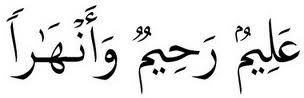
A diacritic التشكيل is an additional mark or sign added to a letter. The term is derived from Greek and means “distinguishing”. Diacritic is both a noun or an adjective whereas diacritical is only an adjective. Diacritical marks may appear above or below a letter or in some other position such as between two…
The Rosetta Stone حجر رشيد Posted by Fisal on Jul 20, 2011
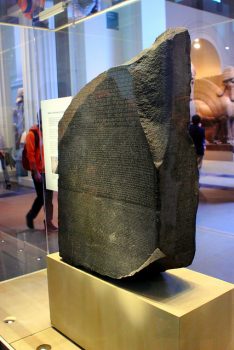
The Rosetta Stone is an ancient Egyptian basalt stele inscribed with a decree فرمان issued in Memphis منف , Egypt in 196 BC on behalf of King Ptolemy V بطليموس الخامس . The decree appears in three scripts: the upper text is ancient Egyptian Hieroglyphs اللغة الهيروغليفية . The middle portion is Demotic اللغة…
ذو Posted by aziza on Jul 15, 2011
ذو is a very interesting word in Arabic. It means ‘the owner of’, ‘one who has’ or ‘one with’. It is one of the ‘five nouns’ that are marked in Arabic by long vowels rather than short vowels, so the three cases of ذو are (ذو) nominative, (ذا) accusative and (ذي) genitive. Consider the following…