


Calligraphy (书画) Posted by Stephen on Sep 28, 2011
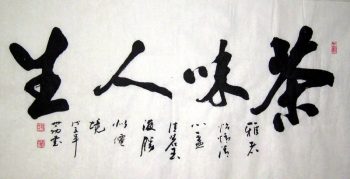
Chinese calligraphy or 书画 (shū huà) stands as a testament to evolution of the Chinese written language. Learning it takes years of practice, a steady hand, and an intense focus to detail that few can master. Chinese calligraphy is both extremely fluid and extremely structured. A missed angle, a frayed brush tip or even a…
Chinese Traditional Instruments: PíPá (琵琶) Posted by Stephen on Sep 27, 2011
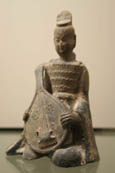
The pípá (琵琶) is a four-stringed, plucked Chinese musical instrument often referred to as the “chinese lute”. Similar to western guitars and mandolins, the pipa has a pear-shaped wooden body with a varying number of frets ranging from 12–30, depending upon the style and sound desired. Unlike the erhu, which is played with a bow (like…
Wǔ Shù (武术) Posted by Stephen on Sep 26, 2011
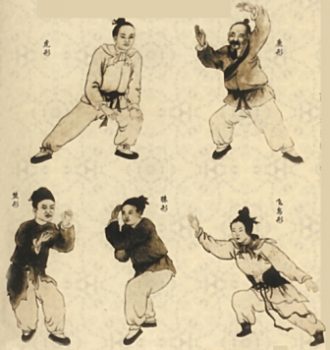
Kung fu is a modern day phenomenon that is more of a culture than the actual practice of Chinese martial arts. Wushu or 武术 (wǔ shù) on the other hand, is a broader term that refers to the many schools (門, mén), families (家, jiā) and sects (派, pài) of Chinese fighting. Much like 功夫, 武术 translates…
Enter Kung Fu (功夫) Posted by Stephen on Sep 25, 2011
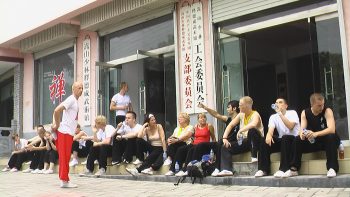
If you are like me, you love kung fu–in all its glory. No matter if it’s a Bruce Lee flick, a kickboxing match or if you’re just practicing some taichi (太极拳 pronounced: tài jí quán) in the back yard–kung fu kicks a$*. The hits, the flips, and who can forget the fumanchus? It’s the art of…
Idioms Explained Posted by Stephen on Sep 24, 2011
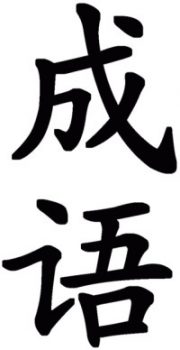
Idioms or 成语 (chéng yǔ) are very prevalent in Chinese writing and even in common day sayings. Much like idiomatic expressions used in English, the Chinese equivalents are an amalgam of history, cultural influences and scholarly debate, imparted upon Mandarin and Cantonese over thousands of years. Further, because Chinese and English are the two largest…
For Whom the Bells Toll: BianZhong (编钟) Posted by Stephen on Sep 22, 2011
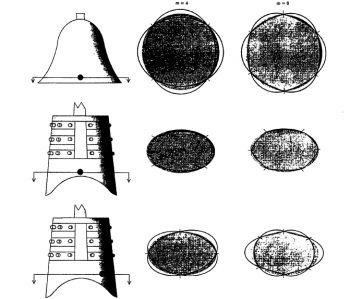
Before the days of zithers, silk-strung bows and reed instruments, making Chinese traditional music was both a simple and grandiose affair. Limited by the tools and resources available back some three millennium ago, it was quite difficult to create instruments with enough precision to replicate specific melodies and notes on an individual scale. Percussion ruled…
The Yin and Yang of GDP and Environment Posted by Stephen on Sep 21, 2011
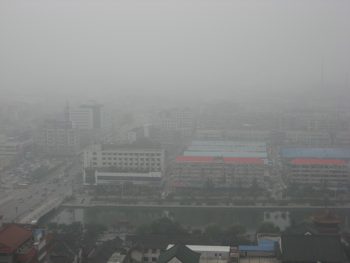
Anyone looking for a lesson in both climate change and sustainability (持续性 chíxùxìng) needs to visit China. In a country full of contradictions or 矛盾 (máodùn), it only makes sense that some of the worse environmental degradation is contrasted by very progressive attempts at conservation and sustainability wherever possible. China is unique because nowhere else…