


Good times, bad times, you know I’ve had my share Posted by Elena on Feb 6, 2011
This past week I finally sat down to watch an episode of the long(est)-running Dutch soap opera, “Goede Tijden, Slechte Tijden,” which has been beloved by 1.3 million viewers once a week since October 1990. I wanted to watch because the show had been mentioned at my office: one of my coworkers proposed that drama…
International Film Festival Rotterdam 2011 Posted by heather on Feb 3, 2011
The 40th edition of the International Film Festival Rotterdam (IFFR) is just about to arrive at its conclusion on February 6th. The IFFR is an annual film festival, held in the city of Rotterdam at the end of January and is considered to be in the realm of other large European film festivals such as…
Word Order? What Word Order? Posted by heather on Feb 1, 2011

Word order in Dutch is one of the grammar topics that many non-native Dutch speakers notice a difference with. I know it is something that trips me up quite often, especially when I am making longer sentences. Word order isn’t something that I can cover in one post, so do watch out for further posts…
Kids these days say the darndest things Posted by Elena on Jan 30, 2011
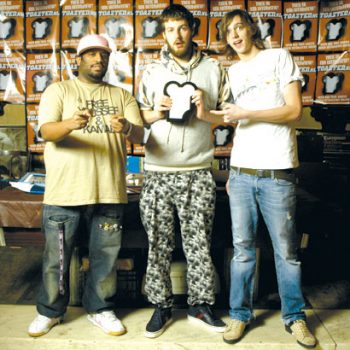
Awhile ago now, I was talking to one of my friends about whether there was any Dutch hip hop I should be covering for this blog. I probably asked with a little bit of a smile, because the idea of Dutch hip hop is funny. He mentioned De Jeugd van Tegenwoordig and Die Antwoord, though…
Questions and Question Words Posted by heather on Jan 27, 2011
In Dutch there is a distinction between ‘yes/no’ questions and questions beginning with a question word (also known as interrogative). Both situations require that you invert (reverse position) the subject and the verb. This is because Dutch is a verb second (V2) language. Meaning that, in the main clause, the verb is found in the…
De or Het? Knowing When to Use Which Posted by heather on Jan 25, 2011

In Dutch there are two definite articles (words that mean ‘the’). These are de and het. The article de is for masculine and feminine nouns. These are also known as common nouns. The article het is for neuter words. Knowing when a word is common or neuter is one of the challenges in learning Dutch, as…
Tinkebell: A brush with contemporary art in the Netherlands Posted by Elena on Jan 23, 2011
This past week, a new editorial by Rutger Ponzen in de Volkstrant revisited the Tinkebell phenomenon. I’d never heard of her before, but she’s a Dutch artist (Tinkebell is, predictably, her pseudonym; her real name is Katinka Simonse) who has made herself famous (at least in Holland) by making art about animals that has tended…