Archive for January, 2012

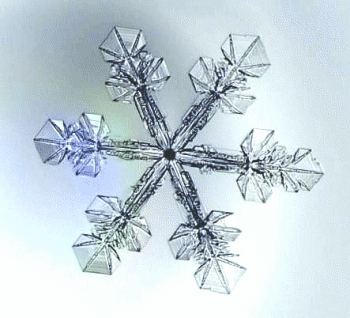
Téarmaí Geimhridh (Winter Terms)

Posted on 30. Jan, 2012 by in Irish Language

(le Róislín)

This winter is proving to be unusually cold (fuar) in some parts of the world (an Eoraip) and unseasonably mild (bog) in others (Meiriceá, b’fhéidir Ceanada).

Before we proceed, let’s look briefly at the pronunciation of the adjectives “fuar” and “bog.” For “fuar,” I’ll simply note that each vowel is pronounced, so it’s “foo-ur.”  That’s noticeably different from most other 2-vowel combinations in Irish, which usually have just one discrete sound (fear, duine, buí, maith, srl.).

The pronunciation of “bog,” might seem to be straightforward, but it is worth noting that it’s not the same as the pronunciation of “bog” in English, although the two words are historically related (a bog being a soft place).  “Bog” in Irish, is most commonly used as an adjective (soft, tender, lenient, mellow, loose).  As such, the short “o” sound is as in “pota” (not quite the same sound as English “pot”) or “ros.”  I emphasize this because it is easy to assume that two similar-looking words, especially short one-syllable ones with only one vowel, would be pronounced the same, even if they are in two different languages.  It’s almost a gut reaction (and I’ve heard the phenomenon happen many times over the years in teaching Irish).  But chance homographs from two different languages are rarely pronounced alike.  Irish and English share a number of homographs but they are different in pronunciation, meaning, and part of speech.  Examples include as/as, is/is, air/air, and gorm/gorm (the English “gorm” being the nearly defunct root of “gormless”).  And that intriguing situation might actually be ábhar blog eile.

To wrap that up, “bog” in Irish isn’t actually the noun for “a bog” (a place for digging peat, or in the U.S., for growing cranberries); that is generally “portach” (or “criathrach,” although that is more specifically a “pitted” bog; hmm, a “cranberry bog,” I might have to re-think that one since cranberry bogs don’t look anything like an Irish “portach”).  “Bog” in Irish can also be a verb (soften, become soft, loosen), or it can be a noun referring to something soft, as in “bog na cluaise” (the ear lobe).

Anyway, now that we’ve established the basics (geimhreadh iontach fuar vs. geimhreadh bog), let’s look at some other winter-related words:

an geimhreadh [un GYEV-ruh or GYEER-uh], the winter (comparable to Welsh “gaeaf”)

geimhridh, [GYEV-ree], of winter, as in “éadaí geimhridh” or “glaslus geimhridh;” when used with feminine singular nouns, gheimhridh [YEV-ree], as in “aimsir gheimhridh

… an gheimhridh [un YEV-ree], of the winter, as in “ráithe an gheimhridh” (winter-time, lit. the season of the winter)

geimhrí [GYEV-ree] or geimhríocha [GYEV-ree-ukh-uh], winters, and na geimhrí, or na geimhríocha, the winters

geimhreata or geimhriúil, wintry

As for “snow,” the basic word is “sneachta,” with the following forms:

an sneachta, the snow

… an tsneachta, of the snow, as in “doimhne an tsneachta

It doesn’t occur much in the plural, but it can, so, we do have “na sneachtaí,” the snows.  But, for whatever reason, the classic phrase “the snows of yesteryear” (one of the few plural uses even in English) remains in the singular, as “sneachta na bliana anuraidh.”  I would have thought “sneachtaí,” but so be it.  Yossarian did pluralize his “Snowdens of yesteryear” quip (Catch-22), but that, of course, is derivative.  Sneachtaí Kilimanjaro, would be a legitimate example, is dócha, but I see neither hide nor hair of it online.  Don’t tell me no one has translated Hemingway into Irish!   An ndeir tú (tú being Google!) liom?

And now, a little more vocabulary practice.  Can you match these winter terms with their definitions?  Freagraí thíos (A).

1. sneachta 2. flich-shneachta 3. calóga sneachta 4. reodóg 5. síobadh sneachta 6. greallach shneachta
a. snowflakes b. icicle c. snow d. slush e. sleet f. blizzard

And what happens to some of our English phrases that evoke wintriness in a more abstract or metaphoric manner?  As one might guess, their Irish equivalents are a little more literal.  Can you match up these expressions?

1. wintry reception 2. a dead frost 3. slushy sentimentality 4. wintry smile
 a. gáire beag fuar b. truflais mhaoth-chainte c. fuarfháilte d. gan aon mhaith

More wintry terms coming up, in upcoming blogs, since we are i ndúlaíocht an gheimhridh, at least from the North American perspective (winter season = December, January, February, equinoxes notwithstanding).  In the traditional Irish calendar, spring starts on Lá Fhéile Bríde (1 Feabhra)Go dtí sin, agus ag smaoineamh ar an ngrian, SGF, Róislín

Gluaisín: bog, mild (re: winter, not for a “mild personality,” which would use adjectives like “séimh” or “caomh,” or “mild beer,” which would be “séimh”); greallach, loam, mire, trampled ground

Freagraí A: 1c, 2e, 3a, 4b, 5f, 6d; Freagraí B: 1c, 2d (as in “failure,” rather dated slang, I know, but still metaphoric), 3b, 4a

Nóta: sneachta vs. sneachtaí.  Hmm, Rossetti kept the plural in his iconic translation of “Mais où sont les neiges d’antan?” but I see a German translation in the singular “Wo ist der Schnee vom vergangenen Jahr?  So, is snow countable or uncountable?  Is Irish different from English in this regard?  Or does it matter, since the “snows” in Villon’s poem are actually women, such as Joan of Arc, Heloise, and “Berte au grant pié” (Bertha of the Big Foot, as per the medieval French spelling).  Looking for “sneachtaí” online, I find very few actual uses in context.  Most of the 63 hits (a pretty small sample, at that) are simply dictionary entries that repeat the existence of a plural form.  An unusual exception is the phrase “dá mbeinn i dTír Bheannaithe na Sneachtaí,” a reference to Tibet, from a poem called “Féinghlacadh” by “TQ” (a Dubliner whose full name isn’t given in his blog,   http://machnamh.blogspot.com/2006_03_01_archive.html).  On the other hand, Irish poet and translator Gabriel Rosenstock treats Issa’s “snows of Shinano” as singular in his phrase “sneachta Shinano” (http://haikuguy.com/issa/rosenstock.html).  And that raises a question that I can’t answer – is “snow” countable or uncountable in Japanese?  Bhuel, bia smaoinimh as seo amach.

Nuashonrúchán (Update): Nóta re: Ceartúchán do na Freagraí (Freagrai A):  Tá siad ceartaithe (corrected) agam anois.  Bhí dhá fhreagra “c” agam.  Brón orm má chuir sé amú thú.

TSAGGSSL (An Gaeilge É Sin? Is That Irish?)

Posted on 26. Jan, 2012 by in Irish Language

(le Róislín)

Bhuel, to answer the title question, braitheann sé.  It depends.  You might remember “TSAGGSSL” from the last blog.  No, it’s not some permutation of “Yggdrasil” or a new companion to the smallish list of words with 8 letters but only one vowel.  Yes, there are some examples of those 8-letter wonders in languages like Béarla and Gearmáinis and perhaps i dteangacha eile (for samples, féach nóta 1 thíos).

So what is TSAGGSSL, aside from seacht gconsan agus guta amháin?  It stands for “Tá súil agam go gcuidíonn sé sin leat.”  IOW, “HTH.”  At least for most purposes, it would mean the same as “Hope this helps,” but without the edge of sarcasm that “HTH” sometimes has.  I say “for most purposes” since HTH, like many abbreviations, has more than one meaning (hand-to-hand, etc.).

And what exactly does “Tá súil agam go gcuidíonn sé sin leat” mean?  “Hope is at me that that helps with you,” in other words, “Hope this helps.”  Broken down further:

Tá                   súil      agam    go       gcuidíonn       sé         sin       leat

(there) is +       hope + at me + that +  helps +            it +       that +   with you.

“Súil,” as many of you will recognize, also has a more literal meaning, “eye.”  There is another word for hope in Irish, “dóchas,” which is usually used more abstractly, and which also shows up in the place name, “Rinn an Dóchais.”

Our “Tá súil agam …” sentence  is in the singular, addressing one person, as marked by the word “leat.”  We could also use “libh” for “with you” (plural), but the acronym would still come out the same.  For that matter, we could also substitute “againn” (at us) for “agam,” to make the wish come from more than one person (i.e. if several people helped to solve the problem).  But again, the acronym would still be the same!

Did you notice the two words “that” in the sentence?  The first one (“go”) introduces indirect statement, as in “Deirim go bhfuil sí ann,” “Chuala sé go raibh sí ann,” or “Thug sé an leabhar go raibh sí ann.”  The second one, “sin” [shin] is the demonstrative adjective, as in “an fear sin” or “an bhean sin.”  In Irish, the demonstrative adjective is often combined with pronouns (like “sé,” it), to give the sense of “this (thing)” (sé seo) or “that (thing)” (sé sin).

A few pronunciation tips: gcuidíonn [GUDJ-ee-un], eclipsed after the word “go” (that); [shay]; sin [shin]

Of course, I guess if we’re really going to acronymize “I hope that this helps you,” we could do what English does and shorten the entire concept.  In English, instead of saying “I hope that this helps you,” we reduce it to “Hope this helps.”  So if we drop the ending in Irish, we could just have “TSAGG” or even just “SAGG” – but I like having the initial “t” – tá cuma níos Gaelaí air, sílim.  Does this remind you of all those initial-ts words in Irish?  Like “(an) tsráid,” “(carr an) tsagairt,” and “(airgead an) tsliúcaiméara”?  Or a few more choice examples, like “(an) tsliosfhuinneog,” “(an) tslime,” “(an) tslachtmhaireacht,” or “(ainm an) tslatóra.”  Remember, “s” is silent after an initial “t” in Irish (an tsráid [un trawdj], etc.).  So, if we pronounced the acronym TSAGG as per Irish rules, it would sound like “tag,” which sounds appropriate for the context, vaguely computery-jargony.  BTW, English has only a handful of initial-ts words.  An cuimhin leat iad?  Muna cuimhin leat, féach sna nótaí thíos (2).  Of course, in Irish, the “ts” combination only occurs due to a trigger from a preceding word, like “the” before certain nouns starting with “s.”  These include feminine singular nouns (an tslat, an tsnáthaid) or the possessive forms of masculine singular nouns (sleán an tsleánadóra)

But to get back down to earth, and to deal with practical applications of the “HTH” idea, there’s no reason you have to make an acronym out of it.  It would be perfectly fine to use the full phrase, as given above, creating variations like the following:

Tá súil agam gur chuidigh sé sin leat.  I hope that helped you

Tá súil agam go gcuideoidh sé sin leat. I hope that will help you.

Tá súil agam go gcabhraíonn sé sin leat.  I hope that helps you (using “cabhraigh” instead of “cuidigh” for “help”).

Tá súil agam gur chabhraigh sé sin leat.  I hope that helped you.

Tá súil agam go gcabhróidh sé sin leat.  I hope that will help you.

And now how, I find myself wondering, has this concept been acronymized in other languages as well?  How ‘bout TMADGBESACL? GMH? Or JEQCTA or EEQCTA (although I’m getting a little out of my Celtic comfort zone with the last two!).  Cad iad siúd, in ainm Dé?  Féach nóta 3 thíos.  

As for whether the acronym form of “HTH” is widely used in Irish, or even in the other languages directly above, I’d say probably not.  I have a hunch that English is one of the most acronym-prone languages out there, to the extent that there are lots of protests against acronymization (e.g. Jeff Atwood’s http://www.codinghorror.com/blog/2006/02/dont-acronymize-your-users.html).  Hmmm, “anti-acronymizationism (?)”!  But meanwhile, it sure gives us an opportunity to explore stórfhocal [STOR-OK-ul] na Gaeilge.  Tá súil agam go raibh sé seo cabhrach.  Or “HTH’d.”  Hope this helped (at least to explain the acronym sa bhlag roimhe seo).  SGF, Róislín

P.S. Hmm, can I “past-tense-ize” HTH as “HTH’d”?

Nóta 1: Focail fhada nach bhfuil ach guta amháin acu:

A. Béarla:

Strength: it’s unusual in English that both the 3-letter cluster “str-“ joins up with the 4-letter ending “-ngth,” but here it is – ocht litir, guta amháin.  The ending “-ngth” is pretty rare in and of itself, but it’s only with the initial “str-“ that it real chalks up points for near-vowellessness.  The other two examples of final “-ngth,” “length” and the quite obsolete “youngth,” simply have fewer consonants in proportion to the vowels.

Schnapps, tagann an focal seo ón nGearmáinis, “schnaps” (gan ach “p” amháin).  “Schnapps” i nGaeilgeFocal atá i bhfad níos giorra [shorter] – “sneap” [shnap].

B. Gearmáinis:

Naoi litir agus guta amháin, mh’anam!:schrumpfst

Ocht litir agus guta amháin, reasonably “mh’anam-ish” freisin: “schwimmt.”

Again, what can I say, but nach iontach na cairn chonsan iad?  (carn, here, “cluster,” often “heap, mound”).  So, of these two German words, which means “he/she/it swims” and which means “you shrink”?  More or less a “tabhartas in aisce,” déarfainn.

C. Gaeilge: i nGaeilge, bhuel, ní fhaighim ach focail le seacht litir agus guta amháin ina measc: “(i) bhfadhb,” “(i) ndrúcht,” agus “(i) bhflosc,” mar shamplaí.  Níl mé ábalta smaoineamh ar aon fhocal a bhfuil ocht litir aige nach bhfuil ach guta amháin ann.  An féidir libhse?  N.B. Ceist eile ar fad í ceist na bhfocal fada nach bhfuil ach an guta céanna iontu, mar shampla, “adhantach.”  

D. Teangacha eile: Polainnis?  Sanscrait?  Moltaí ar bith agaibhse? 

If any readers can think of some other one-vowel goodies i dteangacha eile, it would be fun to see them.  Please do write in.  Irish has lots that are seven letters with one vowel, as we just saw, especially when we apply urú (eclipsis).  It has some really long words with proportionately few vowels, ach sin ábhar blag eile.  And then there’s always “na hadhbha” and “na hadhbhtha” but, guess what, sin ábhar blag eile freisin!

Nóta 2: Focail A Thosaíonn le “ts” i mBéarla:  These are all I could find, and they’re all focail iasachta (loan words).  In Irish, these words just start with a regular single “s.”  An féidir le duine ar bith agaibh smaoineamh ar cheann ar bith eile?  Additional suggestions welcome!

Ón Rúisis: tsar (czar), tsarina (czarina).  I nGaeilge?  Sár, Bansár, No initial “t” of “sár” unless possessive (mac an tsáir, the son of the tsar).  “Bansár” has the “ban-“ prefix and so would never get an initial “t.”

Ón tSeapáinis: tsunami, súnámaí; tsuzumi, susúimi (a type of Japanese drum).

Ón tSuáinis: tsetse fly, seitse [SHETCH-uh].  Note that “cuileog,” the actual word for a “fly” in Irish,  isn’t part of the term; it’s just “seitse.”

Nóta 3 (An tAcrainm i dTeangacha Eile?)

TM ADGBESACL? Tha mi an dòchas gum bi e seo a’ cuideachadh leat (or “… gu bheil e seo …”) (or “leibh,” etc.) (Gaeilge na hAlban)

GMH? Gobeithio mae’n help (or “… helpu”) (Breatnais)

JEQCTA or EEQCTA? “J’espère que ca t’aidera” or “en espérant que ca t’aide.”  Or plural forms: JEQCVA or EEQCVA for “vous”? (Fraincis)

Gluais: adhantach, igneous, inflammable; moltaí, suggestions; Rinn an Dóchais, The Cape of Good Hope; smaoineamh, to think, to reflect; Suáinis, Tswana (a language of southern Africa); tabhartas in aisce, a giveaway; thug sé an leabhar go …, he swore that … (lit. he gave/took the book that …)

Nótaí Fuaimnithe don Bhlag “Cé Mhéad Lá sa Mhí?” (Pronunciation Notes)

Posted on 23. Jan, 2012 by in Irish Language

(le Róislín)

Pronunciation notes always seem welcome here, so here’s another batch, this time for the discussion of na míonna, from the previous blog (nasc: http://blogs.transparent.com/irish/ce-mhead-la-sa-mhi-how-many-days-in-the-month/). 

That blog seems to have generated a lot of lenition (séimhiú), so we’ll certainly be looking at that here.  Urú (eclipsis), hmm, I only see one example.  An meas tú sin!  We’ll also look at a few other points, like word stress (which syllable is emphasized) and various vowel sounds.  Ag tosú le séimhiú, with the usual disclaimer, that this is just an overview, for selected examples, not an córas go hiomlán!

I.   Séimhiú

1. after “cé,” the word “méad” (amount) becomes “mhéad” [vayd]

2. after “sa” (in the), “mí” (month) becomes “mhí” [vee] and “cairt” (chart) becomes “chairt” [khartch]

3. after “ar” (the particle changing the question “An maith leat …?,” do you like …?, to “Ar mhaith leat …?, would you like …?), “maith” (good) becomes “mhaith” [wah, or “vah” or “wai” (like “why”) in some dialects)

4. after “ceithre” (4), “mí” (month) becomes “mhí” [vee]; lenition follows the numbers two through six, for most nouns

5. on an attributive noun or adjective after a feminine singular noun, like “bliain.”  This time, can you find the example (in the last blog), instead of me just writing it in?  Freagra (1) thíos.

6. lenited sounds in the middle of a word: Fómhair [FOH-wirzh], Feabhra [FyOW-ruh], and Samhna [SOW-nuh, with “sow” like “now” or “cow,” not “tow” or “snow”] have a “w” sound; the “t’s” of “laethanta” (days)  and “Meitheamh” are silent [LAY-hun-tuh], [MEH-huv]; slender medial “ch” (flanked by e or i) is basically breath, as in “fiche” (20) [FIH-huh]; broad medial “ch” (flanked by a, or u) is guttural, as in “tríocha” [TREE-uh-khuh].

7. lenited sounds at the end of a word, typically silent or very softened: deireadh [DJERzh-uh], bhisigh [VISH-ee or VISH-ig in Munster Irish], Mithimh [MIH-hiv], Meitheamh [MEH-hiv]

II. Urú: after the preposition “i” (in).  Can you find the samplaLeid: initial “b” is eclipsed by “m.”  Freagra (2) thíos.

III. Gutaí:

  1. ue – I think “bhuel”  is the only word in Irish that has this spelling (explainable by its being borrowed from English).  It’s like the short “e” of “well,” not like “gruel” or “flue.”
  2. aoi – like “ee” in English, as we’ve discussed previously (naoi, faoi, etc.)
  3. eo – usually “oh” in Irish, as in “teo” (plural of “te,” warm, hot); also “ceo” (mist, fog), Tóiceoteoranta (limited, as in company names), but not like the two main exceptions, “seo” [shuh] or “anseo” [un-SHUH]

IV. Béim: cén siolla?  There’s a lot of variation as to which syllable is stressed in an Irish word, but the dominant pattern is “stress on the first syllable.”  As a point of comparison, English, I would say, is notoriously varied in this regard (produce section, to produce, a graduate, to graduate, regard, regal, window, endow, etc., etc., etc.), so English isn’t very useful as a basis of comparison (although overall I’d say more words are stressed on the first syllable).  French, in contrast, if I remember my “Clouseauais” correctly, is fairly consistent in stressing the last syllable (fiancé, fiancée, Paris [par-EE], fromage, buffet, ballet, etc.), so one can emphasize the last syllable of most words and sound sort of French, as did Inspector Clouseau, who, I imagine, referred to the “pink panTHER” when discussing the theft of the jewel.  A rusty memory, that, so I guess I’ll put that on my next Netflix instant list.  For current purposes, we’ll just look at the one main exception from the January 20th blog: amháin [uh-WAW-in], with the “WAW” and “in” run together, almost like one syllable

V.   And, as a final note, we saw one permanently lenited word, “bhuel” (well), pronounced “well,” similar to the English, from which it is borrowed.

So, that’s a bit more pronunciation help.  HTH.  Hmm, that (HTH), abbreviated in Irish, would be “TSAGGSSL,” or something to that effect.  And what exactly does that unpronounceable abbreviation stand for?  Ara, isn’t it grand the cliffhanger that that would be.  So hang on tight, till next blog.  SGF, Róislín

Freagraí: 1) lenited attributive noun: bhisigh, in the phrase “bliain bhisigh,” leap-year, lit. year of increase; you may already know “bhisigh” from its basic form, “biseach” (improvement, increase), as in “An bhfuil biseach ort anois?”; 2) urú: i mbliain [im-lee-in]

Gluais: Meas tú sin! Roughly equivalent to “What do you know?” or “What do you think about that?” or “Imagine that!” or “Just imagine!” or “Fancy that!”  Literally, it’s from the verb “meas” (judge, deem, consider).  Normally we’d expect the “-ann” ending typical of present-tense verbs (first conjugation!), giving us “measann” but for this particular verb, the ending is optional, especially when the phrase is used as a rhetorical question.  Word endings aren’t usually optional, but this verb seems to follow the same pattern as established by “deir / deireann,” where both forms exist, with “deir” more common, at least i mo thaithí féin.