Archive for 'Culture'

What Does the Word (غیرت) Ghairat Realy Mean in Pashto?

Posted on 24. Feb, 2013 by in Culture

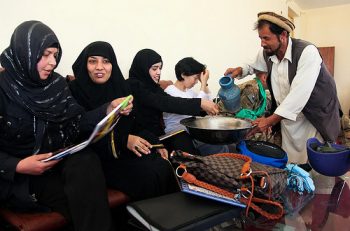
110427-A-ZI978-013

You might be wondering why we are introducing to you a single word in this post. Well, the short answer is because it is very important to know this word if you want to know more about Afghans. Understanding the meaning associated with this word will enable you to understand the issue of honor in Afghan society. By simply giving you the dictionary meaning of this word, we will be leaving out many concepts that this word is associated with in Afghan society.

When talking about Ghairat, it is usually translated as “honor” into English, however, honor which is another very important concept to be learned about Afghan society is Ezat (عزت). These two concepts can be very much connected and they both can be gained by doing similar, or sometimes the same things in Afghan society, but still they are two separate concepts.

Ghairat is primarily surrounded around the protection and control of women in a nuclear family, or in an extended family, or even sometimes in a clan or tribe. So, the protection and control of female members of the family, the protection of other members of the family which includes the extended family and sometimes even the clan, the protection of one’s property, rising against oppression, defending the powerless, fighting for your rights, and in some cases taking revenge constitutes a person’s Ghairat.

Let’s look at a couple of examples to understand the definition above. Suppose a female member of an Afghan family decides that she wants to be a fashion model. The other members of the family, especially the male, members of the family do not agree with her and does not allow her because it is not acceptable in the society and will bring shame on the family, but she doesn’t care and becomes a model. In this case she has damaged the Ghairat of the male members of the family and in order for them to be considered people-with-Ghairat, they need to stop her and punish her, and otherwise it affects their status in the society. Similarly if someone oppresses you, and you don’t defend yourself while you can, then you are considered someone without Ghairat.

These are the major issues surrounding Ghairat, but there are many other things that can affect one’s Ghairat and honor in the Afghan society. For instance, not working very hard to provide for one’s family, mistreating one’s parents, fighting with women, mistreating a guest, not keeping your words, and there are many other little things that can affect one’s Ghairat. It is determined by the people of the society how much Ghairat someone has.

In Afghan culture, to tell someone that he/she does not have Ghairat is considered one of the biggest insults. If one doesn’t have Ghairat in Afghan society one will not be considered honorable; and if he/she is not honorable in this society, he/she could be alienated by most of the members and life can become very hard.

Men Holding Hands in Afghanistan

Posted on 06. Jan, 2013 by in Culture

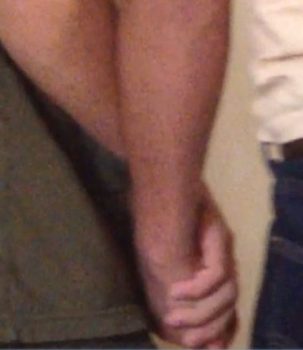
men holding hands

In this post I would like to start by asking you a question. Suppose you are a man and you are in Afghanistan, what would you do if an afghan male-coworker or a friend approaches you and holds your hand? Well, I bit you will panic, blush, and be nervous. In this post we will share with you some information on holding hands in Afghanistan.

In Afghanistan, it is totally normal for a man to hold another man’s hand, or for a boy to hold another boy’s hand. However, it is prohibited for the opposite sexes to hold hands unless they are engaged or married. Men and women don’t even shake hands when they greet each other; there is no physical contact between men and women who are not related. It is rare to see a woman shake a man’s hand.

When two men greet each other, they will shake hands and also kiss each other on the cheek.  Sometimes, depending on how well they know each other, or how often they see each other, they will hug. It is very normal to see two adult males holding hands in public and talking to each other.  Even in formal sittings like offices and workplaces it is not unusual to see two adult male coworkers holding hands and discussing a business matter.

Remember that when a man holds your hand it does not mean anything; it is only an expression of friendship. Of course, it will make you uncomfortable at first if you are not used to this kind of culture, but you can constantly remind yourself that it does not mean anything similar to what it would mean in the west. Also, never refuse holding someone’s hand. You can always find an excuse to have your hand released, for example, you can pretend to wipe your nose or to scratch your face or head.

YouTube Preview Image

Pleasantries in Pashto (Common Phrases of Politeness)

Posted on 13. Dec, 2012 by in Culture, language

In this lesson we will teach you some very useful phrases that we refer to as pleasantries. These are the words or phrases that we use in order to show respect, appreciation, humility etc. By using these words one will come across as a polite person.  Even if you don’t speak the language you will still be able to use these phrases.  The following are some of the most common phrases that we use in Pashto language.

مننه  Manana means, “Thank you” the usage of this word is that same as its equivalent in English.

خیر یوسی   Khair Yosay  is another way of saying “Thank you”, however, it is informal and more like a prayer. It literally means, “May you face good.”  It could be used interchangeably with “manana” but  it is not well suited for formal situations.

هیله کوم Heela kawoom  means, “you are welcome”  it can also mean “please”, “please don’t mention it”

مهربانی  Mehrabaani is a very useful phrase. It is used to ask someone politely to start talking. It is also used to offer someone a seat.  For instance, if someone comes to your office by pointing to a chair and saying “Mehrabaani” you are very politely asking him/her to have a seat.  This same phrase can also be used to mean, “Go ahead”.

ستړی مشی  Starray ma-shay  literally means, “May you not be tired” . When you pass by or see someone working hard you will say “starry ma-shay” . Also, when someone comes to your office or home, you will great him/her by using this phrase.

کور ودان  koor wadaan is another version of saying “Thank you” .

سترګې دی خایسته دي   stargy de khaaista dee means “Your eyes are beautiful.”. This phrase is used to answer to a compliment. For example, if someone tells you that you have beautiful hair, you would answer by saying “stargy de Khaaista dee”. In Pashto we don’t answer a compliment by saying “thank you”.

 Watch the accompanying video for the correction pronunciation of these phrases.

YouTube Preview Image