


Archive for the year 2011
Fireworks 烟火 (yàn huǒ) Posted by Stephen on Jul 5, 2011

Fireworks or 烟火 (yàn huǒ) are a Chinese invention and are synonymous with celebrations in Chinese culture. The earliest documentation of fireworks dates back to 7th century China where they were first used to frighten away evil spirits with their loud sound (鞭炮/鞭砲 biān pào) and to pray for happiness and prosperity. For any big holiday…
上 and 下 – Two Crucial Characters to Learn Posted by sasha on Jul 4, 2011

These are two very important (重要的 – zhòng yào de), very useful (有用 – yǒu yòng) characters when learning Chinese – 上 (shàng) and 下 (xià). In Chinese, you will encounter these two characters very, very often, as they both have many meanings. Let’s take a look at some of the many uses of these…
Chinese Idioms Vol. 3 Posted by sasha on Jul 1, 2011
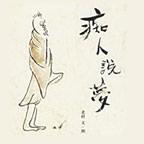
It’s time for another installment of Chinese idioms! 痴人说梦 – chī rén shuō mèng – “A fool tells about his dreams” Basically, this idiom means to talk complete nonsense. The story behind it talks of a rich family who had a very foolish son. One day, he awoke to see the maid in his room…
Measure Words (量词) Posted by Stephen on Jun 30, 2011
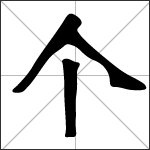
When I taught English in China, one of the easiest lectures was on English articles–simply because there are only three of them (a, an and the). However, when discussing the use of “this” 这 and “that” 那, some problems would arise. Some students would say things like: “this the ball is red” or “that a…
Confucius says… pt. 3: On studying (子曰) Posted by Stephen on Jun 28, 2011
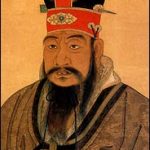
Confucius or 孔子 (Kǒng Zǐ) is China’s most famous philosopher, poet and scholar who lived from 551 BC – 479 BC, and is best known for his writings and teachings on Chinese society, culture and everyday life. His impact on Chinese culture has been so profound that some 2,500 years later his teachings are still well…
Getting Gramatical: Who, What, When, Where (语法) Posted by Stephen on Jun 27, 2011

Many followers of this Blog have requested some basic grammar or 语法 (yǔ fǎ) rules with explanation, so today lets focus on the basics of a sentence: Who (谁 shéi) What (什么 shénme) When (什么时候 shénme shíhou) Where (在哪儿 zàinǎr) Let’s start with a basic sentence in English. Someone asks you what you’ve been up…
Telling Time in Chinese (Video) Posted by sasha on Jun 25, 2011
Similar to my video last month about making words in Chinese, this simple, easy to follow video will teach you some important vocabulary and sentence structure for telling time in Chinese!