


Archive for the year 2010
Bicycle Tour Posted by jan on Aug 17, 2010
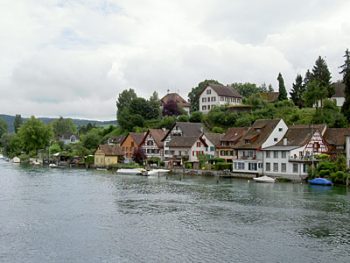
Some months ago I posted an article about Lake Constance (Bodensee), the biggest See (lake) in Germany. Maybe some of you remember. Due to my long summer holidays, now I had the chance to experience the lake another way as gewöhnlich (usual): Spontaneously my wife and I decided to circle the lake by bike!
Prepositions that require the genitive case Posted by Sandra Rösner on Aug 11, 2010
In my previous post, I explained to you the basic idea of the four German grammar cases. Remember: DOER-noun = nominative (carries out the action) POSSESSION-noun = genitive (belongs to DOER, INSTRUMENT or TARGET) INSTRUMENT-noun = dative (with what the action is carried out) TARGET-noun = accusative (receives the action) Unfortunately, the German language is…
WHO is doing that to WHOM with WHAT and WHOSE is it at all? – The four German cases Posted by Sandra Rösner on Aug 6, 2010
Most learners of German seem to struggle with the language’s grammar cases. In this post I am going to explain why these cases exist and what they mean. The crucial element of every sentence is the verb, since it names a particular action. In this action, there are always specific subjects and objects (nouns) involved…
The last love parade? Posted by jan on Aug 5, 2010
Maybe some of you have already gehört (heard) that this year´s love parade ended up in a Katastrophe (catastrophe). 21 people were squashed to death due to a mass panic. 500 were verletzt (injured).
The “Trabant”: the “VolksWagen” of the former German Democratic Republic Posted by Sandra Rösner on Jul 29, 2010
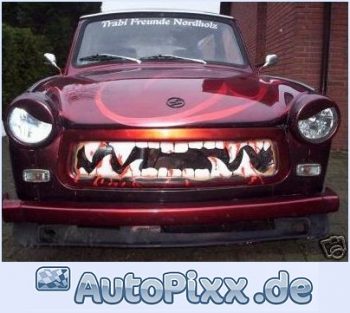
Since Germany is known for its car industry, I am sure most of you have at least heard about brands like Mercedes-Benz, BMW, VW, Audi, Opel, Ford, and Porsche. But have you ever heard of a car called Trabant? If not, let me turn your gaze toward past times. After the division of Germany, both…
Lost in translation: The funny Germans Posted by Sandra Rösner on Jul 26, 2010
It is a prevalent belief that we Germans have little or even no sense of humor (Sinn für Humor). Especially British people often suppose that Germans are humourless (humorlos). But why is that? First of all, of course, Germans love to laugh just as any other nation. But humor is always connected with language and…
Mastering German word order II: main clauses Posted by Sandra Rösner on Jul 22, 2010
In my previous post, I explained the word order of a basic German sentence, containing the following grammatical entities: S = subject: ich (I) V = verb: schreibe (am writing) O = object: einen Brief (a letter) T = time: heute (today) L = location: im Büro (at the office) My example sentence was: Ich…