


Skigebiete in Deutschland – Skiing regions in Germany Posted by jan on Jan 27, 2011
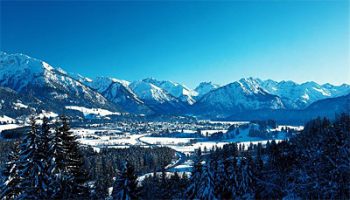
Down from approximately the middle, Germany is a pretty hügeliges (hilly) country. There are some Mittelgebirge (low mountain ranges) and close to the southern boarder, Germany joins the European alps.
My Experience and Scientific Results about Second Language Learning Posted by Sandra Rösner on Jan 26, 2011
In this post I would like to tell you about eine Begegnung (an encounter) I had some weeks ago because this zufällige Begegnung (chance meeting) gave rise zwei Themen in einem Zug anzureißen (to touch on two topics in one go). Additionally, you have the opportunity to enlarge your vocabulary. One of the two topics…
What do Germans eat for breakfast? Posted by Sandra Rösner on Jan 18, 2011
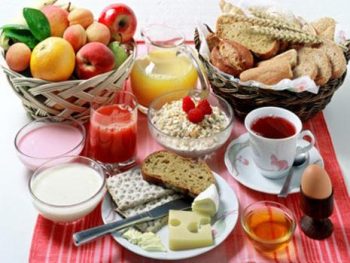
When I get in contact with foreign cultures I am always curious about what other peoples have for Frühstück (breakfast). So, I thought that you could be curious, too, about what we Germans have for breakfast. Germans think breakfast is the most important meal of the day because it gives you all the energy you…
Contraction of prepositions and definite articles in German Posted by Sandra Rösner on Jan 9, 2011
In German it often occurs that definite articles and prepositions are contracted. This is, however, only possible when the article is not stressed. The contracted form of the definite article is called clitic – an unstressed ‘word’ that only appears when it can lean on another word. Clitics do also, in other grammatical forms, exist…
Silvester – New Year’s Eve Posted by Sandra Rösner on Dec 31, 2010

The countdown is running. There are only a few hours left till the old year is over. With this last post for this year I would like to give you an insight into how Germans Silvester feiern(see the New Year in) and what you can say to wish someone a Happy New Year. There are…
German nouns: gender hints Posted by Sandra Rösner on Dec 20, 2010
In German, all nouns have a particular grammatical gender. They can either be masculine (männlich), feminine (weiblich), or neuter (sächlich). The gender of a noun is indicated by its preceding article: „der“ (for masculine nouns), “die” (for feminine nouns), and “das” (for neuter nouns). Please note that not the thing or person is supposed to…
The history of the Adventskranz (Advent wreath) Posted by jan on Dec 15, 2010
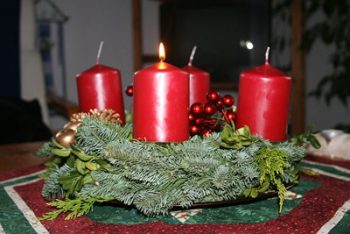
To celebrate the pre-Christimas period and to get in touch with its atmosphere, the Advent wreath became an inherent part of German culture.