


Archive for 'Grammar'
Talking About The Past Posted by Serena on Aug 20, 2012
Here’s a brief description of a morning walk. It highlights some grammatical points which will help you when talking about things that happened in the past. Each sentence is translated into English, and for the text in blue we have given a grammatical explanation. Words in red are links to old posts. 1. Oggi ci…
Il Passato remoto–part 2 Posted by Serena on Jun 22, 2012
In part 1 we looked at the conjugation of the passato remoto (historical past). Today we are going to look at the different ways in which it is used: In historical writing: Il passato remoto is, of course, commonly used when writing biographies or recounting historical events, e.g. Caravaggio nacque nel 1573 (Caravaggio was born…
Il Passato Remoto–part 1 Posted by Serena on Jun 20, 2012
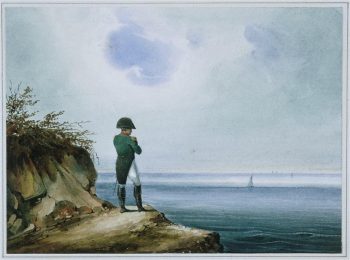
In his latest guest blog, Il Negozio del Papà di Mattia, our friend Mattia uses il Passato Remoto (Historical Past), a tense that is often seen as more or less redundant because it’s mainly used in formal and historical writing, e.g. Napoleone morì nel 1821 all’Isola di Sant’Elena (Napoleon died in 1821 on the Island…
Verbi Idiomatici in Ci Posted by Serena on Jun 6, 2012
Some time ago I wrote an article about the particella ‘ci’: Tricky Little Words “ci” . Let’s revisit the topic and have a look at idiomatic verbs that use ‘ci’, with a few examples of their usage: Volere (to want) + ci = Volerci (to need, to take, as in quantity, time, materials, etc.): dalla…
Bagnato Posted by Serena on May 11, 2012
In our last blog we looked at asciutto and secco (dry). Well here comes the rain again, so let’s see what vocabulary we need to describe … wet! umido = damp: il bucato è ancora umido (the washing is still damp) l’umidità (dampness – noun fem.): dopo tutta questa pioggia c’è molta umidità in cantina…
Asciutto Posted by Geoff on May 9, 2012
With all the rain we’ve had over the last few weeks wet and dry has become a bit of an obsession! Over the next couple of blogs we’ll at some of the vocabulary that we use to describe these conditions. Let’s begin with asciutto = dry: ormai il bucato dev’essere asciutto (the washing should be…
Piacere Posted by Serena on Apr 27, 2012
Chatting with an English couple the other day about the strange convolutions of the Italian language, the conversation moved onto the famous topic of piacere (to please). As a visitor to Italia you can be sure that you will be asked frequently ‘ti piace questo, ti piace quello?’ (do you like this, do you like…