


Archive for the year 2010
Distinguished Women of Ancient Rome Posted by kunthra on May 10, 2010
Despite the fact that women were barred from holding public office and participating in other freedoms enjoyed by men, some ancient Roman women wielded considerable power. In honor of Mother’s Day, I thought I’d give tribute to some of the famous or should I say infamous mothers of ancient Rome. Valeria Messalina was the third…
The Indirect Object Posted by kunthra on May 7, 2010
The indirect object states who is receiving or benefiing from the action being performed by the subject. So whenever you do something “to” someone or “for” someone, that’s the indirect object. The indirect object is also called the dative. We will look at the dative of the second declension. 1) Virō fābulam narrō = I am telling…
The Ablative Plural Posted by kunthra on May 4, 2010
Can you tell the difference between these two sentences? (1) Ad īnsulam nāvigat cum scaphā (2) Ad īnsulam nāvigat cum scaphīs Everything is identical except for “scaphā” and “scaphīs”. As you know, “scaphā” means “boat”, but what does “scaphīs” mean? Scaphīs is the plural ablative, which means that instead of “boat”, it’ll be “boats”. The…
Worst Ancient Roman Emperors Posted by kunthra on May 1, 2010
Who are your picks for worst ancient Roman emperors? Here are mine : 4) Lucius Aurelius Commodus Antoninus. The number four spot goes to Commodus for : A) killing helpless and crippled people in gladitorial feats, while he was dressed as Hercules. B) being paranoid of being killed and killing senators like Condianus and Maximus and…
The Ablative Continued Posted by kunthra on Apr 28, 2010
For today’s lesson, we’ll learn how to say “with” or “without”. Both will be in the ablative. Ad īnsulam nāvigat cum scaphā = He is sailing to the island with a boat “Cum” means “with” and the word it modifies will be in the ablative. Ad casam sine aquā ambulant = They are walking to the house without…
The Ablative Case : From Posted by kunthra on Apr 25, 2010
ā or ab can mean “from”. Can you tell when to use which from the two examples below? (1) Fēmina ā casā ad castrum aquam portat = The woman is carrying water from the house to the castle. (2) Puella ab īnsulā ad actam natat = The girl is swimming from the island to the seashore. In…
The Founding of Rome Posted by kunthra on Apr 22, 2010
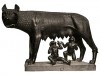
Supposedly the traditional date for the founding of Rome was April 21st, 753 B.C. The tale begins with two twin brothers named Romulus and Remus. Depending on the version of the story, Hercules or Aries impregnates a Vestal Virgin. When the uncle of the Vestal Virgin finds out, he orders them to be killed. The…