


Archive for 'Latin Language'
Phoric & emphatic pronouns Posted by leire on Apr 23, 2012
Phoric pronouns Singular Plural Masculine Feminine Neuter Masculine Feminine Neuter Nominative is ea id ei (ii) eae ea Accusative eum eam id eos eas ea Genitive eius eorum earum eorum Dative ei eis (iis) Ablative eo ea eo eis (iis) As the name suggests, its main function is the phoric: it is used…
Possessive & demonstrative pronouns Posted by leire on Apr 12, 2012
Possessive pronouns One holder Several holders 1st person meus, -a, -um noster, nostra, nostrum 2nd person tuus, -a, -um uester, uestra, uestrum 3rd person (reflexive) suus, -a, -um Its main function is the morphemic: they express the category of person and number. The reflexive possessive suus, -a, -um has also a phoric function…
Pronominal morphology & Personal pronouns Posted by leire on Apr 9, 2012

What are pronouns? Traditionally pronouns are defined as words that are used in place of the name. However, this definition is unsatisfactory, in a phrases like: I will go to the movies tomorrow What name replaces “I“? It is obvious that it does no replace any name. ‘I‘ is a first-person morpheme that indicates the…
Latin pronunciation Posted by leire on Apr 4, 2012
There is not “one correct way” of pronuncing Latin, it depends on which kind of Latin you are trying to speak. Classical Latin Classical Latin alphabet had these (capital) letters: A, B, C, D, E, F, G, H, I, K, L, M, N, O, P, Q, R, S, T, V, X, Y, Z C…
Latin literature VIII: Novel Posted by leire on Mar 29, 2012
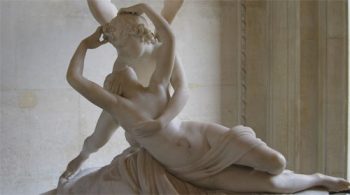
Novel The novel was a minor genre cultivated late. In Rome Petronius with his Satyricon (1st century AD.) and Apuleius with his Golden Ass (2nd century AD.) had a great influence on posterity. With Satyricon Petronius got a totally new and original work, which suited well to the tastes of the time and perfectly represented…
Latin literature VII: Oratory Posted by leire on Mar 28, 2012
The oratory was for the ancient the art of persuading people through speaking correctly. His teaching and techniques are called rhetoric. In Rome, following the models of classical Athens, oratory took on enormous importance. From the 2nd century BC. Rome hosted a large number of Greek rhetoricians, while some Romans traveled to Greece to learn…
Latin literature V: Historians Posted by leire on Mar 22, 2012
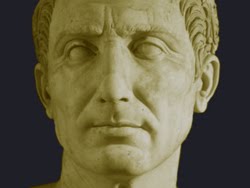
Historians: The first Latin historians we know began to write some History in the form of Annals in the last third of the 3rd century BC. In the 1st century B.C. in time of Sulla, the first great authors that changed the course of Latin historiography were born: Caesar and Sallust. With these two authors…