


Greetings Posted by Kasia on May 11, 2011
Greetings are essential part in our everyday life no matter where we live, what we do, who we are or what culture we belong to. We cannot imagine a single day without greeting somebody. There are lots of different kinds of greetings which are used in various situations depending on how well we know a…
Polish Kiełbasa Posted by Kasia on May 3, 2011
Kiełbasa is a Polish word that describes a traditional type of sausage. A staple of Polish Cuisine, Kiełbasa comes in several of varieties of primarily smoked or fresh cooked lean pork, also available in beef, chicken, turkey, and veal. Every region of Poland has its own unique ingredients and recipes. The most popular are: Kabanosy…
Pan and Pani Posted by Kasia on Apr 29, 2011
In Polish language there is great complexity when dealing with forms of address. The forms of addressing people in one country are often different in another county. I wanted to explain some of these differences and the meanings behind them. First, let’s look at the seemingly simple forms of address such as “Pan/Pani” (Sir/Madam) and…
Sałatka jarzynowa Posted by Kasia on Apr 28, 2011
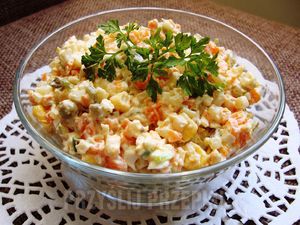
Sałatka jarzynowa is a great Polish salad, but not like the green leaf salad that most people in USA are used to. Polish salad has the ingredients cut very small and has a quite different appearance from leaf salad. It almost looks like a pasta salad with no pasta. Sałatka is one of my favourite…
Labour Day and Constitution Day in Poland Posted by Kasia on Apr 27, 2011
In Poland as in many other countries some people celebrate the 1st of May as an international day of social justice and workers’ rights. However for Poles these celebrations have specific associations – after the WW II the communist authorities used this day in order to show their power and friendship with the USSR. Unfortunately…
Pisanki Posted by Kasia on Apr 26, 2011
The centuries-old art of Polish pisanki is a wax-resist method of decorating Easter eggs, much like batik. The word comes from the verb “to write” —pisać (PEE sahtch) in Polish and pysaty in Ukrainian — as the designs are not painted on, but written with 100% pure beeswax. Every Eastern European country has its version. Eggs are…
Wet Monday Posted by Kasia on Apr 25, 2011
Easter Monday, it is Smigus-Dyngus or Lany Poniedzialek, called in USA “wet Monday”. During all the day, it is allowed to throw water on the others, also unknown! The best thing is to remain at home all the day, because while leaving to go for a short walk or to even go to the church…