


Easter, Πάσχα Posted by dareios on Apr 9, 2012
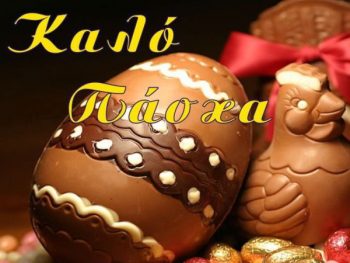
Easter (Πάσχα,Pascha) is the second largest celebration after the Orthodox Christmas. For others Easter is considered to be more important than Christmas. It is celebrated throughout Greece where there are different customs from one city to the other. For the Orthodoxs the Great Week has just begun yesterday. This Sunday is called the Palm Sunday…
Tenses – Simple future 1st Conjugation Posted by dareios on Apr 6, 2012
The simple future is used to express an action which occurs only once in the future. It is formed with the particle θα (tha) = will plus the verb. The most of the verbs change their form when they are used to form the future tense. Few of the do not change their form. The…
Proverbs, Sayings Posted by dareios on Mar 28, 2012
Today I will show to you some of our proverbs. There are way too many and I had a hard time to choose some. Some of them you already have in your language, maybe little different. So, here we are… Άλλαξε ο Μανωλίος κι έβαλε τα ρούχα του αλλιώς. Manolios(a name) changed. He turned his…
25th Of March, independence day of Greece. Posted by dareios on Mar 25, 2012
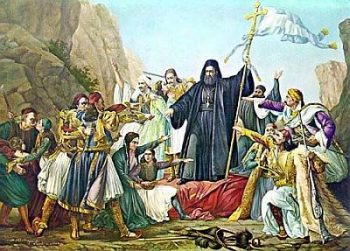
“Freedom or death“(Ελευθερία ή θάνατος). These are the first words that come in the mind of every Greek in the sound of this date. The 25th of March is both national and religious holiday for Greece. It is the date that our ancestors back in the 1821 started their revolution against the Ottoman Empire. In…
Tenses – Simple past 1st Conjugation Posted by dareios on Mar 23, 2012
Verbs are the words that indicate an action or feeling. If you are looking in a dictionary the verbs will be presented in the I-form of the verb. This is the form that is used to reference the Greek verbs, like the infinitive form on English. Verbs can indicate a different point in time such…
Greek National Anthem (Εθνικός Ύμνος), Greek flag Posted by dareios on Mar 21, 2012
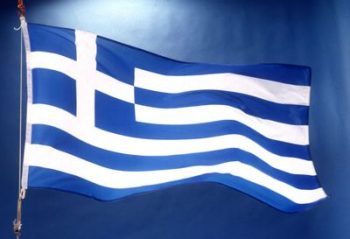
The National Anthem was established by the Greeks in1865. The Anthem is a poem called Hymn to freedom (Ύμνος εις την ελευθερία) which has been written from Dionysios Solomos (Διονύσιο Σολωμό) in 1823 and composed by Nιkolaos Mantzaros (Nικόλαο Μάντζαρο) in 1828. It consists of 158 stanzas (verses) and it is the longest Anthem in…
Personal pronouns, direct-indirect object Posted by dareios on Mar 11, 2012
In Greek the direct and indirect pronoun are not the same like in English. For example in English we say : I met him and I talk to him. Both direct and indirect object are the same. If you translate the same sentence to Greek: Τον συνάντησα και του μίλησα (ton seenadeesa ke too meeleesa)…