


Archive for 'language'
Ergative construction in Pashto Posted by muhammad on Jan 9, 2019
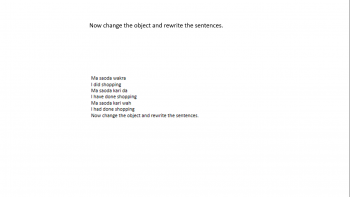
In general, in ergative languages, the verb agrees with the object of a sentence. We are familiar with the subject-verb agreement in the English language, but many Russo-Germanic languages have the ergative construction in them. Pashto is a semi-ergative language because it has ergative construction in the past and other perfect tenses only when the…
Perfective and Imperfective Moods in Pashto Posted by muhammad on Dec 15, 2018
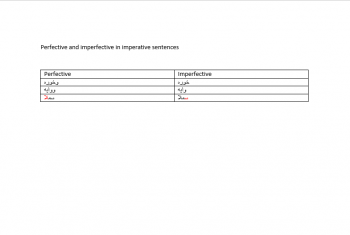
In addition to tenses, Pashto also uses two moods: the imperfective and the perfective. Both of these moods can be used in the past and present tenses. Imperfective Mood The imperfective mood is used to express a regularity or continuity of the verb action. It also points to the progressive nature of the action of…
Basic Greetings in Pashto Posted by aniazi on Feb 4, 2014
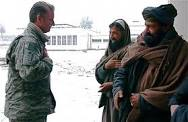
Welcome to our guide to Afghanistan. You may be going to Afghanistan on business, for a visit or even hosting Afghani colleagues or clients in your own country. Remember this is only a very basic level introduction and is not meant to stereotype all Afghanis you may meet. When meeting someone the handshake is the most common form…
TABLA, Afghan Musical Bass Beat: Posted by aniazi on Jan 14, 2014
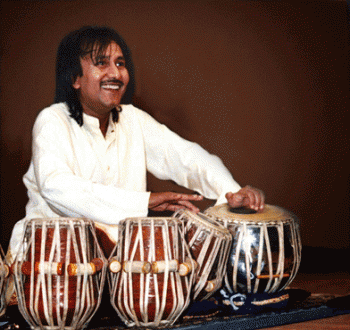
Tabla is the most famous percussion music instrument in Afghanistan. It is most commonly used in Afghanistan classical music (موسيقي), but its versatility in all musical styles (عبارتونو) has enabled it to become the most popular percussion instrument. The level of sophistication and tonal beauty (ښايست) it possesses has elevated the instrument to an…
Postpositions in Pashto Posted by Sayed Naqibullah on Feb 11, 2013
In English we have prepositions, the words that come before a noun and show its relationship to the other words in a sentence such as in, on, for. In Pashto the prepositions are not used alone. These words that do the job of a preposition in Pashto are called postpositions. As the name suggests, post…
Five Tips for Reading Pashto Script Posted by Sayed Naqibullah on Jan 28, 2013
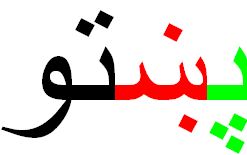
Pashto 1. The unique letters: Pashto adopted the Arabic alphabet and added some extra letters to accommodate for the sounds that are unique to Pashto. In order to read the Pashto script correctly you need to be able to pronounce these letters correctly. The following are the letters that are unique to Pashto. You can…
Past Tense of the “To Be” Verbs in Pashto Posted by Sayed Naqibullah on Jan 11, 2013

The “to be” verb in English has only two forms (was, were) in the past tense. In Pashto, however, we have at least six forms for the past tense of the verb “to be”. The reason we have so many forms for the verb “to be” is because unlike the English verbs, Pashto verbs have…