


11 foodstuffs of the GDR you can still find in German supermarkets Posted by Sandra Rösner on Oct 3, 2014
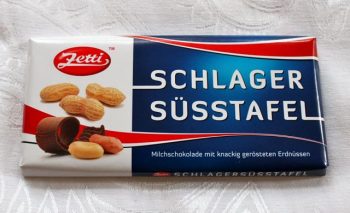
When the Berlin Wall fell in 1989 and the Bundesrepublik (Federal Republic) and Ostdeutschland (East Germany) finally reunited on 3rd October 1990 officially, the citizens and workers of the GDR hoped for an economic reorganization. However, transforming a Planwirtschaft (planned economy) into a Marktwirtschaft (market economy) soon proved to be illusionary. On the one hand…
German grammar in use: The conjugation of the verb “hören” Posted by Sandra Rösner on Oct 1, 2014
The German verb “hören” has got three major meanings: The ability to hear The conscious activity to listen (to) To do what an authority commands you: to obey Additionally, there are several compound verbs with the stem “-hören”, which specify HOW you hear or listen. zuhören – to listen to The verb “zuhören” is a…
Sayings + Expressions 9 – The Spanish Vitamin Posted by Sten on Sep 29, 2014

After some absence, I am back with a new Sayings + Expressions! This week – a Spanish vitamin… Does that make sense? Read on to find out… Vitamin B(eziehungen) Vitamin C(ontacts) (good connections) As we all know, vitamin B is a very important vitamin that we need to survive. It regulates certain vital parts of…
German-Dutch in the mix Posted by Sten on Sep 27, 2014

The Netherlands and Germany are two countries that could not oppose each other in certain ways: soccer, language, some cultural traits, morals, fashion styles… But they also find harmony. There are many activities that connect both countries. Not only economically. I grew up in a small German town on the Dutch border and went to…
German grammar in use: The conjugation of the verb “erklären” Posted by Sandra Rösner on Sep 25, 2014
The common English translation for the German verb “erklären” is to explain. Further, it can mean to declare, to state, or to define — depending on context. Below you can find some example sentences with the German verb “erklären” and its conjugations. Präsens – Present tense Singular Plural 1st person ich erkläre wir erklären 2nd…
The etiquette of Sie and du at the workplace Posted by Constanze on Sep 25, 2014
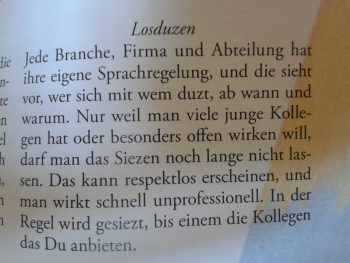
As many German language learners know, in German there are two different ways of saying the word ‘You’. There is ‘du’, which is informal, and ‘Sie’, which is formal. This is entirely different to the English language, which only uses one word (You) for both. I wanted to touch on this subject to discuss the…
German cooking: meatballs with cauliflower and potatoes Posted by Sandra Rösner on Sep 23, 2014
German cooking is very rustic. A common meal consists of meat, potatoes and vegetables. One of my favorite dishes of my childhood is Buletten mit Blumenkohl und Kartoffeln (meatballs with cauliflower and potatoes). My mother usually cooked it for Sunday’s lunch. Below you can find the Rezept (recipe) for this very easy dish. In the…