


Forming Greek nouns Posted by Ourania on Mar 21, 2022

Γεια σας! This post is about nouns. Nouns can be formed or derive by other nouns, verbs, adjectives and numbers. Today we will see how we can form nouns by verbs. If you want to know more about nouns, you can read this. The nouns formed by verbs can mean: 1. The person…
A Cuban in Greece: Listening Comprehension exercise Posted by Ourania on Mar 16, 2022

Γεια σας! Today we will take a break from the Greek culture and we will meet a man from Κούβα (Cuba) who lives permanently in Athens. The man will cook a Picadillo a la Habanera and he will also make a mojito. Watch the following video (10:03 minutes) of the show “Στην κουζίνα των μεταναστών”…
The Story of Lysistrata Posted by Ourania on Mar 8, 2022
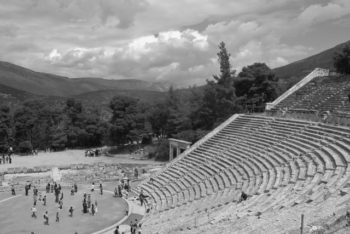
Today in Greece we celebrate την Ημέρα της Γυναίκας (International Women’s Day ). However, the general mood is not festive, as the present war creates an atmosphere of uncertainty and fear. This is probably the right time to talk about της ιστορία της Λυσιστράτης (the story of Lysistrata). Aristophanes was the most important κωμικός ποιητής…
Reading Comprehension in Greek Posted by Ourania on Feb 21, 2022

In the last years many people in Greece have been showing interest in any kind of seminars. In this post, there is a reading comprehension exercise suitable for intermediate and upper-intermediate learners. Read the description of 5 different seminars and mark (Χ) on the table, the information we have. You must have 16 marks (the…
Old prepositions in Modern Greek Posted by Ourania on Feb 16, 2022

The prepositions used in daily life are taught at an early stage. When Greek learners deepen their progress, they start using prepositions from ancient Greek or from καθαρεύουσα (katharevousa). Some of these prepositions are used in standard expressions. In this post you can see all the “older” prepositions with examples of their use. If you like…
Listening Comprehension: The Village Coffee Shop Posted by Ourania on Feb 9, 2022

Usually Greek students find it difficult to practice listening comprehension. Most authentic resources contain video or audio files which are suitable for fluent speakers. In this post, there is an audio file and a listening comprehension activity, suitable for upper-intermediate students. It is a multiple choice exercise. First, read all the questions and then listen…
Snowstorm in Greece: Vocabulary Posted by Ourania on Jan 31, 2022

The last days of January have been challenging. A heavy snowstorm hit Greece, especially Athens, and the country was totally unprepared to face the challenge. The snowstorm that was, ironically, called “Ελπίς” (i.e. “Hope”) , left many areas without electricity, blocked the streets of Athens, letting many drivers trapped in their cars and debunked the…