Urdu’s Dual Nature

Posted on 18. May, 2013 by in Uncategorized

Urdu is both an aristocratic language as well as the commoner’s language.  It is the commoner’s language because in fact the later Mughals had become almost (though not quite) commoners, having lost their Empire.  It is at the same time not the common man’s language, since the common man’s language is Hindustani, not Urdu.  The later Mughals, despite being pauperized refused to be treated like paupers and insisted on being treated with respect as aristocrats. Urdu has the graces, polish and sophistication of an aristocratic language.  Thus Urdu has a dual nature; it is both the common man’s language (aawaam ki zubaan) and also the aristocrat’s language (the common man’s language being Hindustani or Khariboli).  This may sound a paradox, but it is true, and in fact this is the beauty of Urdu, that while it is the language of the common man, expressing all the problems, worries, sorrows and hopes of the common man, it is also a language of grace, polish, sophistication and dignity.

It has been mentioned above that Urdu is basically a combination of two languages, Hindustani (or simple Hindi) and Persian, the former being the common man’s language, while the latter being the aristocrat’s language.  It has also been mentioned that Urdu is a special kind of Hindustani, not a special kind of Persian (because the verbs in it are all in Hindustani).  Continuing this analysis it may be stated that the content of Urdu i.e. the feelings and ideas expressed therein are that of the common man, but its form of expression is aristocratic.  In other words, Urdu expresses the troubles, sorrows, anxieties and hopes and aspirations of the common man, but its style (andaz-e-bayan) is not that of a common man but that of an aristocrat.

For instance, the greatest Urdu poet Ghalib had a horror of the commonplace in the mode of expression in poetry.  Regarding himself an aristocrat, he had an intense desire to be different from the common masses, and his poetry is marked by its originality and unconventionality.  Ghalib was of the firm view that the language of poetry should not be the same as the spoken language.  Hence he often expresses his thoughts not directly but indirectly, by hints and suggestions. The same is true of many other Urdu poets.  They often express their thoughts and feelings not in simple, direct language but by insinuations, allusions, indications, and in a roundabout way, the aim being to appear sophisticated and elitist, instead of being common place.  This sometimes makes the work difficult to understand (the great Urdu critic and biographer Hali regarded one-third of Ghalib’s verses too recondite to be regarded as being in Urdu), and sometimes several meanings can be attributed to the same verse.

However, the aristocratic style and sophistication (andaaz-e-bayan) of Urdu is what makes it powerful, and enables the emotion and thoughts of the common man to be expressed forcefully and robustly.


Creation of Urdu in the Indian Sub Continent

Posted on 15. May, 2013 by in Uncategorized

While the Mughal Emperors from Akbar to Aurangzeb were strong rulers, having control over large parts of India, their successors, the later Mughals, who ruled from 1707 (when Aurangzeb died) to 1857 (when the last Mughal Emperor, Bahadur Shah  Zafar,  was  deposed), were mere phantoms or shadows of the departed glory of their ancestors.  These later Mughals were Emperors only in name, they were in fact pauperized, they had lost their Empire to the British, the Marathas, and their Governors, who had really became independent rulers (like the Nawabs of Awadh or Nizam of Hyderabad). In their reign the court language gradually ceased to be Persian and instead became Urdu.

Why did the court language which was Persian in the reign of the great Mughals become Urdu in the reign of the later Mughals?  This was because the later Mughals were not real Emperors but had become nearer to commoners or paupers with all the difficulties of the common man.  Hence they had to take recourse to a language nearer the common man.  Why then did their court language not become Khariboli, which was the language of the common man in the cities?  That was because these later Mughals, and their Lieutenants, the Nawabs and Wazirs, while having become pauperized retained their dignity, culture and self respect.  They still prided themselves in being Shahzade-Timuria i.e. descendants of Timur, the great conqueror, (who was Babar’s grandfather’s great-grandfather) and descendants of the great Mughals.  Thus despite having become paupers they were not prepared to be treated as commoners.  Hence while they gave up Persian and adopted Khariboli, this was not the Khariboli of the common man but Khariboli of a special type, borrowing from the sophistication, polish and culture of the Persian language.  In other words they spoke a Khariboli which was coupled with the graceful features, sophistication and some vocabulary of Persian.

Urdu thus became the language of aristocrats who had become pauperized, but who retained their dignity, pride and respect.


Urdu in India

Posted on 09. May, 2013 by in Uncategorized

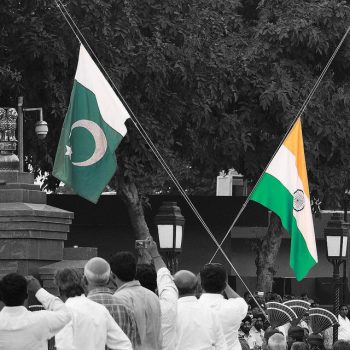
Two false notions were propagated, particularly after 1947 when India and Pakistan gained their independence from British rule about Urdu by certain vested interests: (1) that Urdu is a foreign language, and (2) that Urdu is a language of Muslims alone.

The first idea is palpably false.  Arabic and Persian are no doubt foreign languages (though I have great respect for them also, as I have great respect for all languages).  But Urdu is a language which is totally indigenous.  It was born in the Indian sun continent as the language of the Lashkar (camp) and of the market.  In its simplified form (as Khariboli or Hindustani) it is the language of the common man in large parts of urban India.  Its prominent figures have all lived in India, and they have made an outstanding contribution to our culture, dealing with the problems of the people, sympathizing in their sorrows, and touching the human heart.  Only ignorant people can call Urdu a foreign language.

The second notion, that Urdu is a language of Muslims alone, is also false.  In fact up to the last generation in India Urdu was the language of all educated people, whether Hindu, Muslim, Sikh or Christian, in large parts of urban India.  It is only from my generation onwards that Urdu has disappeared to be a common language in India, which I regard as unfortunate.

The notion that Urdu is a language of Muslims alone can only be attributed to the policy of `divide and rule’.  Certain vested interests wanted Hindus and Muslims to fight with each other, and hence they give birth to the false notion that Hindi is the language of Hindus while Urdu is the language of Muslims.  As a matter of fact the spoken language of the common man (in urban areas) is Khariboli (or Hindustani), Urdu being Persianized Khariboli, and Hindi being Sanskritized Khariboli. Urdu has a national following in India as it is spoken in 13 States of the country.